
Civilisations: Rise and Fall review: The BBC's glossy new history doc shows learning lessons from the past is a depressing business
Watching the BBC's new history documentary Civilisations: Rise and Fall (BBC2, Mon, 9pm) brought to mind the great philosophers, George Santayana and Shirley Bassey.
George, of course, said: “Those who can't remember the past are doomed to repeat it.”
Shirley – with The Propellerheads – told us that “it seems quite clear that it's all just a little bit of history repeating”.
And that was hammered home by this glossy new series, which features the combination of expert talking heads and mute dramatised tableaux that worked so well for previous documentaries like The Rise of the Nazis.
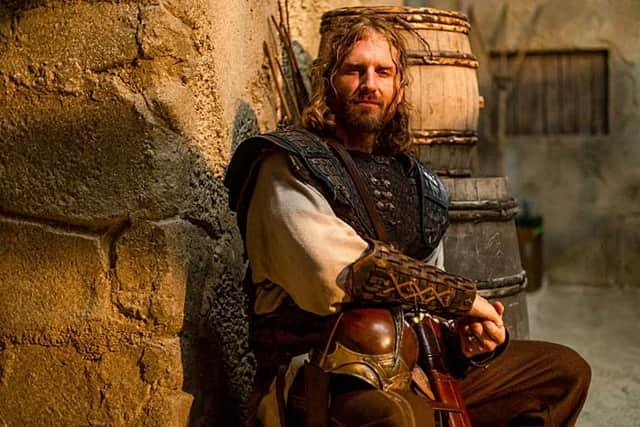

An hour-long, this first episode spent the first five minutes giving us an introduction to this instalment's subject – the fall of Rome – before introducing the series as a whole, telling us it's about “challenges that are all too familiar today: climate catastrophe, pandemic, war”.
Not exactly a laugh-a-minute, we then had an illuminating canter through the end of days in fifth century Rome, beset by administration problems, led by a child emperor, and with a refugee crisis of its own to contend with.
The Goths, you see – not the ones dressed in black who sulk in their bedrooms, the original ones from eastern Europe – were fleeing the Huns and gathering on the Roman empire's borders asking for help.
Estimates put the number of refugees at 100,000 – a huge number, given the population of Rome itself at the time was 750,000. And, as one historian puts it, “any government would look at 100,000 people and see a problem”.

Of course, these Goths had been part of the Empire for decades, although seen as second-class citizens, and stereotyped as long-haired barbarians.
All of this stores up problems for the Romans, not helped by the fact they are led by a boy-emperor whose paranoia is fed by a bunch of “conniving opportunists”, while wealth inequality has grown massively.
Once again, parallels with our fractious modern world are made clear: “The rich are supposed to pay taxes, but things don't really change in history and yesterday, as it happens today, those who have accountants find more or less legal ways not to pay taxes.”
On and on it goes, making today's petty tyrants and grasping billionaires looking ever more like Roman grandees who wouldn't think twice about making their horse a general or mounting pogroms against refugees.

The parallels are heavy-handed – subtext is not a thing here – but the time for nuance and subtlety is gone.
After all, if no one listens, what is there left to do but scream and shout?
It's all really rather depressing, the idea that our current state of affairs is the inevitable start of a slide into chaos and disorder before some other society is built from the ashes.
A feeling that's really brought into focus when you realise that one of our expert talking heads comes from the none-too subtly named Centre for the Study of Existential Risk.
And it's this chap, Luke Kemp, who hammers the final nail into the depression coffin when he tells us: “Growing wealth inequality is the most common and crucial element of societal collapse.
“Wealth inequality, in short, hollows out societies, leaving them a brittle shell, which can be cracked asunder by numerous different shocks, such as disease, climate change and invaders.”
As a documentary, it's skilfully put together, with some beautiful shots of waving wheat fields, while the dramatised scenes add texture and interest.
But it's doomy tone doesn't necessarily make it the most entertaining watch, and sometimes you don't really want to be reminded how awful everything seems.
Subsequent episodes seem doomed to repeat this, when what the viewer wants somewhere – anywhere – is a little hope.