
‘I’m building my own pioneering home in Leeds to slash my energy bills'

Bills are set to spike in October
A Leeds architect is putting his own ideas to the test by building a pioneering home designed to use less energy, as millions of households prepare for another rise in their bills.
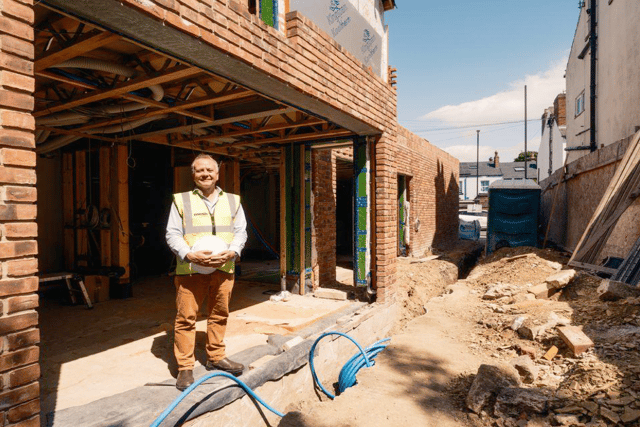
Ian Collins, co-founder of Leeds-based Mesh Architects, is creating the highly energy-efficient family home for himself in Chapel Allerton.
The property is being designed using Passivhaus principles, with high levels of insulation, carefully positioned glazing, airtight construction and controlled fresh-air ventilation helping to keep energy use to a minimum.

It comes as Ofgem's energy price cap is set to rise by four per cent from October, meaning the typical annual household gas and electricity bill will rise by £60 per year for the average household.
Mr Collins believes the way homes are designed and built could play an increasingly important role in helping people cope with high and unpredictable energy costs.
He said: “For us, this is the future of the business and the future of the built environment.
“Buildings use an enormous amount of energy and we think the responsible thing to do is improve their performance wherever we realistically can.
“It doesn’t necessarily mean spending a fortune or completely changing what somebody wants from their home.
“Often it’s about making better decisions at the beginning and having people around the table who understand how to get those decisions right.
“We want Mesh to be at the front of that.”
Passivhaus buildings can reduce heating demand by as much as 90%, highlighting the potential for energy-efficient design to cut long-term running costs.
Mr Collins' own property will be officially certified as a Passivhaus Low Energy Building.
He has lived in Chapel Allerton for around 30 years and is building the house on a tight infill plot between existing Victorian terraces.
But he says creating an energy-efficient home does not mean compromising on its appearance or how it feels to live in.
“There’s sometimes an assumption that an energy-efficient house has to be a box with tiny windows. It absolutely doesn’t,” he said.
“First and foremost, it has to be a great place to live. It needs light, views, spaces that work for the person living there and those little moments that make a house feel special.
“Technical performance matters enormously, but good architecture should also bring you joy. The exciting part is bringing those two things together.”
The project forms part of Mesh's wider focus on sustainable and low-energy architecture.
The practice describes its approach as “Practically Passive”, taking ideas from Passivhaus and applying them to real-world projects whether or not a client chooses to pursue formal certification.
Its existing sustainability work includes improvements at Stainbeck Church, which are targeting reductions of up to 85 per cent in heating bills, a low-energy retrofit of a bungalow at West Park Road and a 38-apartment zero-carbon development in Leeds' Climate Innovation District.
Mesh has also appointed 25-year-old architect Patrick Roobottom as it looks to expand its expertise in sustainable design.
Mr Roobottom, originally from North Wales, joins from Wighton Architects in Farsley after completing his Masters in Architecture at Leeds Beckett University.
He has recently passed his exams and is now a fully qualified Passivhaus Designer.
He will work across Mesh's residential and commercial projects, bringing expertise in sustainable architecture and low-energy buildings, as well as graphic design and visualisation skills.
The practice currently employs 12 people, with Mr Collins expecting the team to grow to around 15.
However, he says there are no plans for Mesh to become a large corporate architecture firm.
“We don’t want to become administrators who never design anything anymore,” he said.
“We enjoy being architects. We want to know the projects, know the clients and bring our own experience to them.”
Mr Collins said the rising cost of energy was another reason for architects to think carefully about how homes perform over the long term.
He said: “With energy bills continuing to rise, it’s another reminder that the cost of a home isn’t just what you pay to buy or build it - it’s what that home costs you to live in for the next 20, 30 or 40 years.”
Mesh works across Leeds, Harrogate and York, with projects spanning residential, commercial, retail, hospitality, health and fitness.
Leeds remains at the heart of the business.
He said: “I came here 30 years ago not really knowing the city and fell in love with it.
“Leeds has this attitude of getting on with things and making things happen.
“People are open, straightforward and friendly, and that’s very much how we want Mesh to operate too.”