
'He leaves an enduring legacy': Legendary Bradford-born artist David Hockney dies aged 88
The Bradford-born artist died peacefully at home
David Hockney, one of the most celebrated and influential British artists of modern times, has died aged 88.
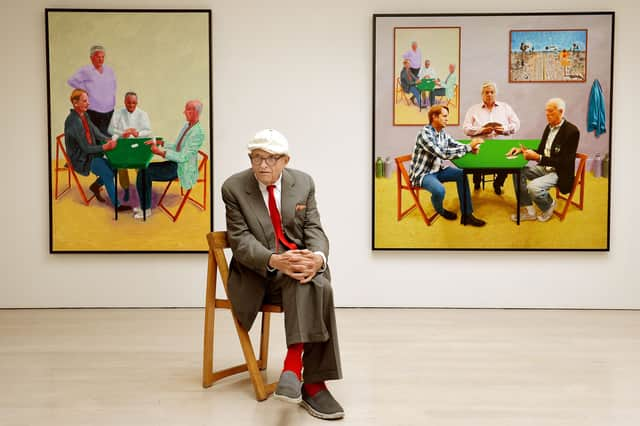

The Bradford-born artist died peacefully at home on June 11, his publicist Erica Bolton said.
A statement said: “The celebrated British artist David Hockney, one of the most important figures in contemporary art in both the 20th and 21st centuries, passed away peacefully at home on 11 June 2026, one month short of his 89th birthday.”
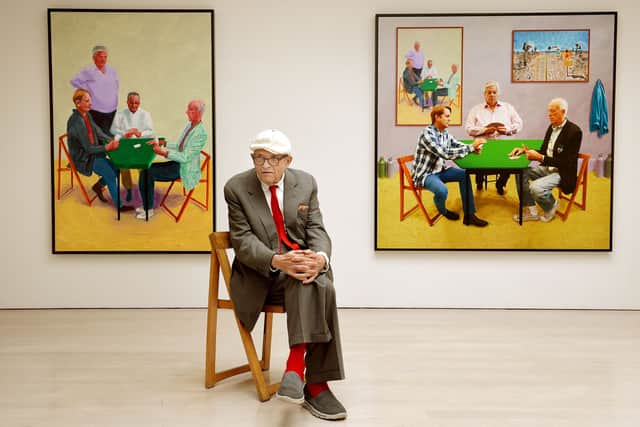
It added: “David Hockney’s enduring legacy reflects his underlying enthusiasm for life, his outstanding sense of humour, his immense generosity, and his investigative curiosity encapsulated by his signature phrase, Love Life.
“Details of memorials will follow in due course.”
Hockney was born in Bradford on July 9, 1937, the fourth of five children in a working class family.
At the age of just 11 he decided he wanted to be an artist, an ambition which was not encouraged by his teachers at Bradford Grammar School, but with the support of his parents, he entered the local art college.
Over the course of more than seven decades, Hockney’s joyful, optimistic vision made him one of the world’s most popular artists responsible for some of the most memorable images of the 20th and 21st centuries.
In 2018, his painting Portrait of an Artist (Pool with Two Figures) was sold at auction in New York for 90 million dollars (£70 million) – smashing the then record for a work by a living artist.
Long seen as a “national treasure, with his huge round spectacles, gentle Yorkshire burr and bleached blond hair – replaced in later years by a series of flat caps – his image was almost as distinctive and familiar as his paintings.
At the age of 87, the Fondation Louis Vuitton in Paris staged the largest exhibition yet of his art, with more than 450 works – the majority from the preceding 25 years – filling the entire museum, much to his obvious pleasure.
His health was, however, by this stage in serious decline and he required round-the-clock nursing care.
He nevertheless remained resolutely upbeat. He once said his loss of hearing had actually sharpened his work – “If you lose one sense, you gain other senses, and I feel I could see space clearer.”
He never lost his love of painting, continuing to work for four to six hours a day.
“I’m happiest when I’m painting,” he said. “If I can paint every day I don’t care about anything else.”