
Chuck D: 'What you’ve got to do is say something that hasn’t been said'

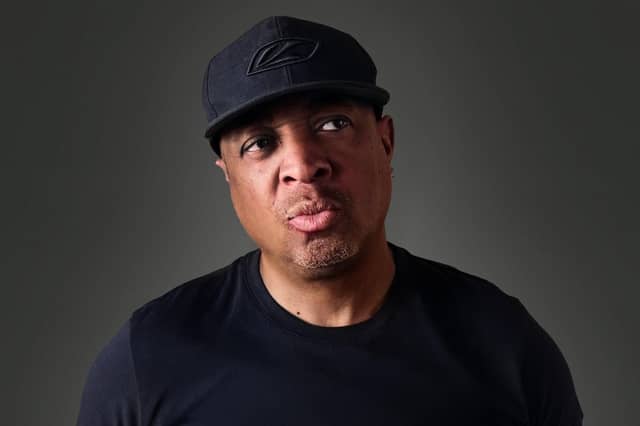

As frontman of one of rap music’s most enduring, outspoken and visionary groups, Chuck D is uniquely placed to offer an insight into how hip-hop has changed the world.
Now aged 65 and one of the genre’s elder statesman, the leader of Public Enemy will be sharing his thoughts on hip-hop’s rise at Leeds International Festival of Ideas.
Put simply, he feels that no other musical movement of the last 40 years has had quite the same cultural impact globally.
“It’s the culmination of a lot of different styles, a lot of different music, soundbites, stylistic imprints, also visual expression that has something to do with dance culture,” he tells The Yorkshire Post in a transatlantic phone call.
“So it’s been elements that (have) been talked about for ever – sights, sounds, story, style. MC-ing and DJ-ing, which are two completely different dynamic expressions from anything before, then you’ve got story and style, so those things go with the expression, definitely if you’re talking about graffiti art and dance culture.”
Back in the mid-1980s when Chuck – real name Carlton Ridenhour – met future bandmate Flavor Flav (William Drayton Jr) at Adelphi University in New York, he drew on the inspiration of such American musical giants as The Last Poets, Gil Scott Heron, George Clinton and James Brown. “It was all of them and some more,” he says. “We were adolescents in the Seventies, and children in the Sixties, so if you take that entire cross-section between 1964 and 1984, you’re coming up with the gods of music culture of the 21st century, that cross-section that influenced us as far as being record players, as far as being record selectors, and then going on top of that was something that we thought would add to the party.”
At hip-hop’s core has always been a strong sense of community. Block parties – neighbourhood gatherings, accompanied by music, to breed solidarity – helped spread the word, as says, Chuck, did “the culture of how the DJ on the radio talked to the community when there really wasn’t that total voice going to the community at that same time culturally at once”.
“The closest you come is to a preacher in a church that most people could attend,” he explains. “But when you had the radio playing the music there was also the voices of artists that was similar, it came close to that kind of congregation.”
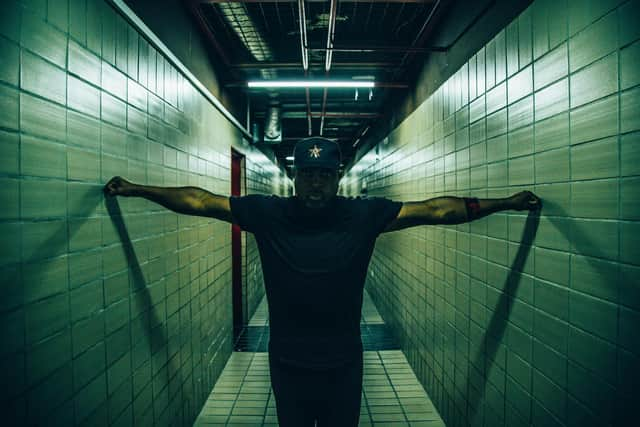
Throughout the past four decades, politics and social commentary have remained at the forefront of Public Enemy’s songs. “Well, you’ve got to have a song that says something,” Chuck D reasons.
But for him, rap has been more than just a way of addressing a lot of wrongs that he saw within American society. “We also address a lot of rights that go on around culture and community that was previously unuttered,” he points out. “So we address a lot of different things and that comes across in the voices that we speak and the volume of words that the artform exhibits. We were able to say a lot of things that were on our mind and let it out in dialogue. That’s one thing that made the MC really different and breathed.”
In the early days, Public Enemy’s approach was confrontational, with Chuck D and Flavor Flav surrounded onstage by a Minister of Information, Professor Griff, and their so-called Security of the First World, dressed in paramilitary uniforms. “Well, controversial is I’m loud as I am when I get a microphone, and my voice is different than most people, so obviously that’s going to be the first controversial thing that you hear,” says Chuck. “The first controversial thing that you see is black skin with volume, so that just comes with the territory. What you’ve got to do is say something that hasn’t been said or talk about something that needs to be talked about.”
The band crossed musical and racial boundaries, also finding an audience among rock fans. In 1991 Chuck collaborated with Anthrax on a version of Bring The Noise; this summer they toured Europe with Guns N’ Roses. “You got to be who you are, as simple as that, it wasn’t like we were calculated to just be controversial,” Chuck says. “When you’re going over to Britain, they’re a predominantly white audience, it’s the United Kingdom and I think the people categorise as Caucasian; it would be different if it was going to Nigeria.”
Perhaps surprisingly, Chuck seems at ease with the more commercial side of hip-hop, even if it seemed at times that the music industry was trying to co-opt the artform and dilute some of its messages. “No, I always felt the commercial part of hip-hop was great too because it kept the party going – and we come out of dance party culture, (so) why not?” he says. “It was just that I felt that in order for me to make recordings (commercial hip-hop) was something that would be crowded for me to do. Of course I could do it well – I come out of dance culture, I don’t come out of the science laboratory or the government channels.”
At the end of last week Public Enemy released their 17th album, Black Sky Over The Projects: Apartment 2025. It is a record that Chuck seems particularly proud of, telling The Yorkshire Post: “It’s a fantastic piece of work, I really enjoyed working with Flavor on this record.”
Forty years on from their debut Yo, Bum Rush The Show!, he feels there is still “a lot to say” about the state of America and the wider world. He’s also “encouraged that a lot of groups, a lot of younger artists, who are going to be around for the next 50 years, would also feel that there may be a comfort zone in saying what they see around them in their art”.
“For me myself and I it’s mathematically feasible that there’s 100 per cent chance I won’t be around for the next 50 years, so they’ve got to figure this out because they’re going to be around for those 50 years and I always thought that it’s not cool to leave them with a disaster on their hands,” he says.
“I think maybe the elders have failed them,” he sighs, “so you want artists to try to understand that they do have a gateway and an avenue to say what they feel, and hip-hop is fantastic at it.”
Chuck laughs mirthlessly when asked what he feels about the seeming slide towards authoritarianism under US President Donald Trump. “Number one, I don’t call him Trump, I call him 45/47 (signifying the order of his presidencies in US history),” he says, before citing historical warning signs.
“I think that the evils of the world follow history a lot closer than the people that need to follow history because the evils of the world at the control panels can make things go in cycles, they can pull a page from the past and use it in the future and manipulate masses off an old playbook. I don’t feel good about seeing things that I heard about before that people promised to the world that they’ll never see the light of day again pop up like it’s the brand new thing, so I got a problem with that, yeah.”
To those that have studied the 1930s it’s understandable to be “frightened”, he feels. “If you don’t study history it’s just something that doesn’t mean anything and you’ll be shocked by every little occurence, (thinking) ‘Oh my God’, throwing up an emoji at every turn.”
In a busy year, Chuck also released his sixth solo album, Radio Armageddon. “I had a ball with that, C-Doc is the Brian Eno of rap,” he quips about his productivity. He sees his solo work as “something quite separate” from Public Enemy. “It’s a tank for ideas and it’s a platform for presentation of other artists and I enjoy doing that. I’m really at heart a great behind-the-scenes guy. When it comes to being up front, if it can’t cast a light on new artistry I question myself what the hell am I doing?”
The author of six books on his own imprint, Chuck’s most recent work, Interficial ARTelligence Moments That Met Me, includes reflections of meetings with his greatest heroes and other public figures. Like many Public Enemy record covers, it also features his illustrations which he punningly calls “naphic grovels that cover what I see”.
“In my latter years, I don’t just write a song about what I see, I kind of illustrate a caption,” he says. “I come from a time when I was training myself how to be a political cartoonist well before I became an artist doing songs.”
Having studied fine art at Adelphi University, he says it has “no question” remained an important creative outlet for him alongside music. “It was not something that I (initially) delivered to the public, but it turned out to be the best use of social media rather than use it the same way everyone else uses it,” he says. “I found it was an unbelievable way to expound upon an opinion and reach people and that’s the way it came about of wanting a demand for my works. I’m not a painter per se, although I can paint; I consider myself an illustrator.”
Chuck D is in conversation with broadcaster and presenter Nihal Arthanayake at Leeds Playhouse tonight at 8pm. Leeds International Festival of Ideas runs until October 18. https://leedsinternationalfestival.com/
Public Enemy’s album Black Sky Over the projects: Apartment 2025 is out now.