
Meet the 'good Samaritan' Leeds builder who exposes dodgy tradesmen and claws back cash for victims
He’s helped over 500 people - including a Leeds grandma swindled out of her savings
A 'good Samaritan' Leeds builder who helps expose dodgy tradesmen has revealed his top tips to prevent homeowners from being caught out.
Graham Nash, 55, has helped over 500 people and clawed back over £650,000 for victims who have been scammed over the past six years.
He runs his own building company Builders Pinnacle, where he calls out cowboys on his social media pages and helps rebuild properties that have been affected at reduced costs.
Victims include Leeds grandmother Yvonne Elliott, 70, whose small extension he has agreed to rebuild after she lost her life savings after a 'cowboy' failed to erect it.
And Ryan Ward, 37, whose house was left a 'death trap on stilts' and £93,000 out of pocket after a builder left his property structurally unstable.
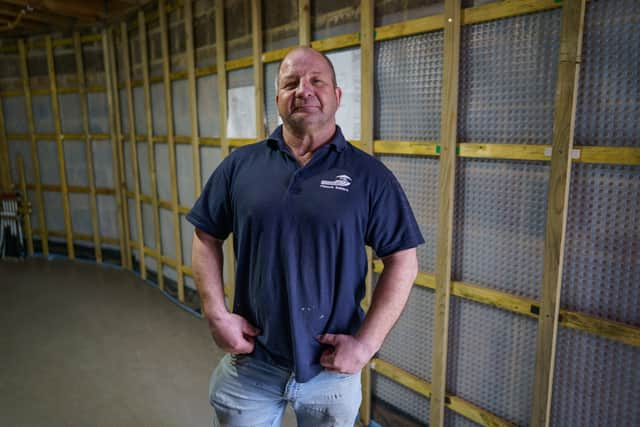

Graham, who has over 35 years of experience in the construction industry, has revealed his top tip is that homeowners must take advantage of social media to protect themselves from dodgy tradesmen.
He also says to never pay up front and with cash.
"You would be surprised at how much you can find out about a builder from social media,” Graham said.
"It is a great way to vet, do your own checks and due diligence to prevent yourself from being ripped off by any builder who has approached you about a job.
"It is great place to find builders now, the yellow pages is old school.
"You can easily find them by placing an ad in your local community groups a number will approach you, or finding builders that come up several times within any similar conversations."

Graham said before agreeing with a builder, get a "minimum of three quotations".
He added: "For me, it is a red flag if a builder can start the work immediately, within the next day.
"All the best builders I know are booked up months in advance. You should question why they have quick availability.
"It doesn't mean they are bad, they might have the time, but it could also mean they are struggling for work.
"You also need the quotations to make sure you aren't being ripped off, as they should all come in at a similar price."
Once you have the quotations, he says use social media to find out if the builder is "any good".
Graham said: "Search their name up and see if there are any bad reviews.

"If not it is important you message a couple of their clients who have posted about them online, ask them what they were like and if they had any issues.
"Or you can ask the builder for a previous client's phone number.
"This is really useful in building up a profile of them. Just because it says one thing online, it doesn't mean it is the truth, one of their clients might get back to you, saying to stay clear."
He then said to check on Companies House to see if it is a legitimate business.
Companies House is the government's register of all the UK's limited companies, which is available to the public.
He said: "You need to check the builder out on Companies House as he will only be there if he is a legitimate limited company.
"If they aren't registered, then it is a red flag, and you need to stay away.
"You can also use it to see any other businesses the builder has owned.
"I'd recommend making note of them and running them through social media or the internet, and messaging previous clients, as there may be a sinister reason he dissolved these other business."

Graham then suggests asking previous clients you have reached out to to see if you can do a site visit to check out their tradesmanship.
The builder said: "Once you have chosen one you think you are going to use, you need to go and see the work they have done.
"Just because you are on the site, doesn't mean they are rated, there still might be problems they have.
"It is important you check out the quality of their workmanship to make sure that is what you are happy with.
"They can also show you the proof of recipes and invoices, and the contract showing they are competent at their job."
Graham said one of his big tips is to never take a previous client's review of service by a phone call - take it as "code red" as it might not be the homeowner you are speaking too.
He said: "I have seen now a lot of builders are passing on phone numbers from family and friends for them to lie about their work so they can obtain the job."
Other tips Graham recommends are:
- Once the builder has provided you with a quotation, make sure it is broken down into segments for stages of work.
- Never overpay for staged work as the builder ma ybe front-loading the job to make sure that they cover their backs from the initial start of the work.
- Make sure the payment schedule is structured so it works fairly for the builder and for you, the homeowner.
- Never pay a builder fully up front first - as they could just run off with the money.
- Pay with a credit card, as then you will at least get the materials or your money back if there is a problem.
- Never pay in cash and always make sure that it is paid into a business account that is relevant to the person doing the work.
- Make sure you have a contract in place, signed by both parties, with a time scale of the work and how long it is going to take, and make sure you identify any additional work before starting. He says this is one of the big factors causing problems with builders and homeowners towards the back end of projects.
- Make sure you check their public liability and employers' liability.
- When getting work done on your own house, make sure you have the correct insurance before the builder starts.
- If there are any bespoke items like windows, steel, or anything that needs to be ordered for the project, rather than paying the builder directly by the supplier.
- Before starting any project, make sure that building control and planning permission have been granted for whatever work it is be it an extension or a new roof.
- If the work can be done under permitted development, you always need a building inspector to come and check and verify the work is okay and up to standard.
- Make sure to get your structural engineer to verify any timber or structural steel work that needs to be implemented into your property.