
Hero police officers recognised nationally for efforts to save heart attack victim at Leeds golf course

‘They played a major role in bringing him back from the brink of death’
Three heroic police officers have been recognised nationally for their efforts to save a heart attack victim at a golf course in Leeds.
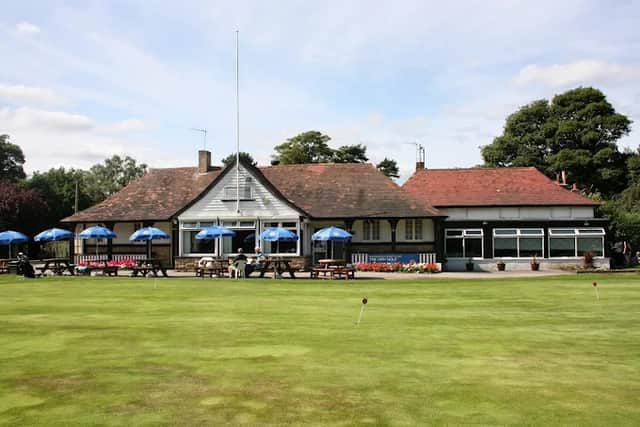
PCs Daniel Coleman, Olivia Mason and Hannah Stoves have each been awarded Royal Humane Society Resuscitation Certificates for their gruelling life and death battle at Roundhay Golf Club on the cold wet morning of October 28 last year.
They responded to the emergency call that the man had collapsed in a remote part of the golf course and when they arrived it took them ten minutes to run a mile over uneven grassland and woodland to reach him.
Sadly the man later died in hospital but he died with his family around him rather than on a remote part of the golf course.

Andrew Chapman, Secretary of the Royal Humane Society said: “Sadly the man died in hospital but the three officers who ran to the scene in atrocious conditions undoubtedly gave him the best chance possible of survival.
“They played a major role in bringing him back from the brink of death, albeit briefly, and giving him the chance to have his family with him when he died. They did an incredible and exhausting job.”
Upon reaching the victim, the trio began administering cardiac pulmonary resuscitation (CPR) in the fight to restart his heart which they kept up for 12 minutes until an air ambulance and paramedic reached the scene and the man, whose pulse had restarted was taken to hospital.
In addition to the awards they are to receive the three officers have also won the personal praise of Andrew Chapman, Secretary of the Royal Humane Society.
The roots of the Royal Humane Society stretch back nearly 250 years. Other than awards made by the Crown it is the premier national body for honouring bravery in the saving of human life.
It was founded in 1774 by two of the day's eminent medical men, William Hawes and Thomas Cogan. Their primary motive was to promote techniques of resuscitation.
“They richly deserve the awards they are to receive,” Mr Chapman added. “At the same time though there are many incidents where lives are saved and those involved never receive awards they deserve because their names have never been put forward.
“We appeal to members of the public if they hear of incidents in which lives have been saved, sometimes in circumstances where the life savers have put their own lives in danger, to bring them to our attention.”
Over its 252 year history, the awards has scheme evolved as it emerged that numerous people were prepared to put their own lives at risk to save others.
Today a variety of awards are made depending on the bravery involved.
The Society also awards non health care professionals who perform a successful resuscitation. Since it was set up the Society has considered over 90,000 cases and made over 220,000 awards. The Society is a registered charity which receives no public funding and is dependent on voluntary donations.