
'I see how work of NSPCC is transformational for children': Debra Radford on her journey from ballet dancer to changing lives

Debra Radford has spent 35 years with the NSPCC in Yorkshire, working to protect children in the region and championing their rights. Laura Reid speaks to her.
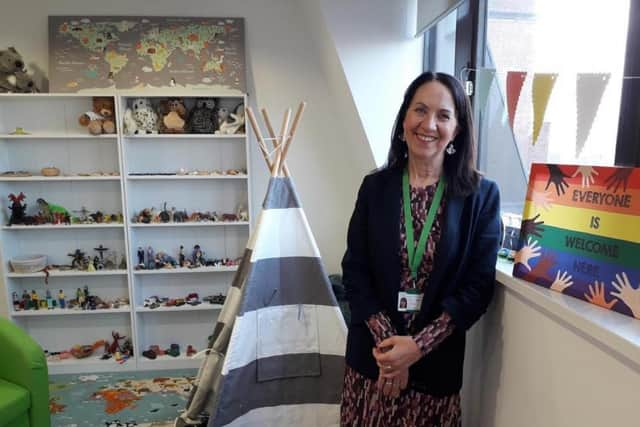
Debra Radford’s first stint with the NSPCC was as a 23-year-old student social worker on placement at a modest Portakabin ‘office’ in Basildon, Essex, in the 1980s. These days, she’s based at the charity’s modern hub in Leeds, overseeing its vital work to stop child abuse and neglect across the Yorkshire region.
"I suppose the way we work and the size of teams and who we're working with changes over time,” Debra reflects, as she marks 35 years since her first staff role with the charity in 1990. “But what's at the core and I think what has never changed is that commitment to working with children where child abuse and neglect has taken place and also trying to prevent that from happening in the first place. Being there for children, essentially.”
Debra was at what is now Hertfordshire University, undertaking a social studies degree alongside a social work qualification, when she first stepped foot into that NSPCC office. Straight away, she began working directly with children who had been sexually abused. “It was daunting to begin with,” she recalls, “but I knew this was the work that I wanted to do. That first role shaped everything that followed.”

“The work that the NSPCC were doing at that point with children and families, I could see the impact that it was having,” she adds. “I could see the commitment that the staff had to being creative and innovative and doing things to really try and make a difference to children’s, and families’, lives and I thought I really want to do that.”
After qualifying as a social worker, Debra worked for the local authority in Waltham Forest, London before returning to the NSPCC in York in 1990 as a Child Protection Officer. She later became a Senior Practitioner in Barnsley, championing children’s voices and rights for those living in the care of the local authority. In 1999, Debra took maternity leave to have her daughter Jess, but her passion for finding new ways to reach children never faded. Over the years, she has worked at both practitioner and manager level, and has pioneered the use of creative arts and therapeutic interventions, helping children to express feelings and experiences that words alone cannot always capture.
“Words can be really difficult to say – sometimes because children have been told what will happen to them or their family if they use the words or speak about it, but also because sometimes they just literally don't have the words to explain what's happened to them,” says 62-year-old Debra. “Also, once children have spoken about an abuse situation, they rarely want to sit down and just keep going over it. That's not helpful. What they most often want help to manage is how they feel and the impact (of the abuse) – and you can do that in lots of different ways...It's about finding the best way to help children recover and move on.”
A lot can be communicated through the creative arts, something that spoke to Debra’s background. “I trained as a classical ballet dancer. I was at stage school,” she explains. At 5ft7 however, she was on the tall side for the industry, at least back then, and after leaving ballet school, Debra studied for A-levels before working as a PA at a multinational company in London. “I very quickly felt that I wanted to do something more, that I wanted to try and work in a profession where I felt I could help people,” she says. “I was already doing voluntary youth and community work and began to read about different courses I could do and the social work one really spoke to me.”
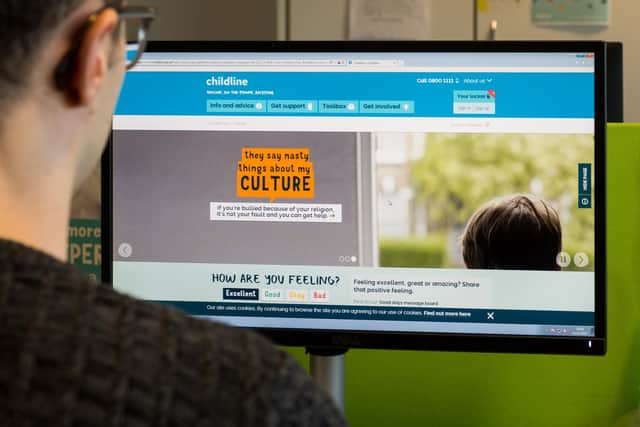
Fast-forward and for the last five years, Debra has been Assistant Director for the NSPCC in the North East, Yorkshire and Humber, responsible for the charity’s services in the region. These include therapeutic support for children who have been sexually abused, help for expectant parents experiencing anxiety and low mood, and support for mothers and children after domestic abuse, as well as community-based prevention projects. The charity also delivers the Speak Out. Stay Safe. programme in schools, helping children understand their rights and how to seek help if they feel worried or unsafe. At a national level, it also campaigns for policy change to improve the lives of children and ensure they are protected from harm, and provides the Childline and Helpline services.
A big part of the charity’s work, Debra says, is offering training and support for other organisations, professionals and volunteers who are working with children, to expand the reach of services “with a ripple effect”. “At the moment it is still absolutely the case, for example, that lots of children who've been sexually abused cannot access a specialist service or any service to help and support them if they need that,” she says. “It's sometimes just luck of the draw where you live if there happens to be a service...(But) it needs to be as available as any other kind of provision.”
One of the biggest changes Debra has witnessed over her time with the charity has been the development of technology, which has brought new challenges, and means that children are now also at risk of being targeted and abused by perpetrators online. Like many other charities, the NSPCC is also facing a great demand and need for services during a difficult financial climate, but despite the challenges, Debra is as committed as ever to the cause. “What has really enabled me to keep going in this work is that I know it’s transformational,” she says.
“It helps to put children's lives on track again. It helps to give parents the guidance they need to support their children...I think if every day was filled full of sadness, it would become overwhelming, but what you see is that children really want to move through and get back to living their life, being able to cope with what's gone on. And that's been very motivational.”