
'We couldn’t just stand by': How Kirkstall’s community rose from the devastating 2015 Boxing Day floods

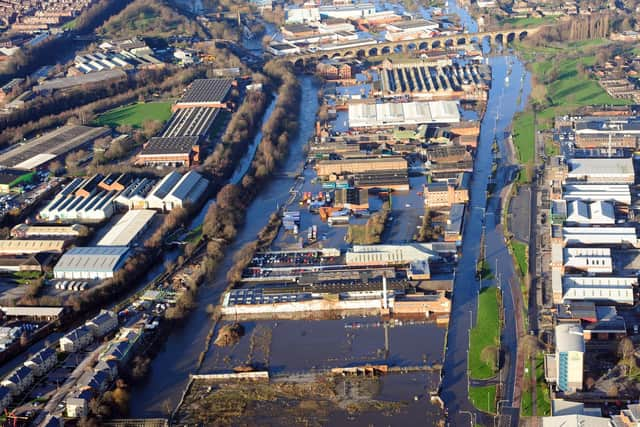
On the morning after the devastating floods on Boxing Day 2015, Kirkstall looked like a place time had briefly abandoned. Pavements were buried under thick, brown silt, shopfronts destroyed, and the smell of river water was everywhere.
But before the sludge had settled, people began to appear - some in wellies, some in pyjamas under hastily grabbed coats - carrying buckets, brushes, flasks of tea and trays of food.
What had been a scene of devastation only hours earlier was already shifting into something else: a neighbourhood refusing to wait for permission to begin again.


Among the first to act was Philip Marken, founder of Open Source Arts on Kirkstall Road. He wasn’t even in Leeds when the River Aire burst its banks - he was in Belfast visiting family - but the moment he saw the scale of the rainfall, he booked the first ferry back to England.
By the time he reached Kirkstall, the water had already swallowed the ground floor of his building, destroying half a million pounds' worth of equipment and materials accumulated over a decade.
But Marken’s instinct wasn’t simply to salvage what he could. It was to open the doors.
“We couldn’t just stand by,” he told the YEP. Even with his business in ruins, the mezzanine floor offered a dry, warm space. Within hours, Open Source Arts had become a resource hub where volunteers could gather, grab tools, share information, and simply take a breath before heading back out into the wreckage.
The logistics were improvised but effective. People arrived with shovels, jet washers, bin bags, and spare gloves. Others brought food.
Volunteers didn’t just come from Kirkstall - they came from across Leeds and beyond. Students, families, faith groups, and neighbours who had never spoken before. At The Climbing Lab, owner Andrew Tutin remembers how dozens of people came to help scrape mud from the flood and haul ruined timber out into the cold air.
“At one point, I think we had 50 people in the building just jet washing and scraping mud out the door and piling things up,” he said. “If it wasn’t for the help of so many volunteers, it would have been a much longer recovery process.”
There were surreal moments too - volunteers coated in mud and river water suddenly engulfed in clouds of icing sugar while clearing out a commercial bakery; a team of young men from a local mosque hauling waterlogged clothing from a collapsed warehouse.

By the end of the clean-up, around a thousand people had passed through Open Source Arts’ doors. The number might seem astonishing, but those who were there all shared a sense that the community had quietly decided it would not let its businesses and residents face this alone.
For Coun Fiona Venner, who had been elected only the year before, the days after the flood were a baptism of fire. She remembers arriving at Kirkstall Road and seeing the river flowing down the centre of the street. But what stayed with her wasn’t just the destruction - it was the speed at which people mobilised.
“What I remember really clearly was, there was kind of a real savage beauty to the river,” Fiona said. “But we had no sense at that stage, just looking at it, of the absolute destruction and devastation it would cause when the water finally drained away.
“But also just the incredible community response. Because we had 1,000 volunteers who came out, and some people came out every day for two weeks, all day, every day.”
Venner and her ward colleagues worked closely with the resource centre at Open Source Arts and various community groups to help direct volunteers to the businesses that needed them the most. The council’s own teams - highways, waste, cleaner neighbourhoods - were deployed rapidly, but she is clear that the grassroots response was indispensable.
“It was incredibly organised, incredibly fast”, she said. “The community response was powerful - and it taught us a lot about what people can do when they’re trusted and supported.”
Long-term effects and lasting change
The 2015 Boxing Day floods reshaped Kirkstall in ways that are still visible. Open Source Arts became more than an arts centre. In the years that followed, Marken and volunteers organised more than a hundred river clean-up days, pulling debris from the Aire long after the floodwater had gone.
Relationships between businesses and the council also deepened. Many owners who had barely known their neighbours before the floods found themselves working side by side for weeks. Some of those bonds remain today.
But the legacy isn’t only positive. Many businesses never recovered. Others reopened but remained uninsured for flooding, unable to secure policies at viable rates. Tutin said he still receives Environment Agency alerts, and while the new flood defences installed since have held firm, the warnings trigger a familiar knot in the stomach.
Across the industrial estate, flood barriers have become as common as roller shutters. Some businesses leave them in place over Christmas as a precaution - a quiet reminder that the memory of 2015 hasn’t faded.
A decade on, confidence is steadier but not absolute. The flood alleviation scheme has protected the area during several high-water events, and both residents and business owners acknowledge its impact.

According to Venner, the defences have prevented flooding even when water levels matched or exceeded those of 2015. But she also notes the emotional toll: years of anxiety, phone calls from business owners during heavy rain, and the knowledge that some people still carry the trauma of watching their livelihoods submerged.
For Marken, the fear hasn’t gone. When severe weather is forecast, he still checks river levels throughout the night.
“It puts you on high alert,” he said. And without access to flood insurance, many businesses know that another major event could be financially devastating.
But when people in Kirkstall talk about the floods now, the conversation almost always turns back to the same thing: the volunteers who worked tirelessly around the clock to rebuild the community.