
‘Streets turned into rivers’: How Kirkstall was hit by the devastating Boxing Day 2015 floods

Shortly after dawn on Boxing Day 2015, Kirkstall woke to an unwelcome surprise: the River Aire had spilled over its banks, flooding streets, shops, and homes.
What should have been a day of festive cheer quickly turned to shock and despair. Storm Eva’s relentless rainfall had pushed the river to record levels, leaving swathes of the community underwater and causing devastating damage to homes, businesses, and local infrastructure.
The floods left a trail of devastation across Kirkstall. For residents and business owners like Andrew Tutin, the impact was immediate and overwhelming.
He was just weeks away from opening his indoor climbing centre, The Climbing Lab, at Kirkstall Industrial Park. He recalls being about to sit down for a meal with his family when the first Environment Agency flood warnings appeared on his phone.
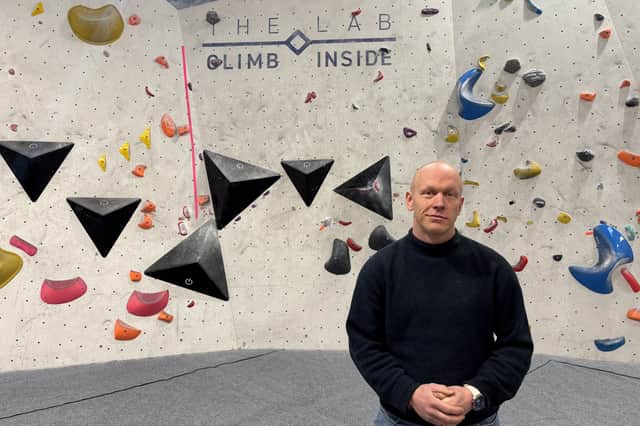

“We were still in the process of building the climbing wall,” Andrew told the YEP. “So we had all the equipment and tools out on pallets spread around the centre. We were just trying to lift everything higher, get everything off the ground.”
With water levels rapidly rising, Andrew and his team worked late into the night, wading chest-deep through the floodwater. Then things went from bad to worse. “I had to leave for the hospital because the water pressure outside made it impossible to open the door. The handle snapped off and sliced my finger open, so I had to pack up and go get it stitched.”
By the next day, the building was still flooded. “We couldn’t get inside at all. When the water finally subsided, the space was full of brown sludge, with structural timbers torn out. Everything we’d stacked up had floated into the main shutter, blocking the entrance - you couldn’t properly get into the building. It was just devastating.”
In the hours that followed, the community came together in an extraordinary effort to restore what had been lost. Hundreds of volunteers, both local and from further afield, put on their wellies and grabbed whatever buckets and brushes were available.
“We kind of got stuck in straight away, moving stuff, organising everything, and just trying to get the sludge out,” he remembers. “At one point, I think we had 50 people in the building just jet-washing and scraping mud out the door and pounding things up.
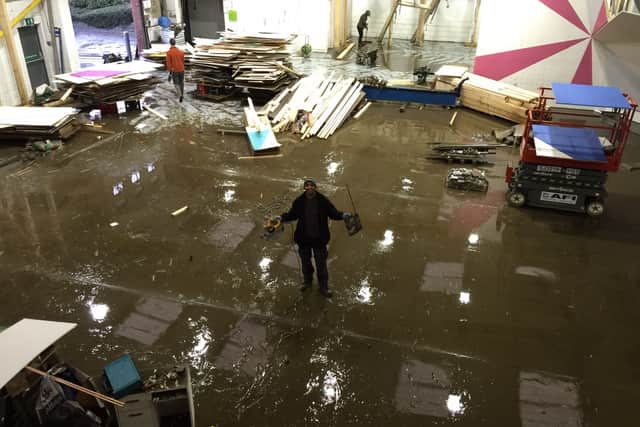
“I think if it wasn’t for the help of so many volunteers, it would have been a much longer recovery process.”
As the floodwaters continued to surge through Kirkstall, it quickly became clear that the devastation reached far beyond shops and businesses. Cultural and creative spaces at the heart of the community were hit just as hard.
At Open Source Arts, just a short walk from the river, founder Philip Marken and his team watched in horror as years of patient work and vital equipment were ruined forever by the rising torrent.
“I was actually in Belfast, visiting my family, when I saw the rain on the news,” Philip said. “I booked the first ferry back to England. But you can't really do anything when the water is actually rising.”
Despite efforts to move valuable items to higher ground, Open Source Arts lost a decade's worth of work. “We lost two shipping containers full of equipment, and everything on the ground floor - machinery, materials - gone in just a few hours.
“As a community arts organisation, we'd spent 10 years slowly accumulating what we had, and we watched it all be submerged in a couple of hours. It was very disheartening.
“There wasn’t any insurance for a flood, so we just had to start the process of building back up from nothing.”
Determined to help his community recover, Phil set up a central hub where volunteers involved in the clean-up could gather. “We decided to create a volunteer centre so that people who wanted to help had somewhere to come and pick up tools and equipment.
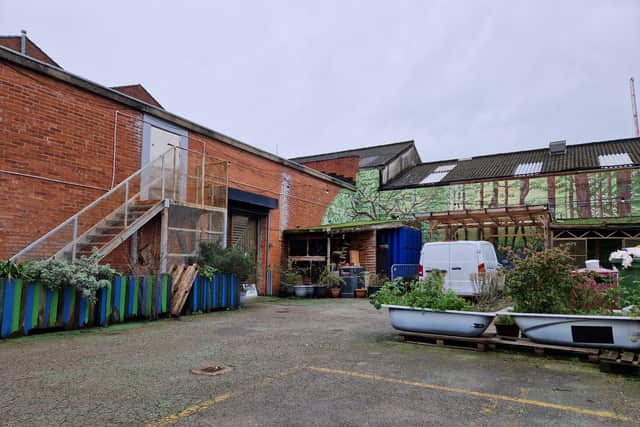
“We were lucky to have the mezzanine, which meant there was a dry space where people could sit down, have a cup of tea, and regroup. It became a base of operations, and we just did what we could.”
The clean-up effort eventually involved around 1,000 volunteers, many of whom were coordinated from the arts centre.
“At the time, it felt staggering. It felt like, ‘Wow, this is such an incredible response.’ I always expected it to happen because Kirkstall has such a strong community, and it's got all these other strong pillars of community interaction already.”
As the Kirkstall community waded into an uncertain clean-up, the scale of the disaster soon demanded more than neighbourhood goodwill alone. For local councillor Fiona Venner, it was a baptism of fire. Elected just months before, she was among the first to see the full extent of the devastation - streets transformed into rivers, the familiar landscape unrecognisable beneath a tide of mud and debris.
From the earliest hours, Venner and her colleagues faced the daunting reality of a public holiday emergency, racing to coordinate support, close dangerous roads, and marshal every available resource to help a community suddenly changed forever.
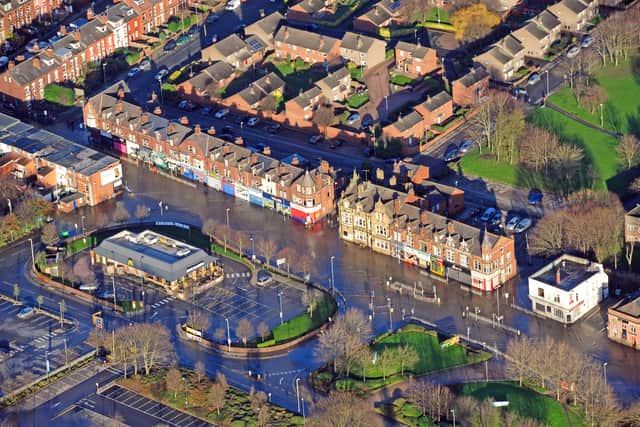
“We were standing outside the Cardigan Arms pub, and the river was flowing down the middle of the road. It was just the strangest thing,” she remembers. “At that stage, you had no sense, just looking at it, of the absolute destruction and devastation it would cause when the water drained away.”
In the days that followed, residents, businesses, volunteers, and politicians would show determination and community spirit as all those affected by the devastating flood came together to rebuild.
By the time the waters receded, over 2,600 homes and 650 businesses had been damaged, a stark reminder of the extraordinary scale of the Boxing Day floods and the challenge that lay ahead for Kirkstall’s community.