
Meet the Leeds museum curator caring for everything from giant pandas to dodo bones
She cares for an extraordinary collection of around 800,000 specimens
When Clare Brown describes her job, she does so with the kind of enthusiasm that instantly makes you wish you’d paid more attention in science lessons.
“I look after things that are a bit dead and really dead,” she laughed.
As one of the curators of natural science at Leeds Museums and Galleries, Clare cares for an extraordinary collection of around 800,000 specimens, from fossils and moths to giant pandas, polar bears, Tasmanian wolves and even dodo bones.
“If you think about the Natural History Museum in London, we’ve got a big collection like theirs just in Leeds, and I look after that,” she said.


It’s a role that combines science, storytelling and conservation, and one Clare never expected to find herself in.
After studying biology at university, she thought teaching would probably be her future, until a chance encounter at a careers fair changed everything.
“I met somebody who worked in museums and thought, ‘Oh my goodness, can I do this as a job?’” she said.
“It’s amazing because it’s so diverse. You get to work with incredible objects, but also you get to tell all those stories.”
Her passion for the natural world began young, inspired by school, the outdoors and a lifelong fascination with wildlife.
“I’ve always been keen on the natural world and the environment,” she said.
“I love walking in the hills and forests and all that kind of stuff.”
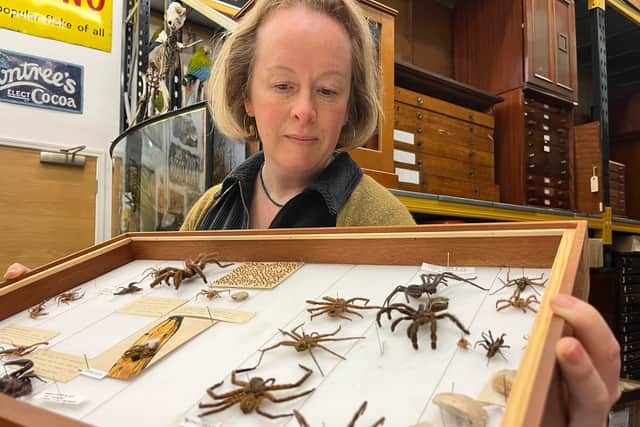
Leeds’ collection itself dates back more than 200 years, with collecting beginning in 1821, and Clare believes it is something the city should be hugely proud of.
She said: “We have tigers and giant pandas and polar bears and dodo bones.
“It’s an incredibly varied collection from all across the world. It’s amazing.”
Among the collection’s most remarkable specimens are its rare Tasmanian wolves, an extinct marsupial species wiped out in the 1930s.
“We have an incredible collection of Tasmanian wolves,” Clare explained.
“Our collections have moved from sort of bashing things on their heads for the enrichment of Leeds to helping real wildlife in the real world.”
But behind the displays visitors see, is a huge amount of work most people never realise is happening.
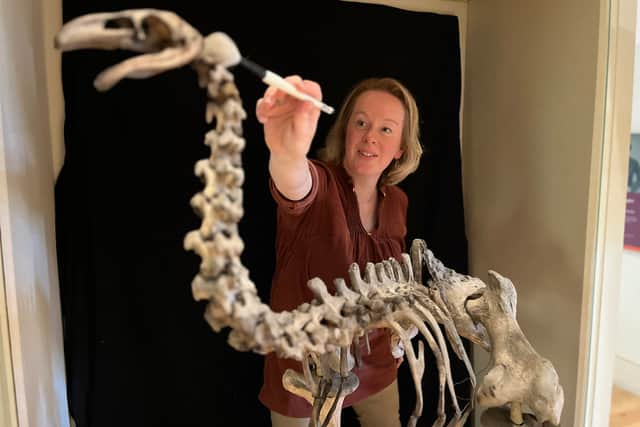
Clare’s days can involve creating exhibitions, cataloguing specimens, helping researchers and loaning items to organisations across the world.
“One day someone’s studying climate change, the next someone’s looking at species movement,” she said.
“Every day somebody has a new idea they want to come and look at our collections for. It’s fantastic.”
One researcher recently studied pollution levels using century-old birds from Leeds.
“We’ve got birds that would have flown through Leeds 100 years ago,” Clare explained.
“They’d have become coated in pollution, and now researchers can study that pollution today.”
Among the collection’s strangest stories are a pair of Humboldt squid eye lenses once used in a Peruvian mummy.
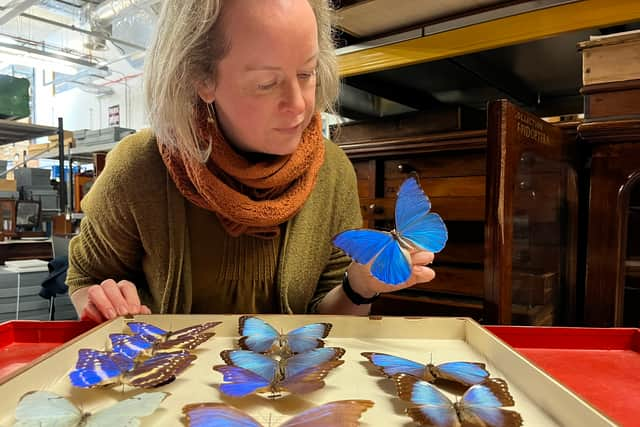
“They used them to make the mummy’s eyes look more alive,” she said.
“It’s very odd, but it’s quite a story.”
But for Clare, some of the most memorable moments are the human ones.
She recalled meeting a visually impaired boy during a museum session with bird specimens.
“He was feeling what a duck felt like and said, ‘Oh my goodness, I didn’t realise ducks had two legs,’” she said.
“There’s no reason he would know that if he’d never seen one. It really brought home the value of physical objects and being able to experience them properly.”
Despite assumptions that museum collections are “dead and dusty”, Clare says their role today is more important than ever.
“If you want to look at where we’ve come from and work out where we’re going, then you need museum collections because you can look back through time,” she said.
“Our collections are now helping scientists understand wildlife, climate change and conservation. I’m really proud to look after them.”
She is also passionate about making museums feel accessible to everyone, especially through places like the Leeds Discovery Centre, where visitors can tour the museum stores themselves.
“We have over a million objects in one room,” she said.
“There’s no glass cases, no interpretation, it’s just the store. It’s brilliant.”
And after years spent working among thousands upon thousands of specimens, Clare says the sense of wonder has never disappeared.
“Every day I see something I’ve never seen before. With biology, everything’s got a story,” she said.
Clare is also keen to stress how much museum ethics and conservation work have changed over time.
“We don’t collect animals and plants now for display,” she said.
“Our ethics have completely changed. We’re not industrial Victorians anymore, and we only collect for science. We are interested in conservation of wildlife.”
Above all, she says she feels lucky to be part of an organisation helping people connect with nature, science and the city itself.
“Leeds Museums and Galleries is a pretty impressive organisation. We inspire so many different people.
“And Leeds? It’s just the best city ever.”