
New book reveals unseen history of Yorkshire in the 1930s
This delightful new read allows you to step back in time ⏰
A new book set to come out next month will shine a new light on what Yorkshire looked like almost 100 years ago.
Britain in the 1930s by Steven Brindle and Maureen Hill uses over 900 extraordinary photographs sourced from the Associated Newspapers archive to offer an insight into pre-war Britain life.
For co-writer Steven Brindle, from Lancashire, working on this project was a way to delve into his own family history.
“I was delighted because this really connected to my parents and grandparents and my memories of them and the world they grew up in,” Steven told the Yorkshire Evening Post.
“Some of the pictures at first look like today but then you look at the details and so much is different. It’s both familiar and not, which is always fascinating.”

Each chapter of Britain in the 1930s is divided by region, offering space to show the striking contrasts between different areas within the same decade.
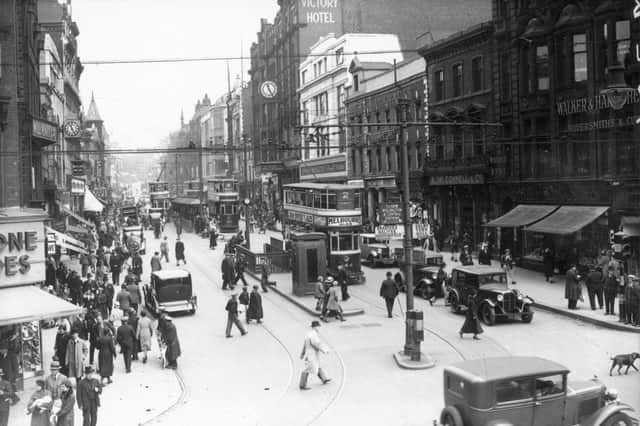
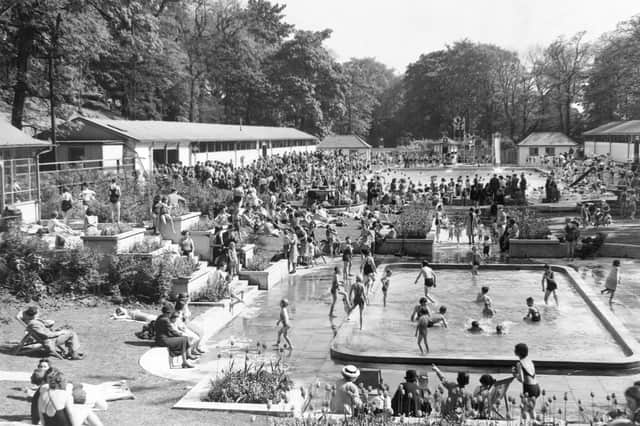
Yorkshire discoveries within the book include a throwback to large crowds waiting to swim and sunbathe at Roundhay Park, trams waiting at the junction of Boar Lane and Briggate, and Leeds Civic Hall when it first opened in 1935.
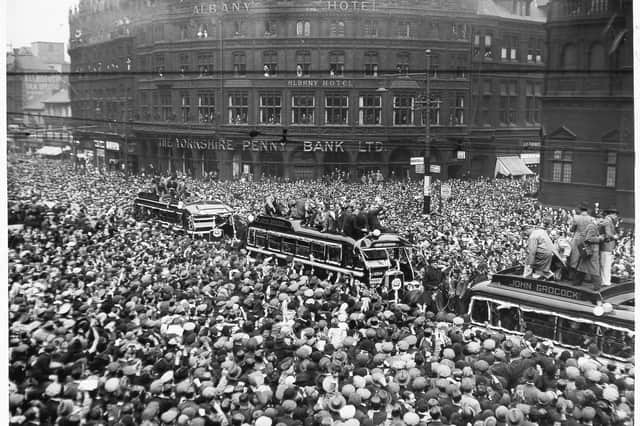
Elsewhere in the county, readers can expect to see unexpected gems such as happy fans lining the streets to celebrate Sheffield Wednesday’s 1935 FA Cup victory, and a busy Hull fish market with traders hard at work.
At the very start of Britain in the 1930s, co-author Steven spotlights Bradford-born writer J.B. Priestley’s idea of the ‘three Englands’ where he described the country as divided into three social and physical categories.
There was Old England, represented by cathedrals and manor houses; 19th-century England represented by industrial heartland; and New England represented by expanding commercialism.
This idea reflects how the 1930s was defined by its contrasts. While economic depression and mass unemployment devastated industrial communities in some areas, others had daily life transformed by prosperity, suburban growth and consumer culture.
Steven said: “Yorkshire had a very rough time in the 1930s with very high unemployment as a lot of the industries they were dependent on were quite old and no longer global.
“But if you look on the outskirts, there were large areas of suburbs with semi-detached houses and new electrical industries being established.”
Britain in the 1930s captures this exact juxtaposition. It displays both the severe economic hardships and unemployment areas faced due to the collapse of industrials like coal mining and shipbuilding, and how seaside towns came alive in the 30s thanks to the expansion of cheap rail travel and the emerging concept of paid holidays.
In the book, which is over 600 pages long, the photos do the talking, with captions used only to contextualise.
The aim is to give forgotten moments from ordinary lives a chance to be shared.
“It’s a book about every man and every woman in the ‘30s. A lot of history is written about the famous, the wealthy, or the aristocracy, but there are very few pictures [here] where you can actually identify anyone,” Steven said.
“I think that means people can relate to it a lot more.”
From technology to politics to culture, many things have changed over the past century.
Britain in the 1930s showcases the ways the nation used to look very different, yet it also revels in what connections we can find with our past.
Steven said: “We only live the lives that we do because the previous generation invented it. We still depend on the things that were built in the 30s. It’s all inherited.
“I think it's important to relate emotionally to people from the past and value them and appreciate them and love them for what they did.”
Britain in the 1930s will be available to buy from November 5.