
Plan to turn former city centre pub into HMO refused
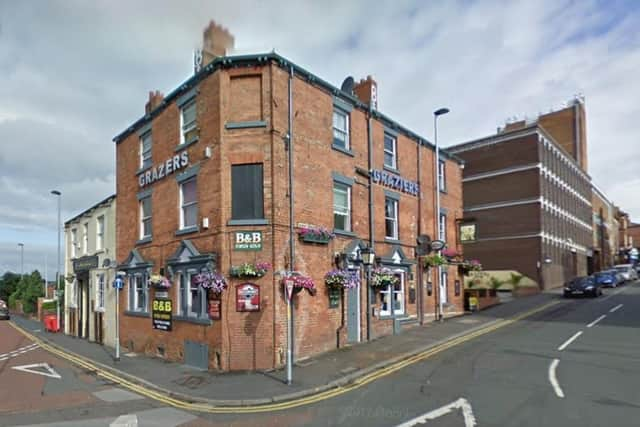
Proposals to convert a former city centre pub into a house of multiple occupancy (HMO) have been refused after more than 70 people objected.
Wakefield Council said plans to turn the old Graziers building into a house share for five people would lead to “a poor level of amenity for future occupants.”
A planning officer also said there would be a lack of shared social spaces within the property, adding that there would be “insufficient bathroom facilities.”
Residents opposed to the development said they feared it would add to anti-social behaviour problems in the area.

Others said it could deter new businesses from coming to the area and have a negative impact on regeneration projects.
The building, on Market Street, closed as a pub around a decade ago before being occupied by property firm Bridge-It Housing Ltd.
Wakefield Council approved an application to convert the upper floor into offices in 2017.
A further application was submitted by the company in June this year for a change of use of the ground floor to allow it to become a HMO.
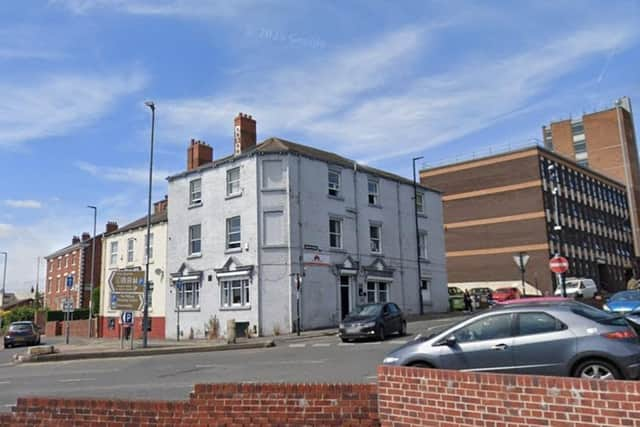
A statement submitted on behalf of Bridge-It Housing said the building “is currently a redundant office” as the occupiers had moved to new premises on nearby South Parade.
The report said: “Due to outgrowing office needs locally, the current owners have moved offices in Wakefield and wish to convert the ground floor to a five-bedroom HMO.
“The owners are Bridge-It Housing Ltd, a registered charity, and provide various types of housing throughout Yorkshire and Lancashire.”
The document said a change of the ground floor layout would be required for the development to go ahead but no alterations to the building were proposed.
It added: “The site is in the city centre and is therefore in a sustainable location providing affordable housing for people who do not have cars and can utilise city amenities.”
A total of 71 objections were lodged with the council, including three from local councillors.
One objector said: “While housing is undeniably important, the concentration of HMOs in this area raises significant concerns for the long-term health, stability, and identity of Wakefield as a community.
“HMOs often result in a transient population with limited ties to the local area.
“This undermines community spirit, weakens neighbourhood engagement, and can contribute to a decline in civic pride.
“Wakefield’s local infrastructure, particularly waste management, parking, and public services, is not equipped to handle the higher density of population that HMOs typically bring.
“This can lead to increased strain and reduced quality of life for existing residents.”
“Wakefield has a unique identity shaped by its mix of historical charm, independent businesses, and creative spaces.
“An influx of high-density, short-term housing risks diluting this character and replacing it with poorly integrated developments.”
A second objector commented: “Areas beyond Trinity (shopping centre) appear neglected and are in urgent need of thoughtful regeneration.
“The continued increase in HMOs only contributes to the area’s decline, exacerbating issues of neglect and instability.
“As someone who works in the city centre, I often find myself confined to my place of work due to safety concerns and a lack of meaningful amenities or attractions.”
A third objection stated: “Wakefield is already losing a lot of its hospitality and shops, so when members of the public want to try to uplift the area by providing entertainment, the effect could be bad.
“I have lived in Wakefield all my life and I am sad to see how it has become. Don’t let it get any worse.
“Wakefield business and night-life depend on footfall and many people are choosing not to come into the city due to worries about safety and crime.”
One person commented in support of the scheme, saying it would be “positive for the community” as “HMOs support those in need.”
An officer’s report said: “Although the scheme is generally acceptable with regard to design, highway safety and security, it is considered that the lack of shared social and amenity spaces, as well as insufficient bathroom facilities, would result in a poor level of amenity for future occupants.”