
'The Holocaust took my family - but my mum never showed any anger'
When Michelle Green remembers her mother, Lili, it is not fear or loss that comes first, but strength.
“She was an amazing, amazing woman who reinvented herself,” Michelle said.
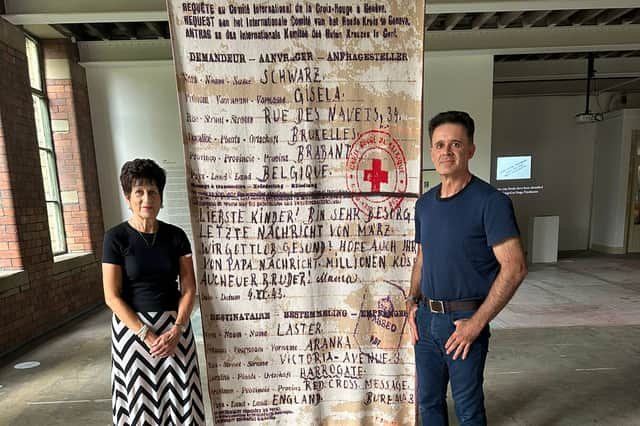

“A lot of Holocaust survivors just couldn't speak about their experiences, but she always talked to me. So I felt as though her story was actually my story.”
Michelle has lived in Alwoodley since the mid-1970s, but her story begins long before Leeds - in Vienna, where her mother grew up in a world of music, culture and beauty that was shattered almost overnight.
“My mum was a model in Vienna, in the Kärntnerstrasse, that’s like the Bond Street of London,” Michelle said.
“She modelled the most exquisite clothes. It was a very glamorous life.”
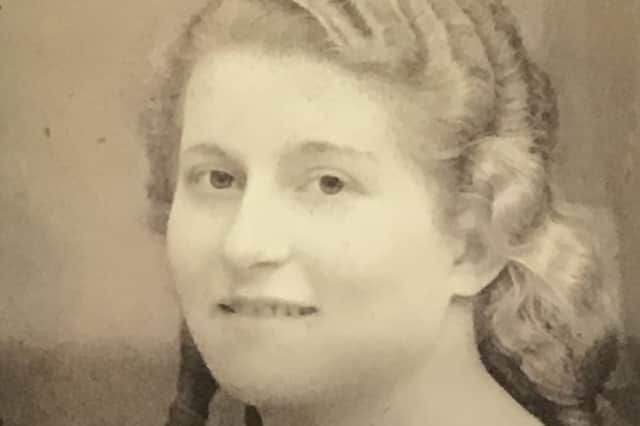
That life ended after the Anschluss, Hitler’s invasion of Austria in March 1938.
Jewish families were subjected to escalating persecution, making daily existence intolerable
Michelle said her aunt Aranka was dragged by the hair down three flights of stairs and forced to scrub the streets of Vienna.
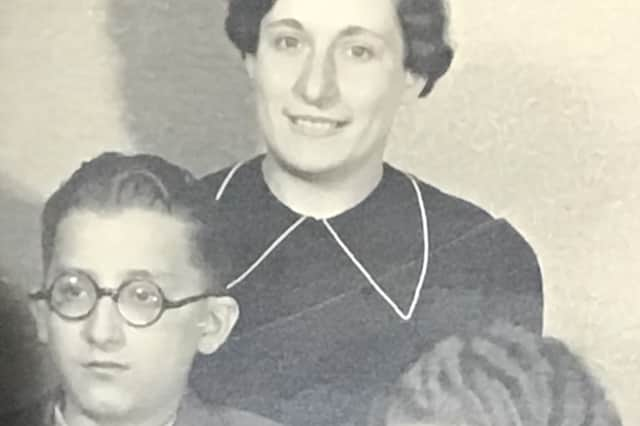
Aranka escaped to England in August 1938 on a domestic permit, hoping eventually to get the rest of the family out.
After Kristallnacht, Michelle’s grandfather Josef Schwarz was arrested by the Gestapo. Though he was later released, the family were thrown out of their flat.
“My grandparents and my uncle Kurt escaped illegally to neutral Belgium. My mum stayed behind,” said Michelle.
Staying behind was dangerous, but Lili refused to be passive.
Michelle said: “She was working with the resistance.
“She managed to get more than 10 men out of Gestapo prisons, including Dachau. But it was getting too hot for her, and she knew her life was in danger.”
On the day Lili left Vienna, the Gestapo came looking for her.
“The two officers arrived at my aunt’s flat and said, ‘Where is Lili Schwarz? She’s on our list.’
“My aunt said she’d gone to Italy. In fact, she’d gone to Belgium. That lie saved her life.”
Lili eventually reached England on a domestic permit.
“She arrived with $10, a suitcase and a hatbox,” said Michelle.
“From this incredible life in Vienna, she became a domestic servant in London. It was very, very hard.”
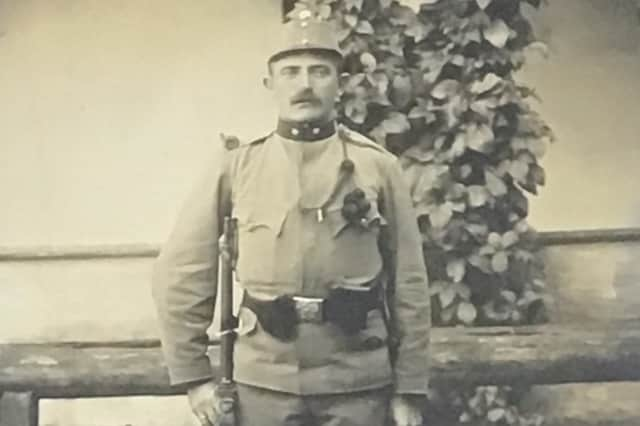
During the Blitz, Red Cross messages arrived from Josef, who had escaped Belgium for France before being captured by the Nazis.
Michelle said: “He wrote that life for him was terrible.
“He said he’d heard about the Blitz and begged them to leave London. He said if they could get out, it would make him happy.”
Lili and Aranka asked where the most beautiful place in England was.
“They were told Harrogate. So that’s where they went. And that’s where I was born,” said Michelle.
In Harrogate, the sisters worked at Bettys for two years, chosen personally by the founder, Frederick Belmont.
They later worked in local hotels, where Michelle said they encountered great kindness.
She said: “One hotel owner said, ‘I’ll put money aside from your wages every week.’
“He promised that after the war, he’d go with them to Belgium and France to find their parents and bring them back.”
That never happened.
Josef spent four years in French concentration camps before being deported from Drancy to Auschwitz on April 30, 1944.
Michelle said: “He survived camp after camp, and then he was sent to his death.”
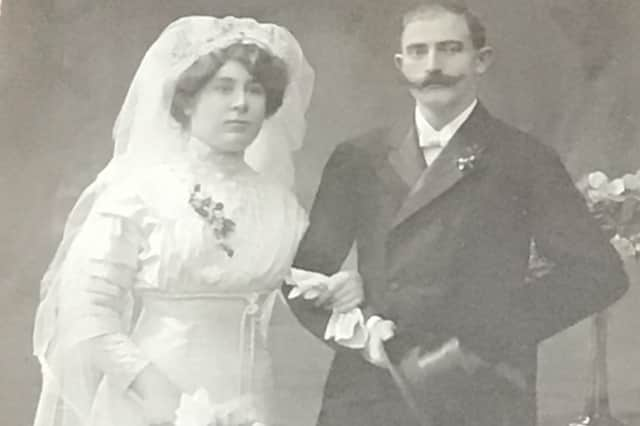
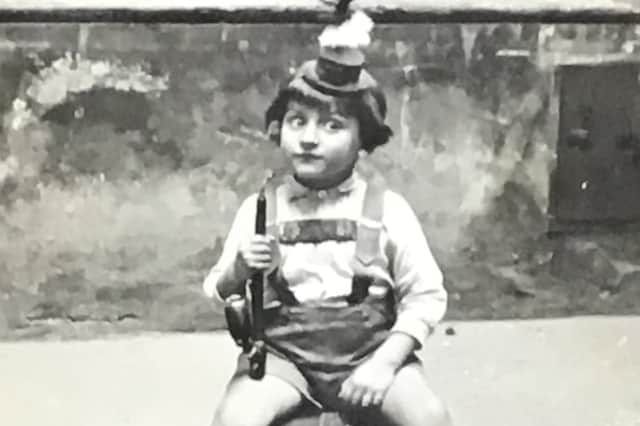
Gisela and Kurt went into hiding in Belgium, much like Anne Frank.
“They were denounced. They were taken to Camp Malines,” said Michelle.
Gisela was offered the chance to stay behind.
“She could have survived. But her son was 15 and on the list to be transported. She wouldn’t let him go alone. She nurtured him as a little boy, she just couldn’t let him face that by himself,” said Michelle.
On May 15, 1944, both were sent to Auschwitz.
“They were murdered,” said Michelle.
“All three of them died in the gas chambers of Auschwitz within weeks of each other. And Belgium and France were liberated just months later.”
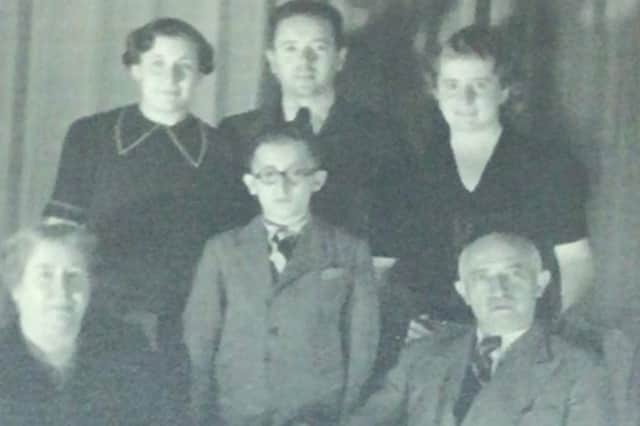
After the war, Lili rebuilt her life once again.
With Aranka and her husband Henry, she opened the Manor Hotel in Harrogate, a hotel that became known nationwide.
Michelle said: “People came from all over England. The cooking was outstanding. My mum and aunt worked so hard.”
Michelle was born at the hotel and describes her childhood as happy, but shaped by absence.
“I grew up without grandparents, without cousins,” she said.
“All my mum’s family were murdered in the Holocaust. That stays with you.”

After moving to Leeds, Michelle dedicated her career to education, eventually becoming head of learning support at Ashville College in Harrogate.
She said: “My mum always said Hitler took everything, but there was one thing he could never take - education. That stayed with me.”
Michelle now works closely with Holocaust Centre North in Huddersfield, speaking to schools and community groups across Yorkshire.
She said: “It’s so important to educate the next generation.
“The Holocaust didn’t happen by accident. It was planned, organised, industrialised, and the world stood by.”
One of the most powerful tributes to her family is a vast woven blanket at the Holocaust Centre, bearing the final Red Cross telegram sent by her grandmother.
Michelle described holding it felt like “hugging the grandma she never met”.
The legacy continues through her children and grandchildren. Her youngest granddaughter, Lilia, is named after Lili.
She said: “At her bat mitzvah, she told part of my mum’s story. That meant everything to me.”

Despite everything, Michelle says her mother never showed bitterness.
She said: “She never, ever showed anger.
“She believed you had a duty to make the best of your life and to help others. That was her legacy.”
That belief still guides her.
“We must never forget the Holocaust. And we must never be bystanders. We’re all human beings. We all belong to each other,” said Michelle.
“Anti-Semitism, intolerance, prejudice, must be eradicated.
“People must be educated to know that no matter where you are, what you come from, what your background is, we're all one people.
“We should all work together for the betterment of society. That's the most important lesson of the Holocaust.”