
Wakefield: 'This is our opportunity' says councillor over plans to demolish Ridings shopping centre and change face of city

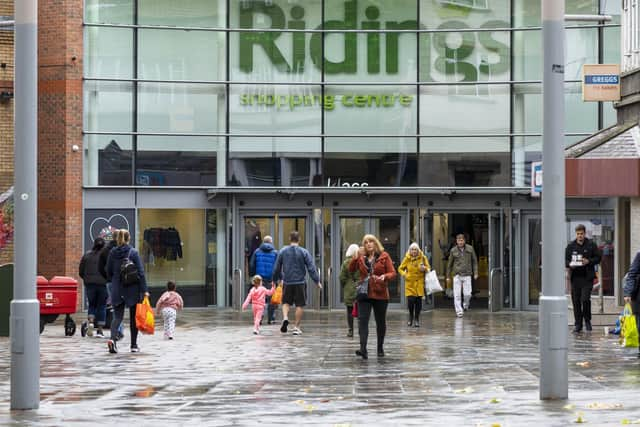
Those who regularly frequent the city centre of Wakefield will almost certainly be familiar with The Ridings.
It was the inspiration for shopping centres across Europe when it opened in 1983, boasting the first food court in the UK and the first glass wall climber lift, which proved so popular that people would queue up to use it and admire the water feature installed at its base.
What stands today is quite different in character from those early years and The Ridings’ heyday, but for more than 40 years, the mall has remained at the heart of the city centre.
Now its days are numbered. Last month, senior councillors in Wakefield agreed to acquire the centre to make way for a multi-million pound regeneration project, with plans for new homes and leisure facilities as part of a scheme expected to take over a decade to complete.

The work also involves bulldozing 1960s residential tower blocks as part of the creation of a new ‘Cathedral Quarter’, the first phase of which is being funded through £17.9m from the Ministry of Housing, Community and Local Government.
Two weeks ago, however, council leaders were told to reconsider the plans to buy and demolish The Ridings after a scrutiny committee took the rare step of referring proposals back to the authority’s cabinet.
But cabinet members voted unanimously in favour of pressing ahead with the scheme.
The proposed development will include a new public square and green spaces aimed at families, leisure and hospitality facilities, a cinema, and a new library and museum.
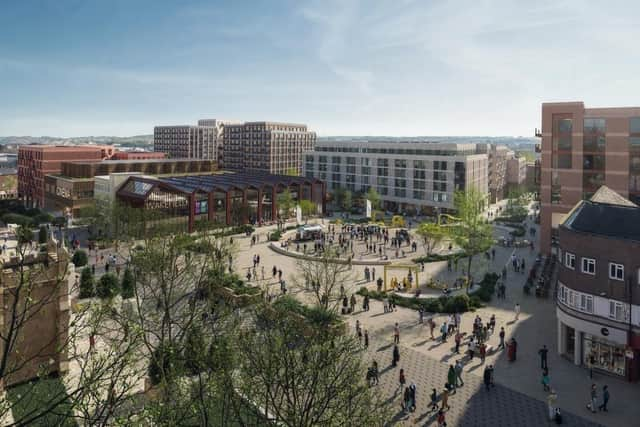
Nearby residential tower blocks, currently owned by Vico Homes, would be replaced by around 200 modern, sustainable homes for residents in the first phase of redevelopment, the local authority said.
Coun Jack Hemingway, Wakefield Council’s deputy leader and cabinet member for regeneration and economic growth, says it is a “once in a generation opportunity to transform the city centre”, but some opposition councillors have claimed the project will pose a “financial risk”.
The plans were unveiled in February, just weeks after Marks & Spencer announced it would be moving out of The Ridings and opening a new food hall on the outskirts of the city centre. Primark is also expected to leave The Ridings later this year.
Coun Hemingway acknowledges the centre has been a huge part of the city, but says it has faced “significant challenges” with the rise of online retail and a decline in footfall.
“I’m born and raised in Wakefield. You remember the glass elevator. You remember The Ridings as it was in the 80s and 90s and when it was a much more vibrant and alive shopping centre. Change is always difficult.
“My worry is if we don’t grasp this problem, if we don’t create a new future for that part of the city, if we just keep The Ridings going as it is, then it will decline even further. And we will end up with an empty shopping centre in the heart of the city that could become a focal point for anti-social behavior that will blight the city and that will deter investment.
“As much as we all love The Ridings, as much as we’ve many happy memories there, we have to look to the future and create a new more sustainable economy for that part of the city.”
The city centre has seen a number of redevelopment projects take place in recent years including regeneration of the waterfront area, the transformation of the former market hall into a cultural and community hub known as Wakefield Exchange and the creation of the mixed-use Merchant Gate development next to Westgate railway station, with restaurants, homes, CAPA College and the Wakefield One council complex.
In Trinity Walk shopping centre, a fit-out is now underway on a bowling and entertainment complex with karaoke, laser tag, escape rooms and a bar, and a new hotel is planned for the site of the former Westgate station.
But “you can’t have any fundamental transformation or change in Wakefield without addressing The Ridings,” Coun Hemingway says. “Because when it was built, it occupied an absolutely huge footprint.”
“There’s so much empty space within there,” adds Clare Elliott, service director for Economic Growth and Skills. “Every time we do consultation, the public are asking for leisure, they’re asking for green space, and are asking for more things to do with families. And quite simply there isn’t the space in the city centre as it stands to respond to that.”
The authority says it is working to support businesses whose current sites would be impacted to still have a future in the city if they want to stay in Wakefield.
The Silly Goose, for example, a newly-launched entertainment bar in The Ridings with activities including axe-throwing and darts is “exactly the kind of business we want”, says Clare. “We’ve had a couple of meetings with that business individually to make sure they understand they are absolutely part of the future of the city centre.”
The council says it is also working closely with Vico Homes to ensure residents will be rehoused within the city centre in the first phase of the Cathedral Quarter development.
Housing is a key part of the scheme. “This will bring people in to live to spend more money in the local economy and really just create a sense of vibrancy in a part of the city that at the moment doesn’t have it,” Coun Hemingway says.
“And once you have a higher skilled workforce living in the city centre, you then have a chance to fundamentally transform the businesses that are attracted to Wakefield so we can start making an impact on salaries and skilled jobs which is really important,” Clare adds.
The council has said it plans to launch “an extensive public consultation programme” giving residents, businesses, and anyone with an interest in the city centre a chance to help shape the final designs.
“We want a vibrant place where people can come and do business, where people can dwell and (with community space) where people feel that they don’t necessarily have to spend a fortune,” says Coun Hemingway. “We want people to be able to come into Wakefield and feel it’s their city, and to be able to enjoy spending quality time with their family there. It’s about creating the economic future that businesses need, but also supporting residents to have somewhere they can be proud of.”