
'We're a lifeline for a lot of women': Asha Neighbourhood Project's first CEO reflects on its 40 years in Leeds

The Asha Neighbourhood Project has been supporting women in South Leeds for 40 years. Its first CEO Alia Nessa tells Laura Reid about its impact.
For 40 years, it has stood unassuming in the heart of the community it serves. Two terraced houses merged together in a row of residential properties in Beeston. From the outside, there are subtle nods to the building’s role as a community centre. Inside the doors of the Asha Neighbourhood Project, lives have been changed.
Asha launched in April 1985, created in response to the needs of Bangladeshi people in South Leeds at the time and to support integration into the local community. Taking its name from the Bengali word for hope, the centre, led and staffed by women, has evolved over the last four decades but at its core, Asha has always been about empowering and supporting women and their families.
"It’s really about empowerment, engagement and education,” explains Alia Nessa, the project’s first CEO, speaking as Asha nears the end of its 40th anniversary year. “It’s about creating a better future and supporting women to be part of civil society in Leeds...It shouldn’t matter where you live, who you are and your income, you should be able to thrive and have opportunities like everybody else.”
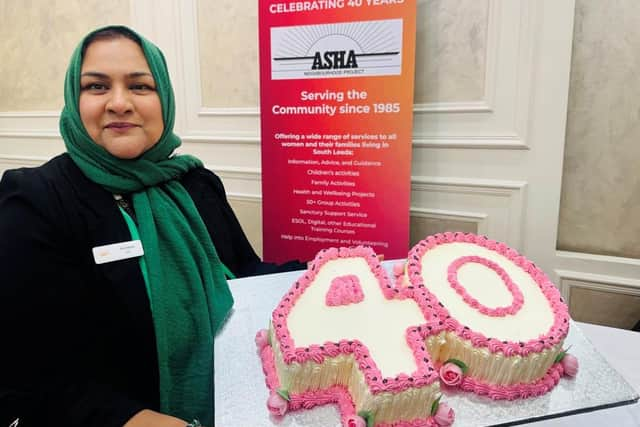

Asha’s work has focused on building confidence and self-esteem, reducing the effects of poverty and developing social and employment skills. It offers advice and advocacy services around things like welfare benefits, housing, domestic abuse and immigration; educational courses in subjects such as learning English and IT skills; health support, exercise activities and lifestyle initiatives; and it runs a number of social groups and events.
Through play schemes and day trips, Asha also offers opportunities for children and young people to learn and play – and it’s through this arm that Alia was first introduced to Asha, as a teenager living in the area. One of seven children born to parents that came to Leeds from Bangladesh and ultimately brought up by a single mum, Alia at the time was caring for her mother, who had undiagnosed mental health issues. It wasn’t easy to concentrate at school and she’d spend her lunch breaks nipping back home to check in on her mum.
Asha helped Alia to find a sense of belonging and identity, and build her confidence. “I wanted to escape being a carer, be with my friends, meet new people and do different things,” she says. She was involved in a number of creative projects and even experienced a residential weekend away on Scotland’s Isle of Arran. There, she took part in outdoor activities including rock climbing, canoeing and abseiling. Just travelling by minibus and ferry was new and exciting.
Now 51, Alia credits Asha with building her self-esteem and resilience and opening her eyes to new opportunities. It was as a result, she says, that she went on to study at university and later to forge a career in the third sector in Leeds. “A lot of girls at the time left school and got married at 16 or 17. (Asha) made me want more from life, to see the world, to get opportunities, to go to university. I gained that drive,” she reflects.
Alia studied a degree in environmental science, which included a placement abroad in Sri Lanka, where she spent time in tropical rainforest. Whilst over there, she also got involved with a centre supporting refugees and orphans, giving her a first taste of community work.
It was back home to Leeds then, where she did a postgraduate degree in development studies and Alia has since spent 25 years in the third sector, including with Health For All, Shantona Women’s Centre, Better Action for Families and Getaway Girls.
Last year, she became Asha’s first CEO, after years of being a trustee. It was a full-circle moment. “It means everything, I’m so passionate about this,” she gushes. “Asha was to me about where I could make a real impact. I’ve lived it, it’s the community I grew up with, I know the needs.”
Alia, who is also a counsellor and psychotherapist, has a bold vision for the next five years – a new, more accessible, centre after four decades of operating in Asha’s current building. Key, however, will be remaining in the South Leeds community that Asha supports. In a new space, Alia envisions a therapeutic addition to Asha’s services, as well as a cafe where women can harness their cooking skills and where the wares of their crafting and sewing can also be sold.
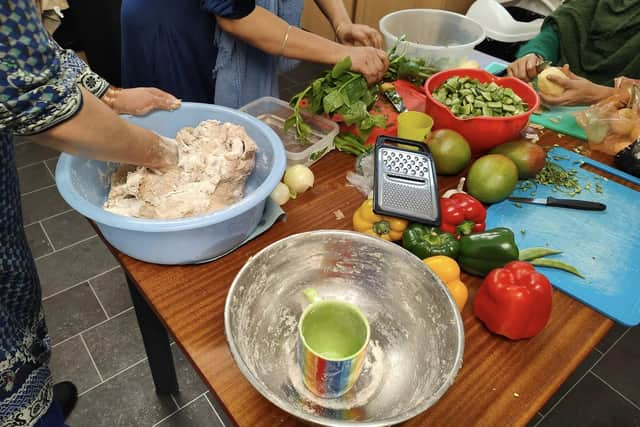
“We’re in a very difficult time in the charity sector because we’re all going for the same little pots of funding,” she acknowledges. But Asha has received cash from various sources. A pot from Comic Relief, for example, is supporting the running of workshops on everything from personal finance to CV writing and healthy cooking, whilst money from The Wharfedale Foundation is helping Asha to recruit and train volunteers to support the local community, whilst also boosting their own employability.
In its 40 years, Asha has supported around 120,000 women and their family members, across 54 different ethnicities. It has hosted 10,000 educational classes and courses, nearly 10,000 support group sessions, 500 trips, and 98,000 advocacy and advice appointments.
Alia knows its life-changing value and her remit is to safeguard the organisation years into the future, so more people can feel its benefit. That means it’s time to shout louder about Asha’s work, she says. "We’re not a big organisation and we’re too busy doing the work on the ground to get our name out there, but we’re making a difference. We’re a lifeline for a lot of women.”
"We want women to feel happy and to have opportunities to thrive and not just survive,” she adds. “That’s what it’s all about.” - Visit ashaneighbourhood.wordpress.com