
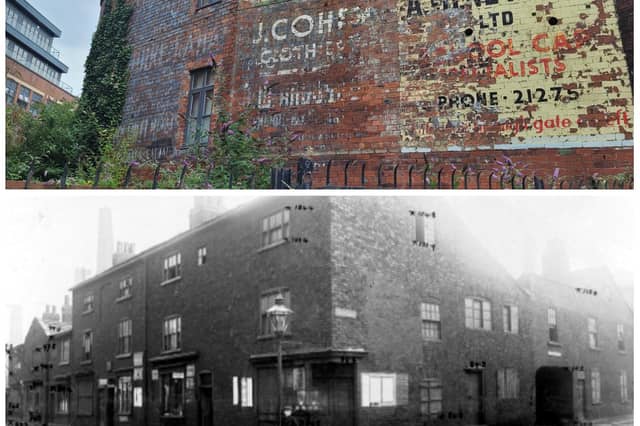

It was home to a close-knit community of families, as well as an iron foundry, mill and timber yard.
The saw mill was the last major link to the area’s industrial past, as it became home to Howarth Timber, before eventually making way for the Gateway hotel and residential development in the 2000s.
While you may not see it listed on many maps today, some relics of Steander’s past still exist to this day.
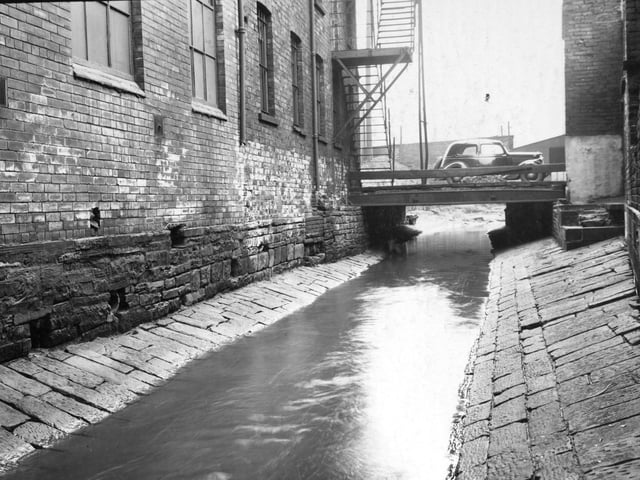
7. Timble Beck, Steander
Timble Beck once ran through Steander, and provided water to businesses in Steander, and flowed out into the River Aire close to Fearn's Island. However, the beck was culverted during the 20th century, and now cannot be seen. (Photograph by kind permission of Leeds Libraries, www.leodis.net) Photo: Leodis
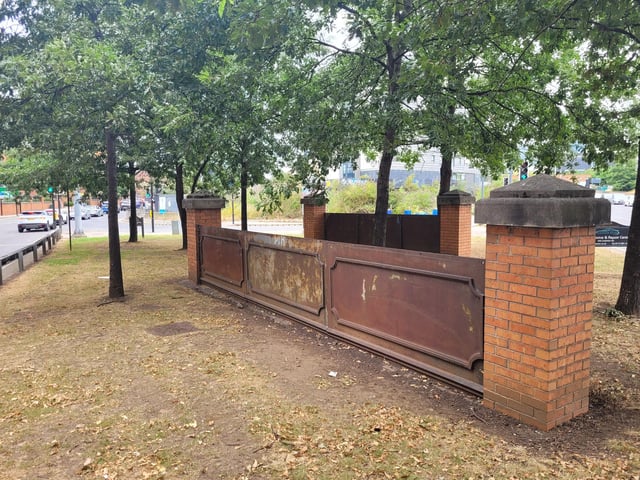
8. 20220723_140921[1].jpg
Despite Timble Beck no longer being visible. Two bridge panels remain on a traffic island near East Street, where the bridge over the beck originally sat. The panels themselves were even manufactured in the iron foundry, just yards from where they were placed. Photo: Richard Beecham
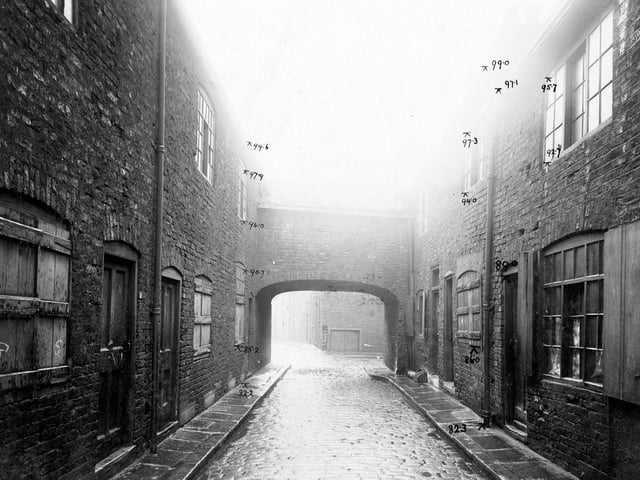
9. Steander Bow
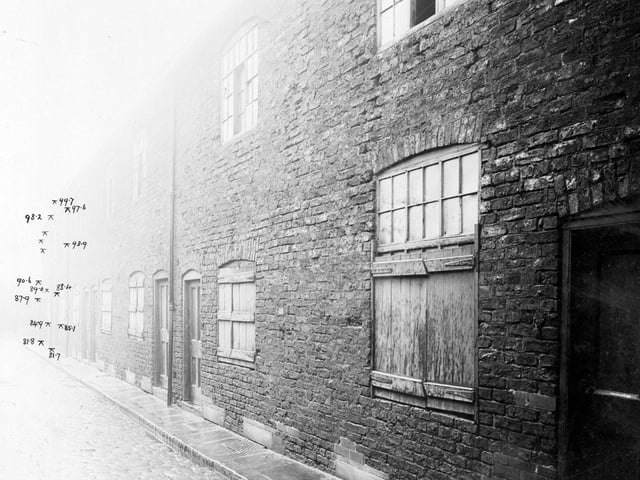
This photograph of Steander Bow was taken in 1905, and will have been demolished soon after. According to the census from 1901, 17 individuals were still living on the site. A map published in 1921 shows the entire site of Steander Bow and the neighbouring Steander Row had been demolished and replaced with a saw mill. It is now part of the Gateway flats and hotel complex. (By kind permission of Leeds Libraries, www.leodis.net) Photo: Leodis
10. Steander Bow
This photograph gives a tiny glimpse of the cramped, poor quality Victorian-era housing the residents of Steander had to live in. (By kind permission of Leeds Libraries, www.leodis.net. ) Photo: Steander Bow from East Street