
“You have to stand up for what's right.”: Meet the Leeds Women in Black remembering lives lost in Palestine
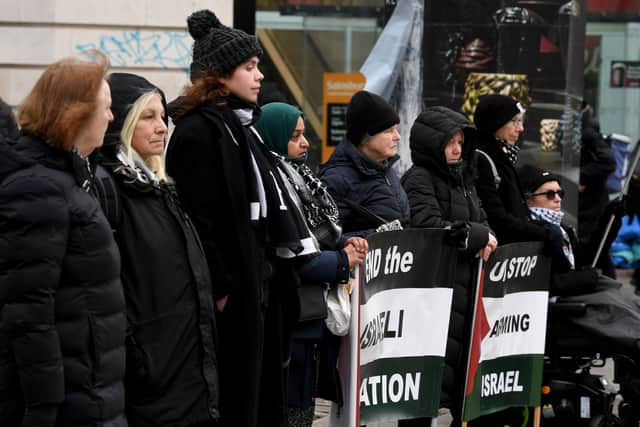
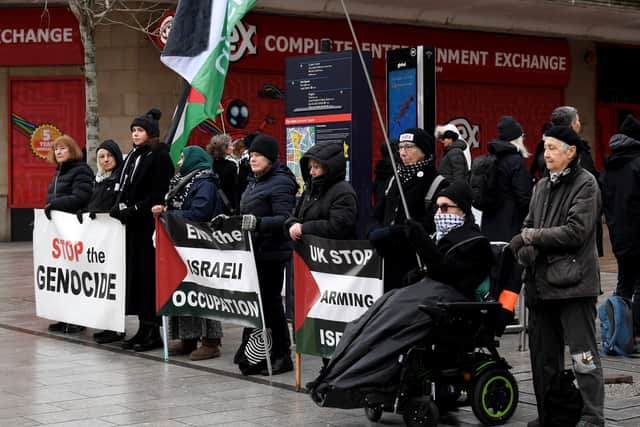
Against the sound of cars and conversations, a group of women stand in Leeds City Centre in complete silence. For one hour every Tuesday for the last seven years, they wear all black as they protest the occupation of Palestine. But who are the Women in Black?
Inspired by the Women in Black, a group of women in Jerusalem who have held vigils to remember the lives lost in the Israeli-Palestinian conflict since 1988, a group in Leeds have been steadfastly supporting the rights of Palestinian people while also mourning all victims of the conflict.
One of the group’s founders said: “We wanted to follow in the footsteps of the women in Israel.
“It was about six or seven women to begin with, that’s how it all started and it’s built its own momentum.”
Now, every Tuesday, more than two dozen women stand in Dortmund Square at lunchtime to campaign for peace in Palestine.
The protests were originally held monthly, then fortnightly, and now weekly, and the number of regular attendees has grown over the year.
One member of the group, Alison Phelps, was inspired to join by the previous activism of her mother’s cousin, who worked as a paediatrician in Nazareth and became a founding member for Medical Aid for Palestinians.
Alison said: “As I’d learned more, what she’d done, I valued who she was.”
“It was out of huge respect and delight to find that I could in a small way continue.”
Another member, Pamela Dub, a nonreligious Jew felt her background and politics compelled her to be involved.
Pamela said: “My parents were refugees from Vienna and they were non-religious Jews but they got out.
“As a Jew I cannot understand how having suffered through the Holocaust, you can do the same to someone else.”
While most of the women part of Leeds Women in Black live within Leeds, some travel from further afield to be part of the protest.
For example, Cath Kibbler regularly travels from near Selby to Leeds every Tuesday to be part of the protest. She made this choice because she felt she “just had to do something” to stand up for the rights of Palestinian people.

The conflict between Israel and Palestine is one of the longest running and most violent disputes in the world, and it stems from competing territorial claims.
Leeds Women in Black, believe the conflict is a humanitarian issue relevant to people from every nation.
Holding banners such as “stop genocide” and “permanent ceasefire now”, they campaign for peace for all people in the region.
For member Viv Anderson, the group’s protest is a chance to teach the public more about the long-lasting conflict between Israel and Palestine.
Viv said: “For me it’s about education. It’s to bear witness and to let people know what is happening.”
Alongside educating others, Leeds Women in Black work to educate themselves on the Israeli-Palestinian conflict through reading as widely as possible, sharing resources with each other, and hearing first-hand experiences from those affected.
A majority of the members of Leeds Women in Black are between the ages of 50 and 70 and have a history of campaigning for causes they believe in from the Campaign for Nuclear Disarmament to women’s rights protests.
When engaging with the public, Leeds Women in Black have had mixed reactions. Some have shouted abuse in the street, while others have impulsively joined the protest.
Cath said: “In the short time that I’ve been part of the group, I feel there’s been a change in opinion. Now we get more positive support.
Alison added: “We get thanked a lot and there have been really moving moments of people bringing bottles of water or umbrellas.”
The members of Leeds Women in Black see their protest as a way to consistently keep Palestine in the public consciousness.
They protest each week because they feel they have a “moral imperative” to do so.
One member said: “None of us have any illusion that we’re going to transform lives but what’s the alternative? You might look back and think maybe what I did didn’t make a difference but at least I did something.
“You have to stand up for what you think is right. That’s all you can do.”