
Council could sell up to 150 public buildings and assets by 2029
Proposals to “accelerate” sales have been put forward
Wakefield Council looks set to sell more public buildings across the district as part of cost saving efforts.
Senior councillors have been asked to vote in favour of proposals to “accelerate and streamline” disposals from the authority’s portfolio of more than 1,500 assets.
A report said the Reform UK-led authority could “realistically deliver” between 100 and 150 sales by December 2028.
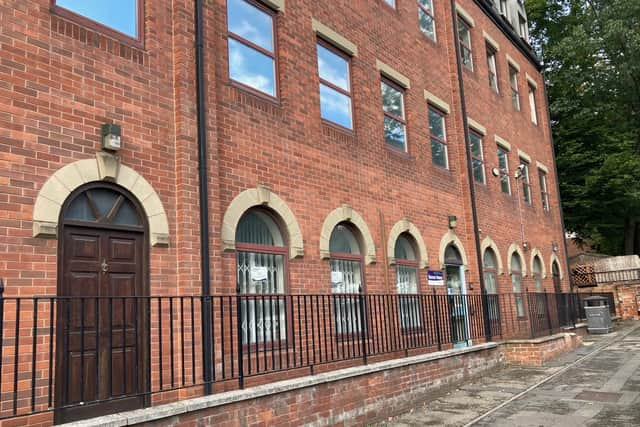
According to the document, feasibility work is already taking place on the potential disposals of Pontefract Municipal Offices, Castleford’s Five Towns Resource Centre.


Normanton Block C offices and Queens House, in Wakefield city centre.
The report said: “The council’s property portfolio should be as lean and high performing as possible.
“This means having clarity on what should be retained, invested in and what should be sold.”
A number of high-profile building disposals were approved under the previous Labour administration, including Woolley Hall, which sold at auction last month for £1.5m, and Castleford Civic Hall, which is to be demolished to build education facilities.
Just over £6.5m was generated from the disposal of 18 assets during the last financial year and the council made almost £17m from 32 disposals during 2024/25.
But the report said the authority’s portfolio “remains significant”, as it currently had 1,680 assets, 546 of which have one or more buildings on them and total almost 36.4m square metres.
Around 6.7% of the entire portfolio – 113 properties – is currently categorised as vacant.
The report, to be considered by cabinet members on September 22, said a “more disciplined and accelerated” approach was required.
It said: “Revenue resources available to manage and maintain those assets are increasingly constrained whilst costs continue to rise.
“Historically, assets have often been retained because they may be required at some future point.
“Whilst understandable, this has resulted in assets remaining in council ownership without a clear operational need, funded project or agreed business case.

“Vacant and under-utilised properties create maintenance, compliance, insurance, utility and security costs.
“Long-term vacant buildings can also adversely affect local communities through deterioration, anti-social behaviour and vandalism.”
Guidance by the Chartered Institute of Public Finance and Accountancy (CIPFA) urges local authorities to only hold assets which are required to deliver services to residents.
The body also advises that, if investment property is to be held, it needs to be “properly managed and provide tangible value for money.”
The report also said: “The disposal of surplus, vacant and uneconomic operational and legacy assets are strongly encouraged, as are poorly performing investment properties.”