
MP calls battery storage plan near beauty spot ‘environmental vandalism’
MP brands battery energy storage system scheme near beauty spot as ‘environmental vandalism’
An MP has described plans to install a battery energy storage system (BESS) near to a city beauty spot as “environmental vandalism”.


Jon Trickett urged a planning inspector to reject proposals for the facility at Heath Common, in Wakefield, as he spoke against scheme at a public inquiry.
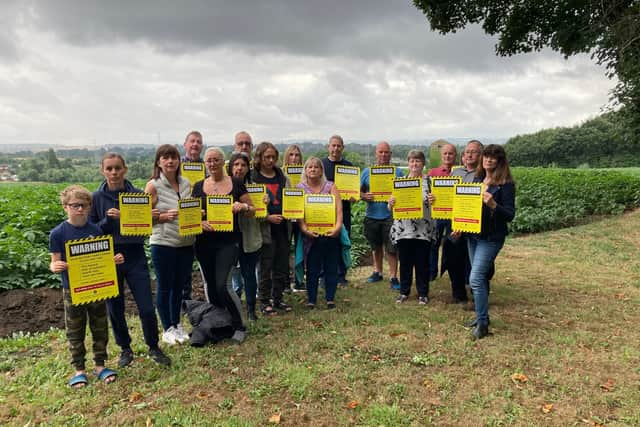
A Planning Inspectorate hearing is taking place after Harmony Energy appealed Wakefield Council’s decision to refuse an application to install 72 containers storing lithium ion batteries on farmland near Heath village.
BESS facilities take in power from renewable energy sources and then release it back to the National Grid when demand is high.
Mr Trickett, MP for Normanton and Hemsworth, told the hearing: “This is the wrong proposal, it is in the wrong place, it is environmental vandalism acting in the name of ecological improvement.
“It damages the local community, damages agricultural land and is totally unacceptable.
“Heath is a particularly unique community with unique characteristics and is a key cultural and historical area.
“It is the jewel in the crown of Wakefield.”
The Labour MP referenced 19th century environmentalist Charles Waterton, who launched a successful campaign in 1844 to protect Heath Common for the city’s residents.
Waterton also built the world’s first nature reserve in Wakefield, at Walton village, and campaigned against pollution and environmental damage caused by the Industrial Revolution.
Mr Trickett said: “The history of Heath is relevant to the inquiry today; it appears history is repeating.
“Waterton successfully created Heath Common, which is now under threat from the proposed development.
“Historic England has declared there are 38 separate heritage sites which surround the area.
“The area is also a well-known spot for kite flying, games and congregation.
“It is a country idyll only a short distance from a busy industrial city for families to escape for a day out.
“Surrounded by former mining villages, it also offers a free space for everyone to enjoy the countryside, which is of particular importance given the deprivation in the vicinity.
“Waterton’s historical legacy is honoured to this day by the fact that large numbers of people use this place for relaxation, giving it a special cultural importance.”
Mr Trickett also said he disagreed with Harmony’s claims that the site should be redefined as ‘grey belt ’, a concept introduced in 2024 aimed at freeing up some greenbelt areas for development.
He said: “It was not the intention of the government for areas like this to be moved out of the greenbelt.
“It is prime agricultural land which has never been built upon and I believe in fact that the proposal to change the site to grey belt is in breach of planning guidance.
“The council refused the application and there are no local people or organisations at all in favour of this development, except those that have a commercial interest.
“My office has received many letters and emails raising concerns around the development.
“It must be stressed that land use should not override local democracy.
“Instead we should be preserving the heritage of Heath Common that Charles Waterton wrote about.”
Stephanie Hall, the barrister representing Harmony, previously said: “The appeal scheme is strongly supported by government policy and would assist the council and the UK in delivering meaningfully on climate and biodiversity agendas.”
Ms Hall said the council had declared a climate emergency in 2019 but had failed to allocate any sites for renewable energy in its latest Local Plan, a document which outlines future development within the district.
Ms Hall said: “Ultimately the heritage impacts are reversible and temporary and are at a lower level than assessed by other parties, which all overstate the importance of what is now a modern agricultural field.”
The hearing continues.