
Plan aims to make Wakefield ‘the best place to do business in the north of England’
Council launches new economic growth plan
Wakefield Council has launched an ambitious new economic growth plan which aims to make the district “the best place to do business in the north of England.”

The local authority’s leadership set out a roadmap to attract investment, create jobs and help people develop the skills needed to support Wakefield’s future economy.
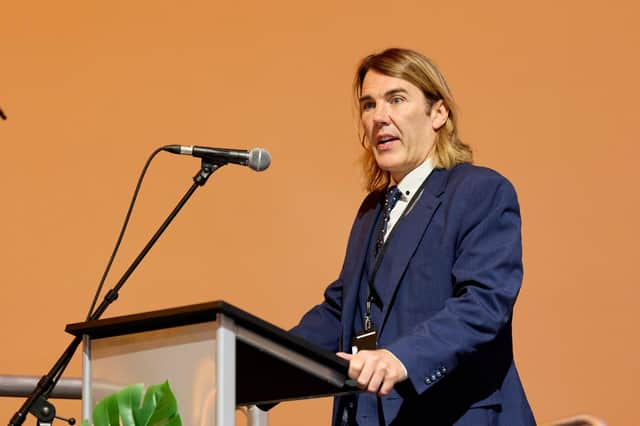
More than 130 business leaders and residents attended an event at Wakefield Exchange (WX) to hear Karl Johnson, leader of the Reform UK-led council, outline plans to create more high-quality jobs for local people and opportunities for businesses.
He said: “For too long we have had a lack of ambition and not capitalised on the amazing strengths that our district has.
“It’s time to change that – it ends today.
“We are setting out an aspirational Wakefield as the best place to do business in the north of England
“I want the message to go out today that Wakefield is open for business.”
The plan set outs priorities for supporting growth and investment, with a focus on advanced manufacturing, logistics, and creative industries.
The blueprint has been developed based on recommendations provided by the Wakefield Futures Commission.
The commission was set up under the previous Labour administration in December 2024 after figures revealed the number of people in the district with qualifications above A-level fall well below the national average.
Wakefield is England’s largest city without a university and faces “significant challenges in developing and retaining higher-level skills among its residents”, according to a report published last year.
Central to the commission’s recommendations was the creation of an employer-led civic hub, to be named the Wakefield Futures Centre.
The proposed new centre would focus skills investment in the district’s fastest growing business sectors.
Unlike many university courses, higher-level skills training would be co-designed with employers.
The training would also be short, affordable and flexible to accommodate the needs of learners, making it easier for people to improve their lives through new training and better-paid work.
The commission estimates that closing Wakefield’s productivity gap could unlock more that £533m a year for people in the local economy.
Coun Johnson added: ”We face an economic challenge on quite a few fronts.
“Wakefield doesn’t attract national and international investment at the moment and we also face a productivity challenge.
“We need 12,000 more people working in knowledge-intensive business to bring us in line with the wider West Yorkshire region.
“These jobs need highly skilled employees to create value and drive growth, and they will play a crucial role in driving innovation that will turbo charge our local economy.
“Our economic growth plan is an important part of Wakefield’s roadmap for a better, more prosperous future.
“It really is a big step in developing a consistent and clear longterm approach to economic growth which will benefit both our residents and business.”
Tony Reeves, the council’s chief executive, said: “Wakefield is full of great businesses and we are brilliantly located.
“There are all sort of opportunities here but, if we were really honest with ourselves, we haven’t joined those things up sufficiently to really optimise the potential that the district has.
“If I had to sum up in a sentence what this plan is about, it’s about being bold, it’s about being ambitious and being prepared to take some risks to unlock the full potential of our district.
“If we do that, with all of the attributes that Wakefield has – with its connectivity, with its position, with the stock of great business we already have – then the future for Wakefield district is very bright indeed.”
Professor Sir Chris Husbands, who chaired the commission, said “Wakefield has real assets, real ambition among residents, and a track record of weathering de-industrialisation better than many similar places.
“To close the gap between skills supply and the future economy, something new is needed.
“That’s why we recommended the Wakefield Futures Centre – a broker between employers and training providers.
“Working with employers to stimulate demand for higher-level skills and with training providers to change the skills supply.”