
Inquiry told battery storage scheme would ‘physically alter’ historic Wakefield landscape
An historic landscape would be ‘physically altered’ if plans to install a battery energy storage system (BESS) near to a Wakefield village were approved, a public inquiry was told.
A Planning Inspectorate hearing is being held after Wakefield Council refused proposals to locate the facility on greenbelt land near to Heath.
In July last year, the authority’s planning committee unanimously voted against an application to install 72 containers storing lithium ion batteries on farmland after more than 1,200 residents objected.
The scheme could still go-ahead after Harmony Energy lodged an appeal due to a three-year delay in the application being determined.
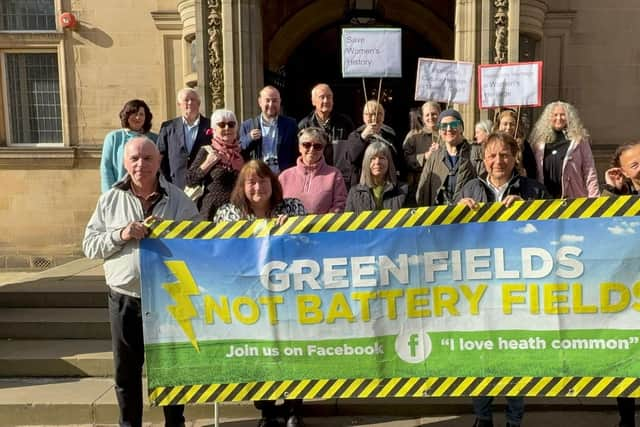

BESS facilities take in power from renewable energy sources and then release it back to the National Grid when demand is high.
On the first day of the hearing, lawyers representing both parties said the main issues in the case related to the impact on the greenbelt and on historic buildings close to the site.
The appellant claims the site should be redefined as ‘grey belt’, a concept introduced in 2024 aimed at freeing up some greenbelt areas for development.
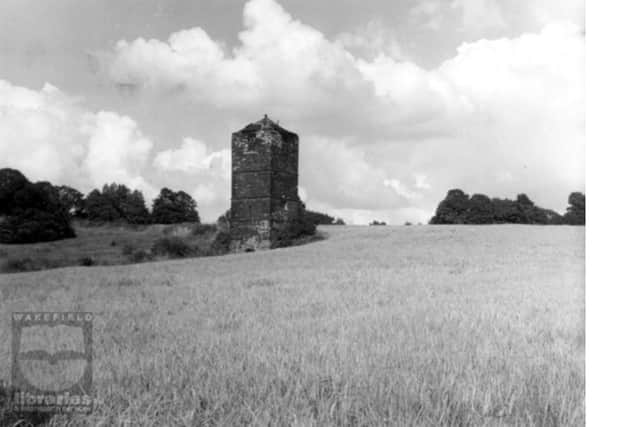
The proposed development lies within the setting of the Grade II-listed Dame Mary Bolles Water Tower, which dates back to the 17th Century, and the Heath conservation area.
Stephanie Hall, for Harmony, said: “The appeal scheme is strongly supported by government policy and would assist the council and the UK in delivering meaningfully on climate and biodiversity agendas.”
Ms Hall said the council had declared a climate emergency in 2019 but had failed to allocate any sites for renewable energy in its latest Local Plan, a document which outlines future development within the district.
Ms Hall said: “Ultimately the heritage impacts are reversible and temporary and are at a lower level than assessed by other parties, which all overstate the importance of what is now a modern agricultural field.”
The lawyer added: “The appellant’s case is that given the national imperatives to address climate change, achieve net zero by 2050 and enhance our energy security, it is precisely sites such as this one, without major impacts, which can assist with a transition to a lower carbon economy and deliver a significant measurable gain in biodiversity.”
Philip Robson, representing the council, said: “Whilst the council supports the principle of renewable and clean energy development, this does not override the need to properly address the harms brought by the proposal.
“The proposed development would physically alter the historic landscape.
“It would also harm the open, rural character of the fields in the west of the designated area through the introduction of modern infrastructure, as well as the expanding development of Wakefield city centre into the historic landscape itself.”
Mr Robson said some historic structures in the village were “designated assets of the highest significance.”
He said: “The water tower carries significant historical interest from the connection to Dame Mary Bolles, a local woman of independent financial means and the only woman to have been bestowed the title of Baronet in her own right.
“The tower continues to be a landmark to this day and has a degree of communal historic interest for local people.”
At least four other organisations are expected to make representations during the eight-day hearing, in addition to the appellant and the local authority.
They include Heath Residents’ Association, Wakefield Civic Society, Wakefield and District Gypsy and Travellers’ Association and The Forgotten Women of Wakefield.
The hearing continues.