
Decade after devastating Boxing Day floods, West Yorkshire Fire Service lacks legal response duty
West Yorkshire Fire and Rescue Service still has no statutory duty to respond to flooding - a decade after the Boxing Day deluge devastated communities across the region.
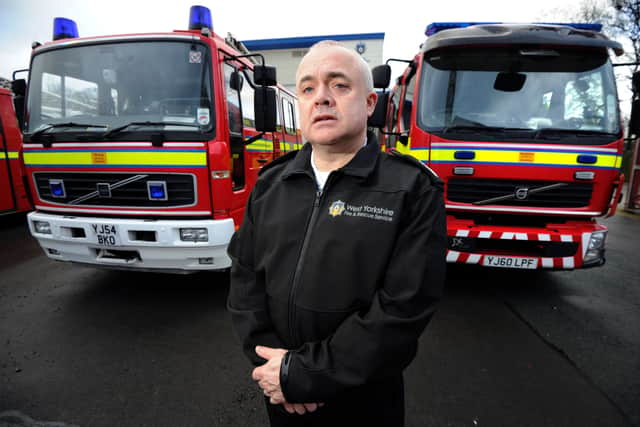
Deputy Chief Fire Officer Dave Walton said the absence of a legal obligation leaves funding for flood response dependent on diverting money from other priorities, despite repeated extreme weather events and growing public expectations.
The issue came into sharp focus during the Boxing Day 2015 floods, when torrential rain brought widespread devastation across large swathes of West Yorkshire, including the Calder Valley towns such as Hebden Bridge, Mytholmroyd and Todmorden, and parts of Leeds.
Crews worked around the clock alongside police, ambulance staff, the Army and local councils to rescue residents trapped by rapidly rising water.
Mr Walton said: “It was the most significant flooding we’d experienced, bar none.”
He recalled one dramatic rescue of a man trapped in his car, where firefighters “literally paddled up to the roof, had to hold on, break the sunroof, and pull him up right and out through the sunroof to rescue him.”

It comes as experts are set to gather next week for the West Yorkshire Flood Summit, which will mark ten years since Storm Eva.
It will provide an opportunity to remember the impact of the Boxing Day floods, recognise what has happened and look to the future, while reflecting on the challenge of climate change.
The Army was drawn in early as the scale of the flooding became clear.
An Army spokesperson said the military had been in contact with civil authorities for several days before the storm hit.
He said: “We were engaged with the civil authorities through daily teleconferences in the days leading up to Boxing Day, at which point the Met Office briefed us on the worsening forecast for rain.
“We were made aware of the initial impact of the flooding in West Yorkshire early on Boxing Day and the Environment Agency submitted the first request for military support that day. We deployed a liaison officer to the Strategic Co-ordinating Group at the police HQ in Wakefield.”
Around 500 soldiers were eventually deployed across West and North Yorkshire from the UK Standby Battalion, supported by troops from the Light Dragoons based at Catterick.
The Army spokesperson said: “Some bridges and roads were damaged, prolonging journeys and affecting the transport of personnel and equipment.
“Most tasks were about temporary repairs to flood defences, protecting critical infrastructure and providing reassurance to communities.”
The soldiers, many of whom came from Yorkshire, gave up Christmas leave to assist the response.
“Practically speaking, the troops lost a chunk of leave over the Christmas period, but they were only too happy to help local communities,” the Army spokesperson added.
The military effort was coordinated through the West Yorkshire Resilience Forum, working closely with fire and police commanders, local councils and the Environment Agency.
The spokesperson said: “We had liaison officers at the strategic and tactical levels of coordination and at those points on the ground where we were deployed in support of the civil authorities.”
While the joint response in 2015 was widely praised, Mr Walton said the legal framework governing flood emergencies in England remains “inadequate”.
“When we make funding decisions such as spending half a million pounds on flood rescue equipment, it means it’s half a million pounds that isn’t being spent somewhere else,” he said.
In England, there is still no legal duty for fire and rescue services to respond to flooding, despite such responsibilities being enshrined in law in Scotland, Wales and Northern Ireland.
The Fire Brigades Union and the National Fire Chiefs Council have long called for that to change, backed by dedicated funding for training, equipment and operational planning.
In its October 2025 report on flood resilience, the House of Commons Environmental Audit Committee recommended that the government begin consulting on a potential statutory duty by the end of 2025, in order to align England with the devolved administrations and “strengthen national flood resilience”.
Mr Walton said that clarity could not come soon enough.
He said: “We’ve been waiting for it for 10 years. But here we are, 10 years down the line, and we’ve still not seen that change.”
Following the 2015 floods, West Yorkshire invested in new boats, flood equipment and enhanced training for crews, but Mr Walton warned that statutory recognition is vital to sustain those resources
He said: “There are so many areas of the UK that are flooding more frequently and to a greater degree, and this isn’t going to get better anytime soon.
“It’s really important that fire and rescue services and other agencies are prepared, equipped and trained to deal with it, as well as working with communities to build flood-resilient areas and infrastructure.”