
Leeds city centre up to 8°C hotter than rural areas during heatwave, new data shows

New data shows Leeds city centre temperatures have been up to 8°C hotter than surrounding rural areas during the ongoing heatwave ☀️🌡️
Leeds city centre has experienced temperatures up to 8°C hotter than surrounding rural areas during the current heatwave, according to new data from Leeds Beckett University’s Sensing Leeds network.
Monitoring a series of weather stations across the city, the data shows that temperatures can vary significantly over relatively short distances, with significant implications for public health, comfort, and urban planning.
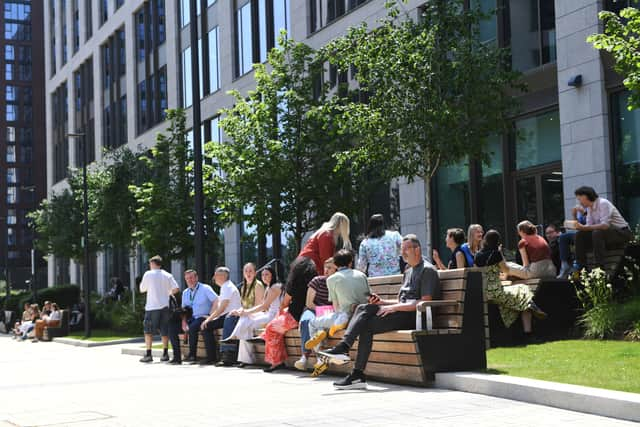

“What we’re seeing is that different parts of Leeds experience microclimate conditions during hot weather,” said lead researcher Dr Jim Parker, a climate researcher at Leeds Beckett University.
“In some cases, moving just a short distance, such as from the city centre to a riverside location, can reduce temperatures noticeably.”
At its peak during the late afternoon on Monday (May 25), the hottest temperature recorded was 33°C at the city centre station at Leeds Beckett University’s Rose Bowl building.
During the evening, data from nearby Met Office stations at Met Office sites in Bingley and Bramham, both roughly 10 miles outside the city centre, recorded temperatures 7.3°C and 8°C lower, respectively.
The research also shows that built-up areas remain hotter for longer after sunset. At 9pm, temperatures in Scholes were still 3°C cooler than in the city centre.
“These differences matter, especially during heatwaves, because higher temperatures overnight can impact sleep, health and overall wellbeing,” Dr Parker said.
“There are also important implications for personal safety, particularly for more vulnerable people during extreme heat.”
The study highlights how green and blue spaces - such as parks, public gardens, lakes, and ponds - can help reduce extreme heat. A sensor located near the River Aire in the Climate Innovation District recorded temperatures 1.5°C cooler than the city centre during the late afternoon.
Dr Parker added: “We’re continuing to engage with partners, including Leeds City Council, to understand how we can better plan for hot weather through the integration of green and blue spaces into the city.”