
I went to Hong Kong for food, hikes, and nightlife and was blown away by one of the world's true great cities


Amongst the lush and ancient foliage is a path. Snaking around the sheer mountainside, it’s a feat of understatedly impressive engineering; the kind of conceptual project which seems simple, but which grows more mind-boggling the more you grapple with it.
Dotted at brief junctions are both grand and silent colonial homes and uber-modern mansions, the creak of time and gleam of the new side by side. And, amongst the soft caws of the black kites, is an unmissable hum.
That hum is the gentle and distant susurration from one of the world’s greatest cities. But, barely half an hour from the humming bustle, is this place of remarkable meditation and quiet. Like the old British buildings alongside the shimmering palaces of the 21st century, this is a place of synchronised parallels. Of a delicately balanced Yin and Yang. This is Hong Kong.

Hong Kong is the world's 7th largest trading economy. It boasts a population of around 7.5m people jostling on the head of its pinprick footprint. It has a harbour-front skyline famous the world over. It’s a byword for finance, night-time neon, iconic architecture, world-class business, an incredible food scene, and luxury.
This you already know. These are the concepts with which the very essence of Hong Kong naturally rhymes. It has earned its reputation for a reason. But it contains a hidden side too. Hong Kong is a geographic wonder; a haven for those in search of natural beauty in shocking abundance.
Country parks and special areas constitute about 40% of its landmass and, away from the bright LED screens of Kowloon and Soho, there are cable cars across plunging valleys in Lantau, European-style seafront resorts on Hong Kong Island, and some 261 beach-boasting islands scattered throughout the New Territories. Hong Kong contains true multitudes.

As a first-time visitor to this abundant corner of Asia, the thing that immediately struck me was the scale - of the city, of the historic lineage, and of plans for the future. Ancient and ever-changing, the city footprint slowly emerges from amid verdant jutting mountain islands springing from the South China Sea, the concrete crawl spreading until it stretches to all parts.
Straight into the thick of Kowloon - complete with double decker trams (Hong Kong is one of only two places in the world which has them alongside Blackpool) - we headed for the Dorsett Kai Tak in the new neighbourhood on the site of the old airport. A brand new hotel next to the glimmering sports stadium, it’s the ultimate in deluxe - even accounting for jet lag, the bed was particularly excellent.
Straight to business: making for the Victoria Harbour, we hopped on the charming Luna Boat Ride for an aquatic viewpoint of that striking skyline. Again, this is where the sense of history hits you - Hong Kong is a true world capital with the atmospheric weight to boot.
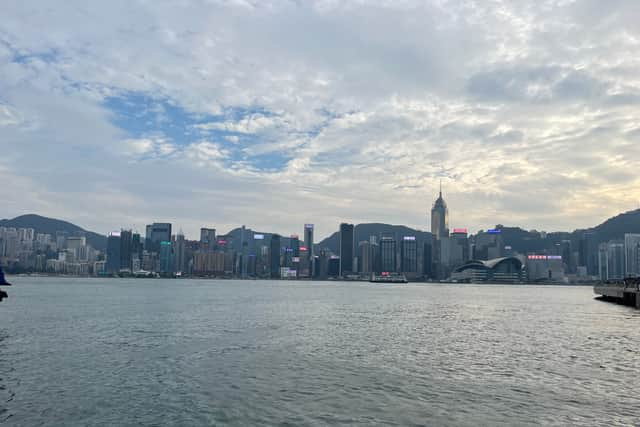
The unending layered markets of Sham Shui Po followed, a labyrinth of wonder and activity - plus a soybean vendor mentioned in the Michelin guide at which we got the chance to sample creamy warm soy milk. Sated as sightseers, we called in at Ho Lee Fook for some of the best Cantonese food I’ve ever had. The dim sum and pork were particularly excellent, while the salt and pepper tofu was the best I’ve ever had - delicate and spicy and a world away from the rubbery offerings so often proffered in the West.
Drinks in the effortlessly stylish Sheung Wan area followed - Mius did fabulous dirty margaritas, Coa did mind-bending things with tequila, and then there was Bar Leone. Officially named as the best bar in the world, landing a spot at Leone required a lengthy wait even on a weeknight, but it delivered.
Outside, queues of thirsty hopefuls gathered optimistically, one even going as far as to ask whether they had tents so he could sleep outside in order to guarantee a table. Inside, under countless pieces of football- and Italian film-themed memorabilia, I enjoyed one of the best cocktails I’ve ever had. Cheers to Sergio Leone indeed.

Swapping hotels, we moved to the Dorsett Wan Chai - a glorious older establishment with an unmistakable air of the debonair. Situated centrally next to the hugely popular Happy Valley Racecourse, the hotel rooms feature wonderful old school retro stylings in homage to its history, combining Asian design with British aspects.
From this central location we continued our journey exploring Hong Kong’s more classical offerings, including some the finest food in the world.
At the Hyatt, we were kindly invited by the restaurant manager to dine at Sha Tin 18, where a spectacular 8-course meal awaited us, including their speciality roast duck, wok-fried beef, flambé rosé wine BBQ pork with gorgeous lard rice, and a sumptuous dessert platter including delightful wine ice cream and some freshly-baked Madeleines.

We were also given the chance to dine at Simon Rogan’s Michelin star Roganic restaurant - a culinary whirlwind experience amidst breathtaking interiors of reclaimed wood from old Hong Kong. From ox tongue to fresh tomatoes with horseradish foam, a life-altering brioche croissant roll to pork and crackling, the meal was a tour de force.
Our final food-based port of call was to The Henderson - a striking architectural wonder of a building which housed the accomplished Akira Back restaurant. With meals served on 3D plates adorned with relief ridges designed by the chef’s mother, we ate succulent truffle and puréed potatoes, braised short-rib sushi-style rice rolls, delicate Jidori chicken, and truly world-class Wagyu short ribs - simply one of the best dishes I’ve ever had the pleasure of eating.
After dinner, we went upstairs to the newly-opened Peridot, a mirage of curved walls and LED lights and easily one of the most unique cocktail bars I’ve ever been to. Rarely has anyone been wined and dined so lavishly.
The transition to Hong Kong’s hidden side came in the form of the famous Peak Tram - a spectacular knee-knocking near-vertical ascent up towards the Sky Terrace in between tightly-packed skyscrapers.
Reaching the top provided a view that required a moment of pause - in front of you is the irresistible urban seep of Hong Kong, behind you a pristine stretch of jungle forest through which tranquil paths gently weave.
Whiling away a meditative hour or so, we followed the Hong Kong Trail - built way back in the early 1910s - thrilled by the views and always accompanied by the soft hum of the city below. Returning to the Sky Terrace for sunset, we watched as a million lights flickered to life.

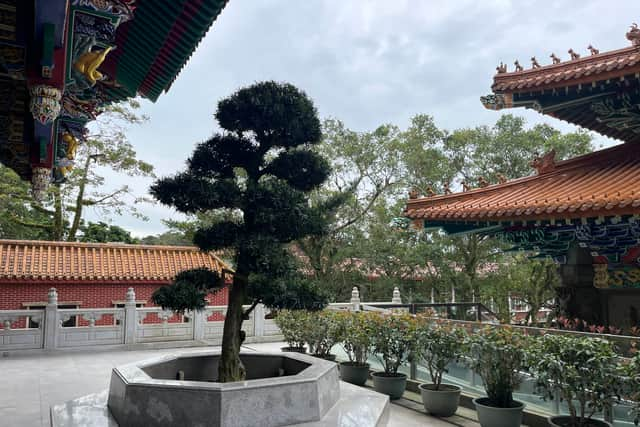
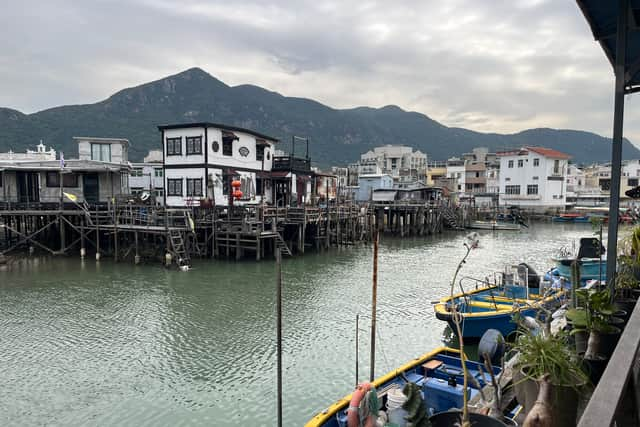
Offered a taste of this other side to Hong Kong, we were hungry for more. And so to Lantau Island, where we rode a gravity-defying cable car over pure blue seas and dense trees below walking up to the Giant Buddha at Ngong Ping. After that we dropped down towards Tai O, the quaint fishing village on stilts known as the Venice of Hong Kong.
Sitting in a local coffee shop on the water, well off the beaten track, listening to 1950s Chinese music was a balm and a tonic for any stress known to man. This side to Hong Kong was a million miles away from anything I’d expected - simply put, I had no idea Hong Kong offered such tranquillity, such heart rate-soothing isolation. It was perfection.
Making the most of sunshine as a bout of wonderful November weather set in, we also travelled to the Dragon’s Back Trail, which made for a truly excellent hike across accessibly but engaging ground. Offering some spectacular views down towards Big Wave Bay, the sea lapping at golden sand under hilltops dotted with villas, the trail was simply glorious.
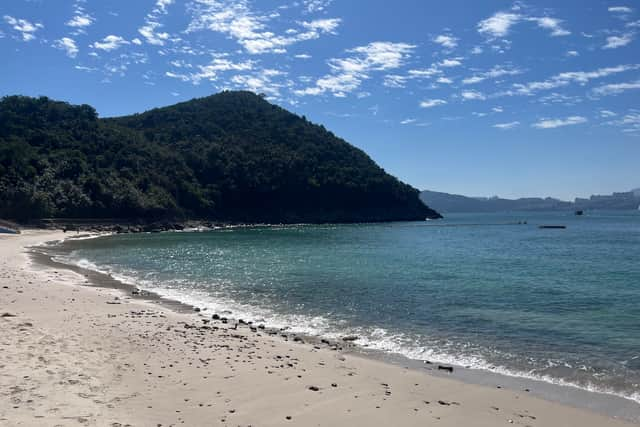
Warm and content, we dropped down to Shek O Beach in its perfect sun-trap location with bars, restaurants, and shops. Soothed by the incredibly warm water, we sipped local beers in the sun against the backdrop sound of locals playing volleyball.
Hong Kong’s least-developed area - the New Territories to the north - was our final hike destination as we headed to the utterly charming Sai Kung. Known as the ‘Back Garden of Hong Kong’, the area incorporates not only sublime coastal villages which, on sunny days, are teeming with friendly locals, but a UNESCO heritage site.
Having caught a boat over to Sharp Island, we hiked to the top of the island mountain to take in the customary but ever-impressive panoramic sea views. Knowing a place of such staggering natural beauty was barely an hour away from one of the world’s most densely populated cities was frankly unfathomable.
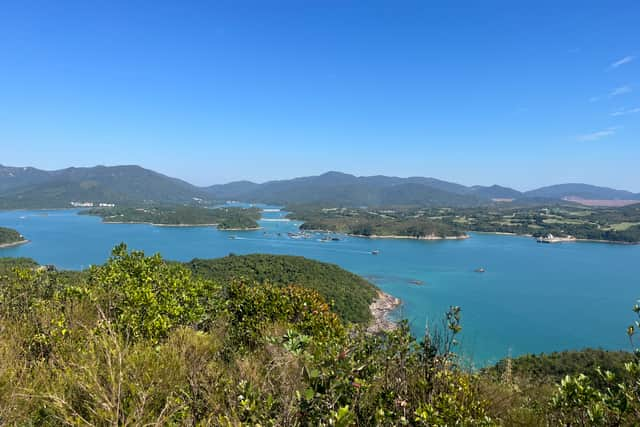
After drying off on the beach following a dip, we caught the boat back to town and enjoyed a seafood feast on the harbour. Utter bliss.
In Chinese culture, four is regarded as an unlucky number. But, having been lucky enough to spend four days exploring Hong Kong’s world famous cityscape sights and hidden off-the-beaten-track side too, it was hard not to feel extremely fortunate indeed.
Jack Marshall was a was a guest of the Hong Kong Tourist Board. Cathay Pacific flis direct to Hong Kong from London, from £549 return. Dorsett Wan Chai has doubles from £113 per night with breakfast. Dorsett Kai Tak has doubles from £115 per night with breakfast. Both hotels offer complimentary shuttle service to major transport hubs, shopping, and dining destinations.