
I tested plug-and-play solar at home – as Ed Miliband backs plans to make it easier in the UK (aff)



This article contains affiliate links. We may earn a small commission on items purchased through this article, but that does not affect our editorial judgement.
Plug-and-play solar systems costing a few hundred pounds could soon be easier to use in the UK after comments from Energy Secretary Ed Miliband – and one consumer writer has already been testing a system at home to see if it actually saves money.
Energy Secretary Ed Miliband has announced plans to make it easier and cheaper for UK households to generate their own electricity - by cashing in on relatively cheap "plug and play" solar.
The technology has been available - and is widely used - in other countries such as Germany for years, and it allows households to connect solar panels to their home's wiring through a microinverter.
These microinverters can cost around £100 and, in their simplest form, are able to plug in to a dedicated three-pin socket, which feeds energy from solar panels to your home supply, lightening the load taken from the grid.
With a basic domestic solar panel available for less than £100, it is possible to harness free energy from the sun for around £200 - a concept championed by Mr Miliband in an interview with Trevor Phillips on Sky News on Sunday.
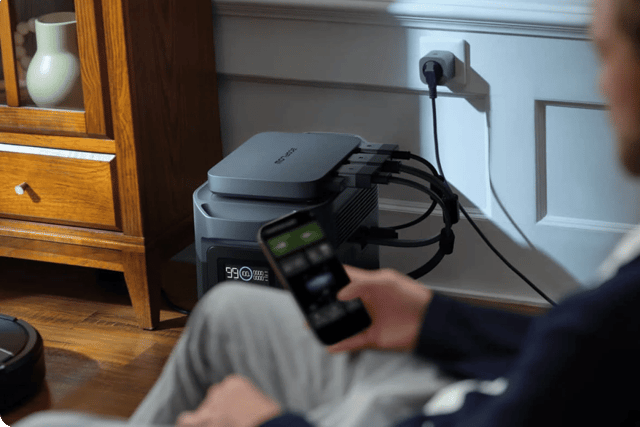
However, as Mr Phillips pointed out during the interview, a more sophisticated setup that would be capable of reliably powering a fridge freezer, including a battery to store the energy generated, would cost around £750.
Under current UK regulations, these systems would still need to be wired in to a home's electrics by a professional - adding further expense. And it's this additional barrier that Mr Miliband aims to remove.
One company that offers such a system in the UK is EcoFlow, which was among the pioneers of "balcony solar" systems which are surging in popularity.
A spokesman for the firm welcomed Mr Miliband's announcement on Sunday, part of a raft of measures he hopes will make Britain more energy secure.
The spokesman said: "Today’s call to allow plug-and-play solar is a very positive step for expanding access to renewable energy in the UK.
"Allowing plug-and-play solar would be an important step toward making renewable energy more accessible across the UK. For households living in flats, rented homes or properties where rooftop solar isn’t possible, small-scale plug-in systems could open the door to generating clean electricity at home.
"Across Europe, similar technologies are already widely used. Solutions such as EcoFlow Stream show how households can generate solar power from small outdoor spaces like gardens or terraces without complex installation.”
What does a £750 solar setup look like?
EcoFlow's Stream system bundles the microinverter technology and a battery in a small weatherproof cabinet, which connects directly to a mains supply, currently in the UK through the home's consumer unit.
EcoFlow's solar panels cost around £200 each, but less expensive panels are compatible.

Currently the cheapest appliance offered by EcoFlow is the Stream AC, which is on sale at the moment for £569. Among the cheapest solar panel suppliers on the market is City Plumbing, which is currently offering a 410w panel for just £56.74. The Stream AC can connect with up to four solar panels.
The Stream units are fully expandable, so you can buy more and link them together to increase generation capacity and battery storage.
Does a DIY solar system actually save money?
Consumer writer Gareth Butterfield has been living with an EcoFlow Stream setup since September 2025. Here are his thoughts so far.
"Can you save money with a plug and play solar system? Absolutely, yes. But don't go into it expecting an instant, dramatic reduction on your bill, and do expect it to be a while before your investment is fully recouped.
"I had my system installed professionally right at the end of one of the sunniest summers on record, and the autumn and winter that followed haven't exactly been great for solar energy.
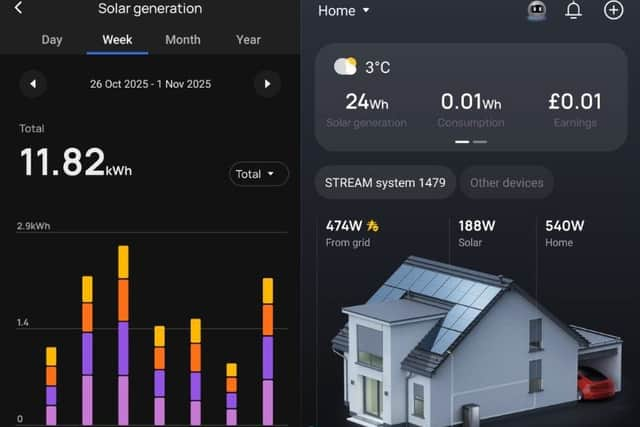
"However, the setup I have on the roof of my conservatory, four solar panels connected to two Stream units, has been surprisingly productive.
“September got me off to a pretty good start, and there were plenty of days "when my system generated more than £1 per day of free energy.
“October proved more of a struggle, as did November and December, but I was seeing genuine cost savings every day, even if on some days it was only a few pence.
"January was another dreary month with very little in the way of returns, but February fared better, seeing quite a few days of £1 or more generated. March is so far proving to be quite a bumper month, as the days get longer, and sunny days now sometimes creep towards the £2 mark.
"The later spring months, with their extra daylight lengths, and then the summer months, should be really effective.
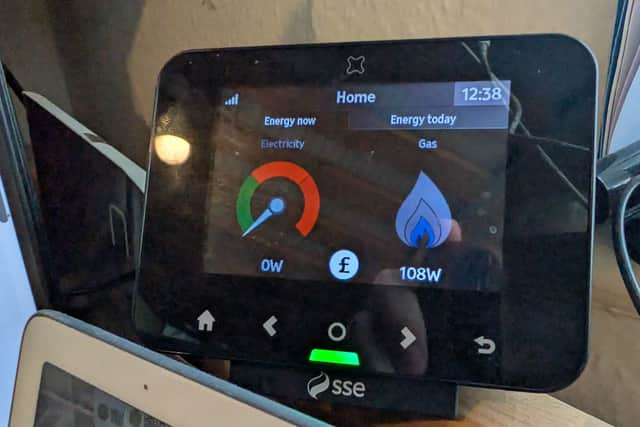
“But even in the depths of winter, I never tire of watching the smart meter in my house drop down to a reading of zero watts, knowing there's enough coming from my panels to cover my home's current base load.
"Watching the amount of power you generate, even on a cloudy day, rising and falling is hopelessly addictive and, while that might not always translate to a huge financial reward, I've already knocked my bill down by £50 per month and I know it'll have another reduction over the summer.
"If you go into a cheap DIY system expecting huge savings straight away, you'll be disappointed. But if you like the idea of watching your smart meter register absolutely no load as soon as the sun comes out, you'll get a lot out of one."

Spring is the perfect time for a fresh start 🌼✨ and that includes your smile. After months of tea and coffee stains ☕, MySweetSmile offers an easy, affordable way to brighten things up at home 🏡. From whitening powder to targeted strips, you can tackle both surface and deeper stains for under £2 per use 💸. With bundle deals and seasonal discounts available, it’s a simple switch that delivers real results 😁

Matching foundation and concealer shades can be one of the trickiest parts of any make-up routine 😩 – but e.l.f. Cosmetics say their newly launched Soft Glam collection could make things much simpler.
The Soft Glam Base Covered Duo bundles the Soft Glam Satin Foundation with the Soft Glam Satin Concealer, both available in 36 shades 🎨 covering cool, neutral and warm undertones across fair to rich skin tones. The idea is simple – choose the same shade for both products and create a coordinated base without the usual guesswork.
Both formulas promise lightweight, satin-finish coverage that is buildable, crease-resistant and transfer-resistant ✨ – designed for everyday wear whether you prefer a natural glow or a more polished look.
Even better for shoppers, the duo is currently £10 with code FLAWLESS 💸 – saving £4 compared with buying the products separately.