

We start off believing everything our parents tell us is true, then we think we know everything, and finally we believe everything we learn at school.
But it turns out that much of what you learnt at school, and have probably been telling your own children, is actually wrong.
The teachers aren’t always to blame. They’re often just passing on what was accepted wisdom back then, or in some cases teaching us things which were actually true at the time but are no longer.
Below are 11 ‘facts’ you were probably taught at school which were either never true in the first place or are no longer correct.
How many of these do you remember being taught at school and are there any others which you remember learning before finding out years later that they are wrong?
Do you have retro pictures or nostalgic memories to share with us? Send them online via YourWorld at www.yourworld.net/submit. It's free to use and, once checked, your story or picture will appear on our website and, space allowing, in our newspapers.

1. Pluto is a planet
If you went to school before 2006 you probably learned there were nine planets in our solar system. It was technically correct at the time, until Pluto was downgraded that year to a dwarf planet. It's one of five dwarf planets, along with Ceres, Haumea, Makemake and Eris. Pluto's demotion was a particular problem if, like me, you learned to remember the planets and their order using the handy mnemonic 'My Very Easy Method Just Sets Up Nine Planets'. | Heritage Images via Getty Images Photo: Heritage Images via Getty Images
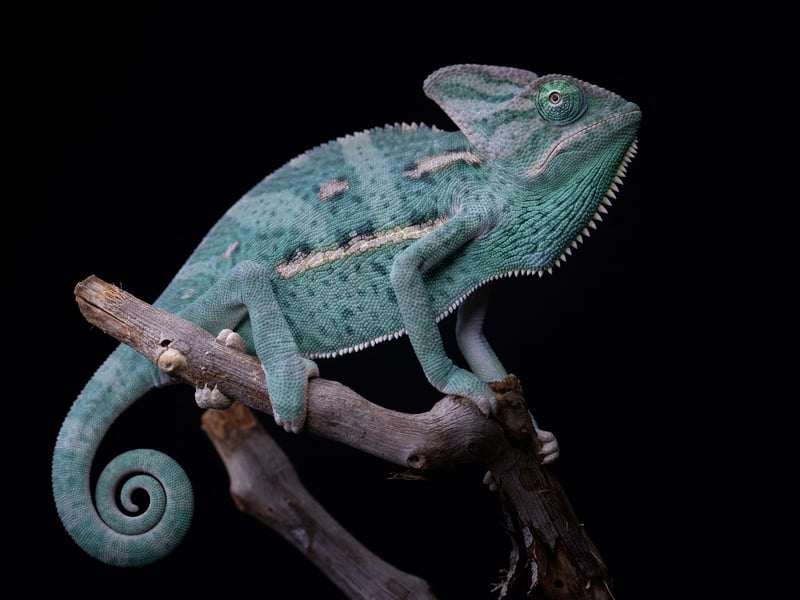
2. Chameleons can blend into any background
Most people grew up thinking chameleons could change their colour to camouflage themselves against any background, but it turns out this is not entirely true. According to the National Geographic, while chameleons can make small adjustments to their hue to blend into their surroundings, the most dramatic colour changes come when they're defending their territory or putting on a display to attract a mate. Chamelons do blend into their background without changing colour as in their normal state they resemble the leaves and branches found in their natural habitat. This is lucky since they lack any defence mechanisms, like a powerful bite, poisonous skin or fast movement. To be fair, teachers aren't the only ones to blame for this common misconception about the extent of chameleons' colour-changing - Disney's Tangled, and its loveable chameleon Pascal, also has a lot to answer for. | JOEL SAGET/AFP via Getty Images Photo: JOEL SAGET/AFP via Getty Images

3. The Great Wall of China is visible from space
The Great Wall of China is a remarkable feat of human achievement, but the romantic notion that it is the only man-made structure visible from space simply isn't true - even if you did learn it at school. While the wall is incredibly long it's actually quite narrow, making it impossible to spot from space with the naked eye. There are some man-made structures which can be seen from space, however. The astronaut, Leroy Chiao claimed to have seen two of the pyramids while looking down at Earth, and NASA says the Three Gorges Dam in China can be seen from space. | DANIEL DORKO/Hans Lucas/AFP via Getty Images Photo: DANIEL DORKO/Hans Lucas/AFP via Getty Images

4. Carrots give you night vision
The idea that eating enough carrots will make you see in the dark is one peddled by many parents desperate to get their children to eat more vegetables - and something some people remember being taught at school too. The myth reportedly has its roots in wartime propaganda. The British government circulated the claim that its fighter pilots were so good at shooting down German planes at night because they ate so many carrots, when in fact it was down to the use of radar, which they wanted to keep secret. Eating carrots does have some benefits for your eyesight, however, as they are a good source of beta-carotene which is converted by your body into retinol, which is vital for healthy eyes. | AARON CHOWN/POOL/AFP via Getty Images Photo: AARON CHOWN/POOL/AFP via Getty Images

5. You have taste zones on your tongue
We all remember the diagram in biology lessons showing the different zones on your tongue, which could supposedly register sweet, salty, sour and bitter tastes. While some parts of the tongue are more sensitive than others, there are not specific areas which are better at identifying certain tastes. This widely taught myth is understood to have stemmed from the misinterpretation of a 1901 dissertation. As well as being able to sense sweet, salty, sour and bitter, each taste bud on our tongue can also identify umami, which was only recognised as the fifth basic taste in 1990. | ANDREJ ISAKOVIC/AFP via Getty Images Photo: ANDREJ ISAKOVIC/AFP via Getty Images

6. I before e, except after c
This spelling mantra trips off the tongue and was taught to generations of schoolchildren, but in the late noughties the government decided it was no longer worth teaching as there were simply too many exceptions, like neighbour, height, weird and science. | Keystone View/FPG/Getty Images Photo: Keystone View/FPG/Getty Images