

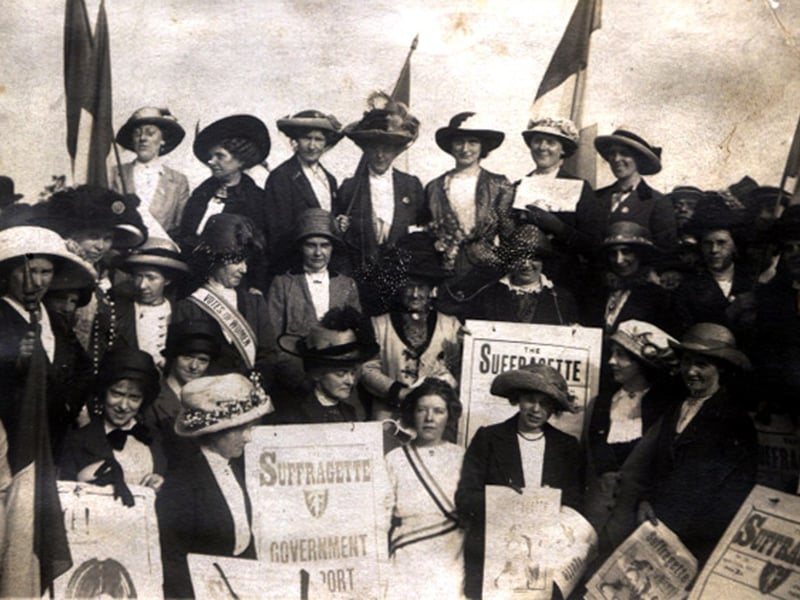
It was march with a powerful message at its heart - 'Votes for Women’. The Women's Social & Political Union's Procession started at Leeds Town Hall and ended on Woodhouse Moor. Bands played on Woodhouse Moor where thousands of people, both men and women, had gathered to listen to the various speakers from the 10 platforms. One of the most famous of the suffragettes to address the crowds was Adela Pankhurst, daughter of Emmeline Pankhurst and sister of Sylvia and Christabel, all leaders of the British Suffrage movement. Also speaking was Emmeline Pethick Lawrence who in 1912 was arrested with her husband and Emmeline Pankhurst for taking part in a window smashing campaign. They famously went on hunger strike while serving prison sentences. The day on Woodhouse Moor was a great success and was was carried by a huge majority as reported in the Leeds Mercury. The image from July 1908 was in a collection of newspaper cuttings which once belonged to Leonora Cohen, a suffragette who lived in Leeds but gained notoriety when in 1913, in order to publicise her cause she attempted to break the glass showcase in the Jewel House of the Tower of London containing insignia of the Order of Merit. A note wrapped around the iron bar she used read "This is my protest against the Governments treachery to the working women of Great Britain." The main photo from this gallery is among a number charting life in and around Woodhouse in the early 1900s. The images are a mix Leeds Museums Service and Artemis as well as others published courtesy of photographic archive Leodis, which is run by Leeds Library & Information Service. READ MORE: Woodhouse in the 1910s - An age of innocence against a backdrop of war LOVE LEEDS? LOVE NOSTALGIA? Join Leeds Retro on facebook YEP RETRO NEWSLETTER: Sign up for our free monthly email digest of Leeds nostalgia
1. Woodhouse in the 1900s
A group of women carrying placards and banners as they take part in the Women's Social & Political Union's Procession to Woodhouse Moor where a huge rally was held. | Leeds Museums Service Photo: Leeds Museums Service
2. Woodhouse in the 1900s
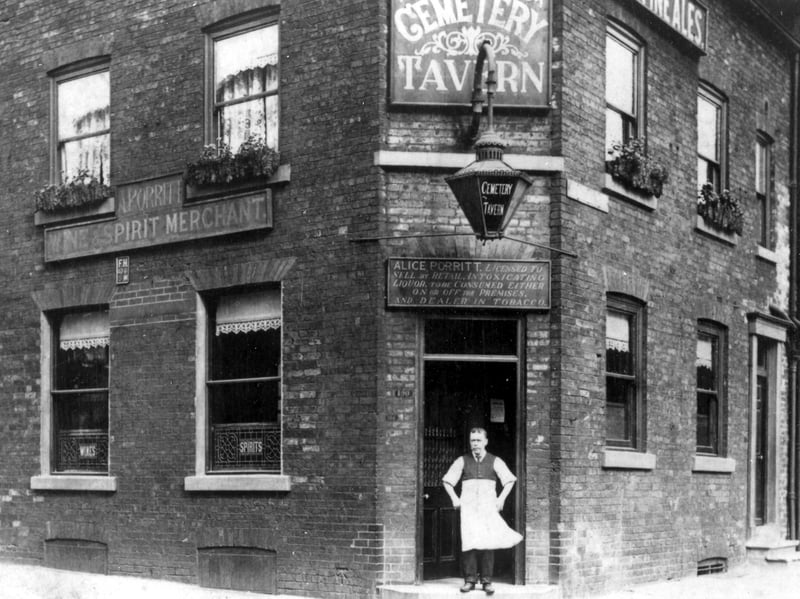
Cemetery Tavern at number 190 Woodhouse Lane. This was named because it overlooked the street leading to the entrance to Woodhouse cemetery. Pictured circa 1905. | Leeds Libraries, www.leodis.net Photo: Leeds Libraries, www.leodis.net
3. Woodhouse in the 1900s
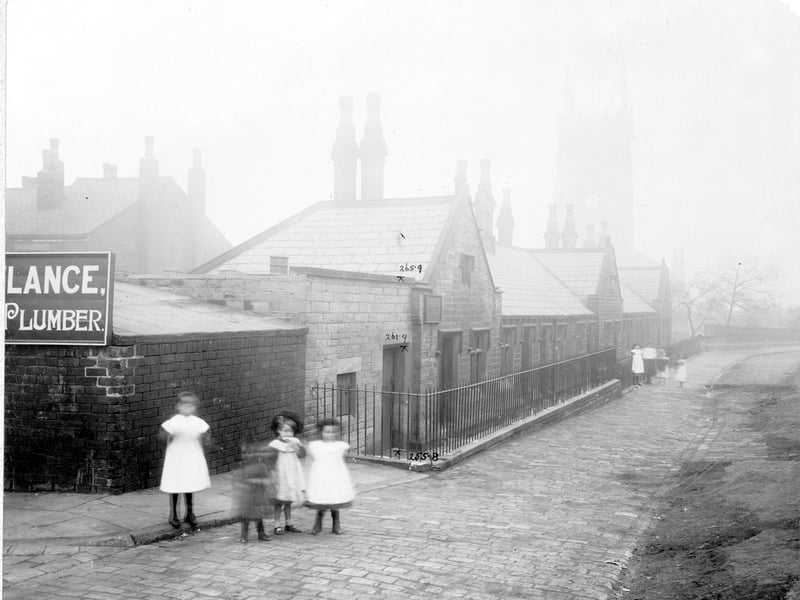
Row of nine dwellings, built around 1838, gift of benefactor Josias Jenkinson who had left other property and charitable funds to the people of Leeds, founded in 1643. On the left premises of Frank Roylance plumber. To the right is St Mark's Church and churchyard. Pictured in October 1905. | Leeds Libraries, www.leodis.net Photo: Leeds Libraries, www.leodis.net
4. Woodhouse in the 1900s
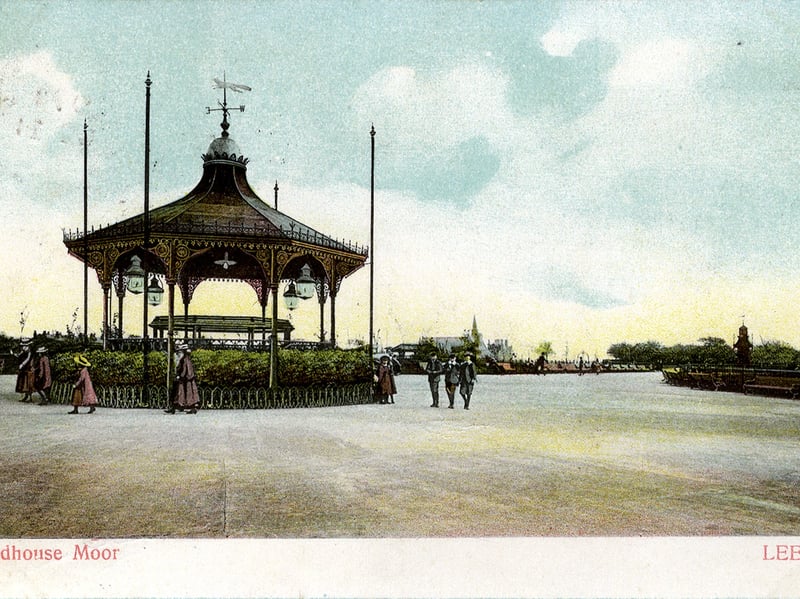
Colour-tinted postcard of Woodhouse Moor showing the Bandstand on the left. This was presented to the park by Alderman William North, who also donated the stone drinking fountain. A postal date of October 31, 1905, is stamped on the back. | Artemis, Leeds City Council Photo: Artemis, Leeds City Council
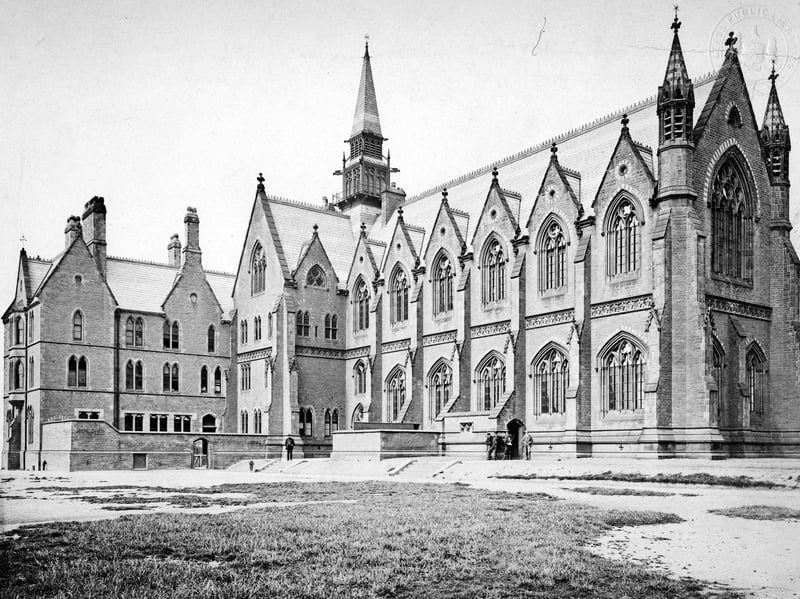
5. Woodhouse in the 1900s
Leeds Grammar School pictured in July 1906. This school opened on June 27, 1859. It replaced the older building between Vicar Lane and New Briggate. This site was sold for £4,200 and a further £7,000 was raised by public subscription. | Leeds Libraries, www.leodis.net Photo: Leeds Libraries, www.leodis.net
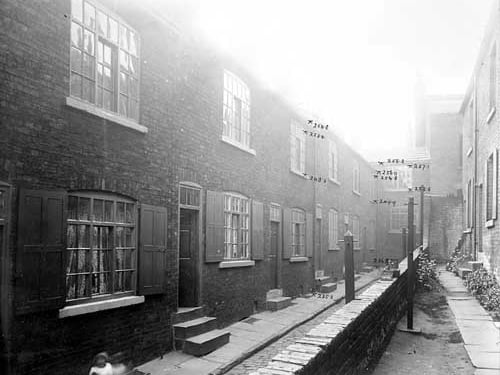
6. Woodhouse in the 1900s
This photo from May 1904 shows the Blackman Lane improvements planned for the back of the Pleasant Dairy. Image shows a narrow alleyway split in half. On one side are long terraced buildings with shutters around the windows and pavement outside. On the right is another long terraced row this time with the opportunity to grow plants and flowers. Future improvements are marked on the image. | Leeds Libraries, www.leodis.net Photo: Leeds Libraries, www.leodis.net