
Black History Month 2026: 5 historic Black figures from Leeds history who changed the city

As Black History Month gets underway, we look beyond household names to five pioneering Black figures whose impact on Leeds history helped shape the city we know today
To celebrate Black History Month, let's take a look back at some of the trailblazers who made their name - and their historical mark - right here in Leeds.
Not to discount the incredible work of Mel B, Corinne Bailey Rae, and Arthur France MBE (especially), but years earlier, several figures from the Black community created a special kind of magic in our city that, whether through the annals of time or a simple lack of curiosity, has perhaps faded from recent memory.
These five figures are just a snapshot of the remarkable individuals who helped forge a better future for generations of Leeds residents, regardless of background or colour.
No doubt there are countless more stories waiting to be uncovered across our local archives.
To delve deeper into the city's rich heritage, why not visit the Local History Library on the second floor of Leeds Central Library, or explore the wide range of exhibitions, talks, and community events taking place across the city throughout Black History Month 2026
Five historic Black trailblazers who changed Leeds forever
John Lewis (Circa 1708) - The first recorded Black person in Leeds history
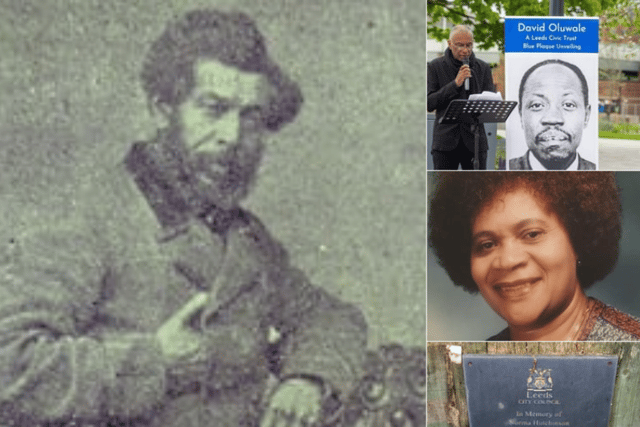

Over three centuries ago, a single entry in a leather-bound diary marked the earliest documented presence of a Black resident in Leeds.
On Sunday, February 1, 1708, renowned Leeds antiquarian and diarist Ralph Thoresby attended morning service at St Peter’s Church (now Leeds Minster) alongside a young Black servant named John Lewis.
Very little is known about Lewis's early life, but historical research indicates he was brought to West Yorkshire through colonial trade networks linked to the Caribbean. Thoresby recorded that Lewis was formally baptised at the parish church, marking a landmark moment in local parish registers.
Today, his name stands at the very beginning of documented Black history in Leeds, serving as a powerful reminder that Black people have been an integral part of the city's story for more than 300 years.
Pablo Fanque (1796 - 1871) - Britain’s first Black circus proprietor and Victorian Leeds icon

For full transparency, the man who would take Victorian Britain by storm was actually born in Norwich in 1796 as William Darby.
But while his story began in Norfolk, it was in Leeds where Pablo Fanque established the nerve centre of his vast entertainment empire, cementing his status as Britain’s first Black circus owner and one of the most successful impresarios of the 19th century.
A master equestrian and skilled acrobat, Fanque built massive permanent wooden amphitheatres across the city—including major venues at King Charles Croft and Victoria Road—drawing thousands of spectators to his Circus Royal.
Beyond the spectacle, Fanque was revered across Leeds for his immense philanthropy. He regularly hosted benefit performances to raise funds for local charities, distressed working-class families, and injured performers, earning widespread respect in a city undergoing rapid industrial expansion.
Fanque’s legacy even left an indelible mark on global popular culture. An 1843 promotional poster for one of his benefit shows in Rochdale was purchased over a century later by John Lennon in an antique shop, directly inspiring the lyrics to The Beatles' classic track ‘Being for the Benefit of Mr Kite!’
When Fanque passed away in 1871, thousands of grief-stricken Leeds residents lined the streets to watch his grand funeral procession. In accordance with his wishes, he was laid to rest at Woodhouse Cemetery (now St George's Field on the University of Leeds campus), buried beside his beloved first wife, Susannah.
His lasting contribution to the city was formally recognized on September 16, 2023, when Leeds Civic Trust unveiled an official blue plaque in his honour on Lands Lane in Leeds city centre.
David Oluwale (1930 - 1969) - The tragic story that sparked landmark police accountability
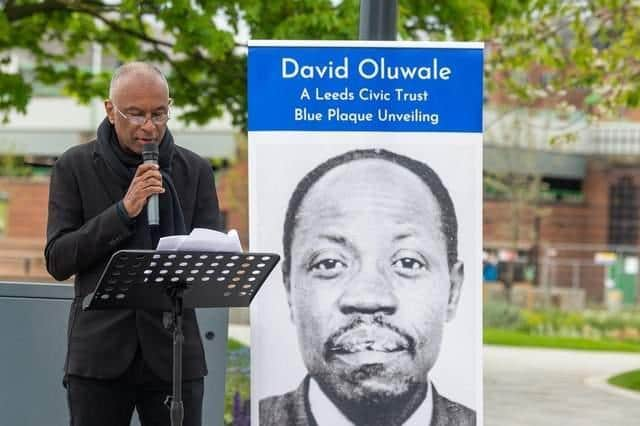
The story of David Oluwale remains one of the most poignant and significant chapters in modern Leeds history. A Nigerian tailor who stowed away on a cargo ship to Britain in 1949, Oluwale arrived in Leeds hoping to build a life and career amidst the post-war boom.
However, after experiencing mental health struggles, homelessness, and social marginalisation, he became the target of systematic physical and verbal harassment by two corrupt Leeds City Police officers.
In April 1969, Oluwale drowned in the River Aire after being systematically targeted and chased near Ware Mill. The subsequent investigation and trial in 1971 resulted in the first successful prosecution and imprisonment of British police officers for violence against a Black person.
While his death laid bare systemic failures, his legacy became a powerful catalyst for social justice, police accountability, and anti-racism across the UK.
Today, his memory is preserved through the work of the Remember Oluwale charity, a Leeds Civic Trust blue plaque on Leeds Bridge, and the striking David Oluwale Footbridge - a pedestrian crossing over the River Aire opened in 2023, serving as a permanent symbol of hope, reconciliation, and inclusivity in the heart of the city.
Gertrude Paul (1934–1992) - The trailblazing educator and Leeds’ first Black headteacher
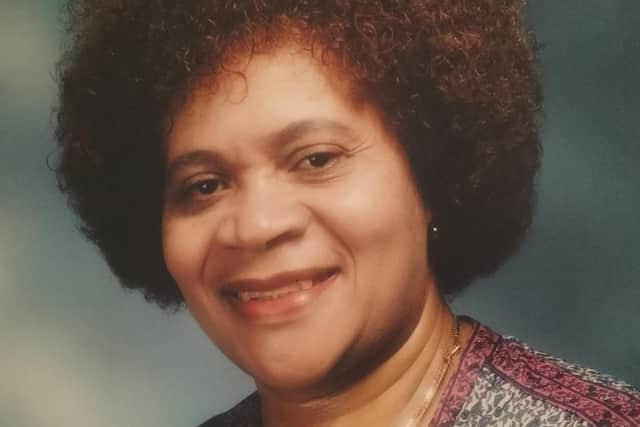
Arriving in Leeds from the Caribbean island of Nevis in 1956 as part of the Windrush generation, Gertrude Paul dedicated her life to transforming education, community relations, and opportunity across West Yorkshire.
Despite holding a recognised teaching qualification from the West Indies, she initially faced institutional prejudice when applying for teaching roles in the UK. Undeterred, her intellect, determination, and passion for child development quickly broke down those barriers.
In 1976, Paul made history when she was appointed headteacher at Greenford Primary School, becoming the first Black headteacher in Leeds. She used her position not only to raise educational standards and aspirations for inner-city children, but also to advise local authorities on multicultural education and racial equality.
Beyond her career in the classroom, Paul was a powerhouse of community activism in Chapeltown. She was a co-founder of the Leeds West Indian Carnival in 1967—the oldest West Indian carnival in Europe - as well as a founder of the Leeds West Indian Centre on Laycock Place and the United Caribbean Association.
Her visionary leadership bridged cultural divides and built lasting institutions that continue to serve the city today.
Norma Hutchinson (1947 - 2004) - The dedicated NHS nurse who became Leeds’ first Black female councillor
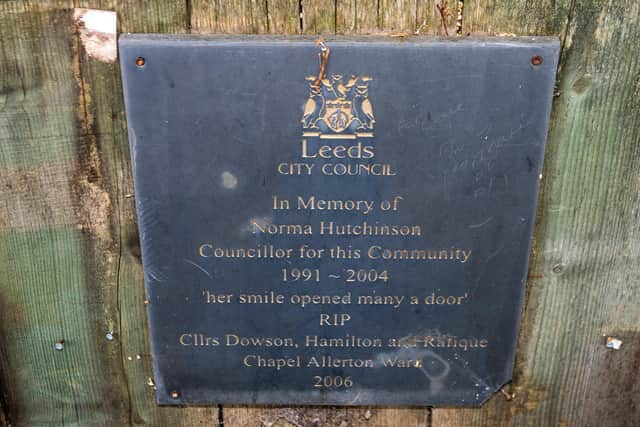
Born in Jamaica, Norma Hutchinson moved to Leeds in 1968 and immediately dedicated her life to public service, training as a nurse at St James's University Hospital.
Over decades working on the hospital wards, she became a formidable advocate for healthcare workers and patient care, stepping up as a prominent trade union representative for NUPE (later UNISON) to fight for fair pay and equal opportunities for ethnic minority staff.
Driven by a deep passion to improve everyday life for residents in Chapeltown and Harehills, Hutchinson entered local politics and made history in May 1991 when she was elected as the first Black female councillor on Leeds City Council. Representing the Chapeltown ward, she championed youth services, affordable housing, and racial equality until she died in 2004.
Her immense contribution to civic life in West Yorkshire is permanently commemorated at Norma Hutchinson Park in Chapeltown - a green space dedicated to the community she spent a lifetime serving.