
Blue plaque recognition for Leeds Animation Workshop

Leeds Animation Workshop - a testament to the city’s independent spirit
Its a movement which grew out of the Women’s Liberation Movement of the 1970s, at a time when women were finding new ways to make their voices heard and challenge the things they wanted to change
Leeds Animation Workshop was the first all-female animation collective in Britain, using film and animation to explore social issues and tell stories that might otherwise have gone unheard.
It all started in 1976, when a group of women friends came together to make a film about the need for pre-school childcare.
The result was ‘Who Needs Nurseries? We Do!’ Following this first film, Leeds Animation Workshop was formally established in 1978 as a women’s collective.
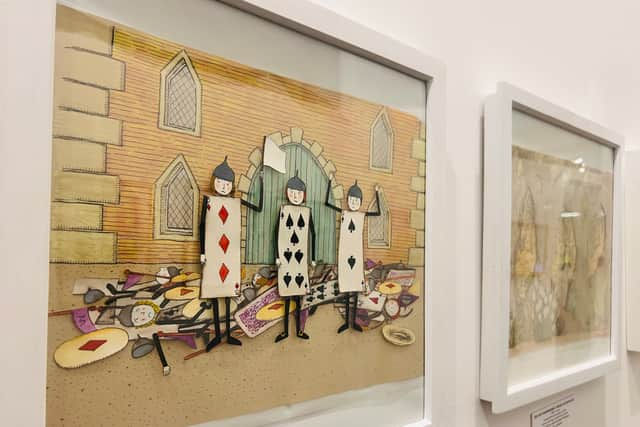

Over the years, the Workshop has continued to develop, with different generations of women working together to create films. The original idea remains much the same: to use animation
to explore issues that affect people’s lives and make subjects that can sometimes be difficult to talk about easier to understand. The work has always been a collective effort, with many people contributing to the Workshop throughout its history.
The Workshop has made around 50 short films covering a huge range of subjects, including domestic violence, racism, sexism, homelessness, bereavement, LGBTQ+ issues, disability, workplace equality, and the environment. The films are made in consultation with people and organisations who have direct experience of the issues being explored. They have also featured the voices of well-known actors and writers, including Dame Maureen Lipman, Meera Syal, Alan Bennett, Sir Lenny Henry, and Michael Rosen.
Although based in Leeds, the Workshop’s work has reached audiences much further afield.
Its films have been supported by organisations including Channel 4, the British Film Institute, the NHS, the Home Office, and the European Commission. They have been shown in schools, colleges, universities, hospitals, workplaces, and community settings, broadcast on television, and translated into other languages.
As well as making films, the Workshop has organised screenings to showcase the work of women and ethnic minority filmmakers and run animation workshops for adults and young people in the local community.
The Workshop has been based in its house in Harehills since 1982, when it bought the building with the help of a grant from the British Film Institute. Its archive, now held by the University of Leeds Special Collections, contains thousands of pieces of artwork, documents, and films recording its history.
Fast forward to 2026 and the blue plaque recognition celebrates an organisation that has been part of Leeds for nearly 50 years, recognising the people behind the films, their commitment to social issues and their contribution to animation locally and beyond.
The blue plaque is due to be unveiled by Leeds Civic Trust on Friday, November 20, (1.30pm) at Shine Leeds in Harehills a space that Leeds Animation Workshop have showcased many films. After the unveiling the plaque will be installed at the Workshop’s long-standing home at 45 Bayswater Row in Harehills.
YEP RETRO NEWSLETTER: Sign up for our free monthly email digest of Leeds nostalgia
Leeds Civic Trust director, Martin Hamilton, said: “The Leeds Animation Workshop is a testament to the city’s independent spirit. This all-female animation collective – a UK first, may have been established in an unassuming terrace in Harehills but their work is anything but ordinary, championing issues that were often overlooked by the mainstream media including everything from nuclear disarmament to equal pay. Its pioneering work is deserving of a blue plaque.”
Leeds Civic Trust promotes the improvements of Leeds in the spheres of planning, architecture, heritage and city amenities and is responsible for the blue plaque scheme in the city.
Since 1987 the Trust has unveiled more than 200 plaques across the district celebrating people, events and buildings that have made a significant contribution to the city of Leeds.