
'I work behind the scenes at Leeds’ most historic cinema - and its secrets still surprise me'
As part of our Heritage Heroes series we put the spotlight onto Hyde Park Picture House - and the magic of keeping the cinema running for over a century 🎬
For more than 110 years, Hyde Park Picture House has welcomed generations of film lovers through its doors, surviving wars, television, multiplexes and even a global pandemic.
And according to Projection and Facilities Manager Mike Sharples, the magic of cinema still lies in the shared experience.
“When people think of cinemas, they probably picture the multiplex out-of-town boxes,” he said.
“So it is surprising to people that places like this still exist.”
The much-loved Headingley venue is one of only two surviving historic cinemas in Leeds, alongside Cottage Road Cinema.
But at one stage, Mike said the city had more than 90 cinemas.


“Every little area would have had its own cinema. It was where people went to get news and entertainment before television,” he said.
“But with the advent of television, then video, then the multiplexes, they gradually became financially unviable.”
Mike, who has worked at the Picture House for 21 years, first joined in 2005 while studying.
“I just started part-time. I knew someone who worked here and they were leaving, so I came in for a couple of shifts and that was it.”
Back then, every screening was still shown on film.
“Everything was analogue. Then within about 12 months, everything went digital. That was a massive change for us,” he said.
Despite advances in technology, the cinema has worked hard to preserve the traditions of movie-going that make it unique.
He said: “We still have curtains and maskings. Early cinema had a lot in common with theatre. You’d come in and there’d be musicians playing before the show started.”
The cinema underwent a major refurbishment after closing in 2019, a project originally expected to last just 13 months before the pandemic brought everything to a halt.
“We’d taken out seats and equipment and were gearing up for work to start,” Mike said.
“Then lockdown happened about two or three weeks later.
“It ended up taking nearly four years, but it’s all been worth it.”
The restored venue reopened in 2023 with improved accessibility, a larger foyer and a second screen added in the basement.
“The biggest compliment I could give it was that when I came back in after the work had finished, it felt like it had always been that way,” he said.
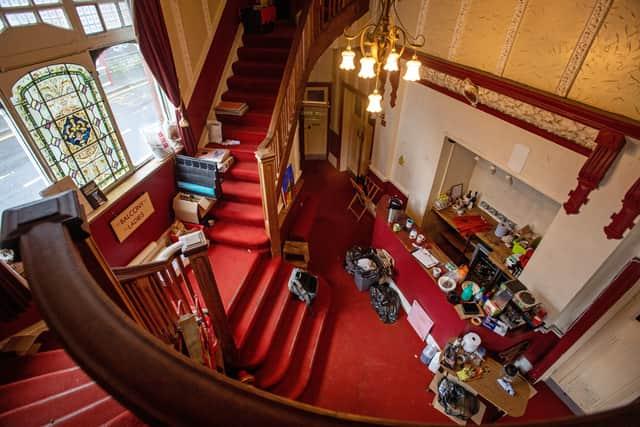
A careful blend of old and new now greets visitors as they walk through the doors.
“The foyer is a mix of the old and the modern,” Mike said.
“You’ve got the terrazzo flooring, the original staircase and even the old fire hydrant still there, alongside the newer additions.
“I hope people walk in and think, ‘Oh, this is nice.’ It’s welcoming and it has character.”
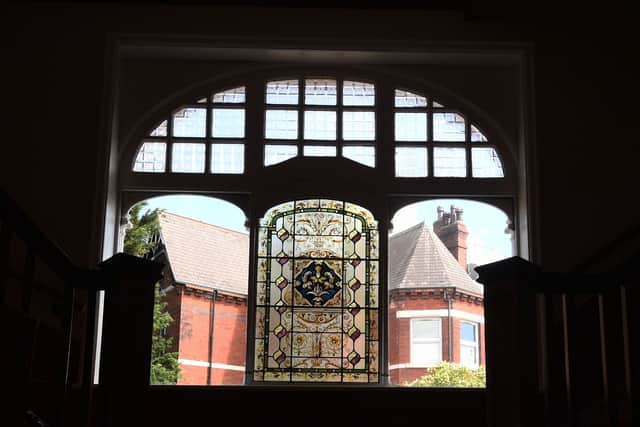
Look closely and visitors can still spot traces of the building’s past hidden in plain sight.
Above the foyer kiosk sits a decorative plaster lintel, the remains of the cinema’s original open fireplace.
Nearby stands the original fire hydrant, a reminder of the dangers early cinemas once faced.
“That dates back to the whole reason cinemas had to be so safety-conscious,” Mike said.
“Silver nitrate film was highly flammable and early projection systems used limelight and carbon rods.”
Elsewhere in the building, heavy iron rings mounted high on the wall once supported a glass canopy outside the cinema.
“That canopy sheltered people queuing outside in bad weather. It was probably removed during the war when metal was being taken for the war effort,” he said.
The Picture House’s period charm has also attracted famous faces over the years, with actors, filmmakers and comedians all passing through its doors.
Among them are Helen Mirren, Jim Broadbent, Paddy Considine, Maxine Peake, Francis Lee, Harry Hill and Tim Vine.
The venue has also welcomed film critic Mark Kermode, filmmaker Ben Wheatley, actor and writer Jessica Hynes, comedian Adam Buxton and journalist Jon Ronson.
“There’ll be others, but I can’t remember them off the top of my head,” Mike laughed.
The cinema has also become a hub for local filmmakers and creative events.
“We support local filmmakers and student filmmakers too.
“Hopefully they’ll make it big and remember who helped them out,” he joked.
For Mike, though, his favourite memories are less about celebrity appearances and more about the people he has met along the way.
“It’s a place of connection,” he said.
“Most of my favourite memories are of the people I’ve met here, including my closest friends Sylvia and Martha, and of course my partner Debbie.”
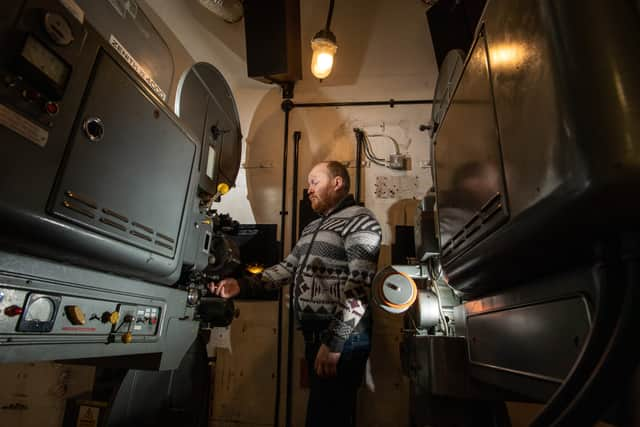
One particularly memorable professional moment came during a screening of Doctor Zhivago on 35mm film.
“I absolutely smashed it. There’s an interval in that film and when the second half started, the curtains opened and the train came out of the tunnel at exactly the right moment,” he said.
“Nobody probably noticed, but for me, that was what it was all about.”
Although digital technology has transformed cinema projection, Mike believes something important has been lost along the way.
“Projectionists as a job barely exist now. A lot of knowledge and history disappeared with that.”
Yet despite the rise of streaming services, he believes cinemas like Hyde Park Picture House remain more important than ever.
“It’s a shared experience. You can spend a lot of money on a home entertainment system, but it’s never going to be quite the same as sitting in a dark room with an audience,” he said.
“You can’t pause the film. You’re not distracted by your phone. You’re completely immersed in it.”
And while audiences may have changed dramatically since the cinema first opened in 1914, one thing has remained constant.
“Certain films deserve to be seen on the big screen,” Mike said.
And more than a century after it first opened, Hyde Park Picture House is still giving Leeds exactly that.