
From Chapeltown to the National Archive: How Solomon is rewriting Black British Heritage through his lens
There’s a quiet confidence about Solomon Charles-Kelly, the kind that comes from knowing exactly where you’re from.
Raised in Chapeltown, the photographer and film professional has turned his lens on the streets that shaped him, creating a body of work that is now part of a national collection with Historic England celebrating Caribbean and African communities in Leeds.
But for Solomon, the Chapeltown Photography Project was never about prestige.
He said: “Ultimately, as I see it, the heritage belongs to the people. It’s cool that it goes into a big thing, but it’s more like looking at the smaller, more intricate things.”
By day, Solomon works in film and TV production.
“That’s what I do on a day-to-day basis in the grip department, working on commercials and films and dramas,” he said.
His credits include the Emily biopic starring Emma Mackey and the Lift led by Kevin Hart.
“If you watch terrestrial TV, then you’ve probably seen a commercial that I’ve worked on,” he added.
Alongside that career, he has built a powerful photographic practice rooted in culture and community.
He said: “I tend to work with things to do with culture - dancers and performers - and I do a lot of things in the community as well.”
Photography runs in the family.
“Dad was a photographer. He stopped before I was born professionally, but he still did it as a hobby. I started through that,” Solomon said.
“I was really blown away because I saw what you can do with a camera. I was really young, so from then I was like, ‘Yo, this is mad.’”


He later completed a master’s in documentary photography at the University of South Wales, seeking “a formal understanding of the theory that goes along with photography… different ways of representation and what different things mean.”
That theoretical grounding sharpened his focus - particularly on who gets to hold the camera.
He said: “When you look at famous photographers… they all seem to come from a European background or American. Those are the people taking the pictures generally.”
He draws inspiration instead from figures such as Gordon Parks, who documented black life in segregated Harlem.
Solomon said: “Those are so different to anything else, that’s what I’m drawn to.
“Because I came from Chapeltown, because everybody I know is black, because I’m black… I look at these guys and think, well, they’re having a similar situation culturally.”
Growing up, he became acutely aware of perception. Attending primary school outside the area, he remembers the reaction when classmates learned where he was from.
“That was kind of the general perception that I felt,” he said.
Now, with camera in hand, he saw an opportunity.
“I’ve got this camera and I’ve got this opportunity. I’m like, no that’s not how it is.
“Now I’ve got the opportunity to put this in a place and to show you that’s not how it is.”
The 2024 Chapeltown Photography Project allowed him to do exactly that, capturing everyday life, from social gatherings to self-portrait sessions with local children.
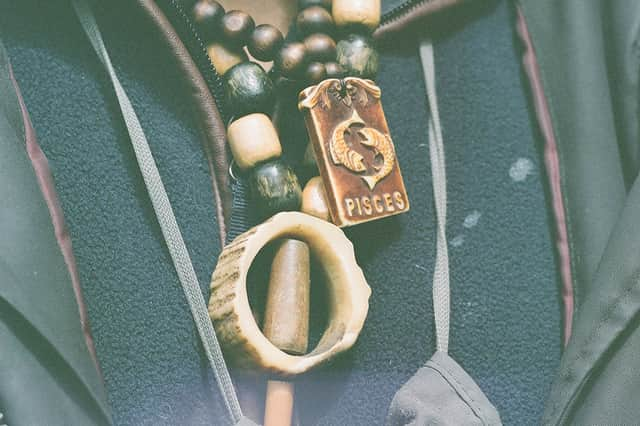
“Things that involved the kids, things that involved social gatherings and happenings,” he said of what felt important to document.
“If you look at these pictures you can see that actually, despite what’s happening, there’s still a community there. It’s still very real and personal.”
Chapeltown, he notes, is changing.
“The houses are big, the roads are wide, it’s a beautiful place. A lot of people who aren’t from there want to move in there, which is leading to gentrification. So things are changing massively.”
That made recording the present moment all the more urgent.
Yet the project worked because it came from within.
“If it was somebody else who wasn’t from the area, I think it wouldn’t have gone over,” he said.
“It’s me. People know me. They know my brother and sister, my mum and dad, my grandma, they know my family.”
The response was overwhelmingly supportive.
He said: “Everybody was really aware, very self-aware, very socially aware, and very much like, ‘I see what you’re doing and I see why you’re doing it, and I think it’s a good thing.’”
There was pride, too.
“When they were being photographed, willingly photographed, not just at an event but like, ‘OK, I’m going to position myself’… those moments. The pride that everybody showed,” he said.
Now part of a Historic England collection, the work carries national recognition, something Solomon describes as transformative.
“It feels pretty magical, to be honest,” he said.
“Those books that I always looked at when I was in the libraries, looking for work by black photographers about communities, especially in Britain, it feels like, ‘Yo, I did a little something like that.’”
Still, he returns to the personal.
He said: “It’s not just a thing of somebody selected to do this and then it goes into the books and that’s how heritage goes.
“Look at the things your grandparents passed down - recipes, family pictures, letters. Hold on to them. They don’t need to go into any big thing. That’s heritage.”
His greatest hope? That young people growing up in Chapeltown see possibility reflected back at them.
He said: “I hope people can use the pictures to view Chapeltown as a place of possibility and a place of creativity.”
“There’s a lot of big things that come out of Chapeltown… This is a place where you can do stuff and get stuff done. Anybody can do it.”
He is quick to credit those who made the project happen, Jonathan and Benedict from Lens Lab, Leeds Caribbean and African Centre, and “friends and family who really made it possible”.
But perhaps the most powerful detail is this: the images were not taken by an outsider parachuting in for a headline. They were taken by someone who grew up just down the road.
“It wasn’t done by a big American photographer,” Solomon said.
“It was done by somebody who grew up down the street.”