

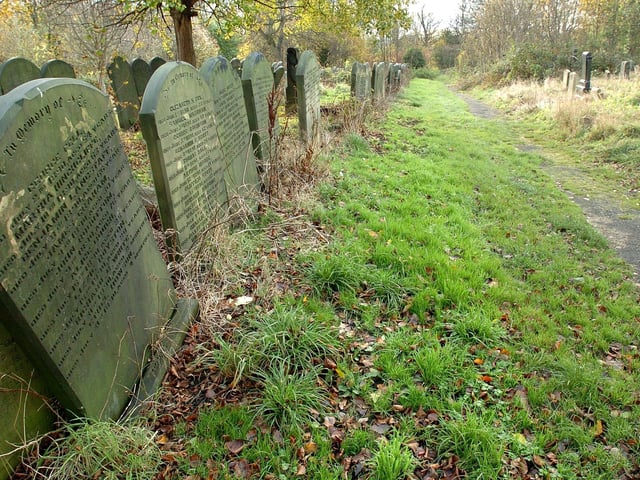
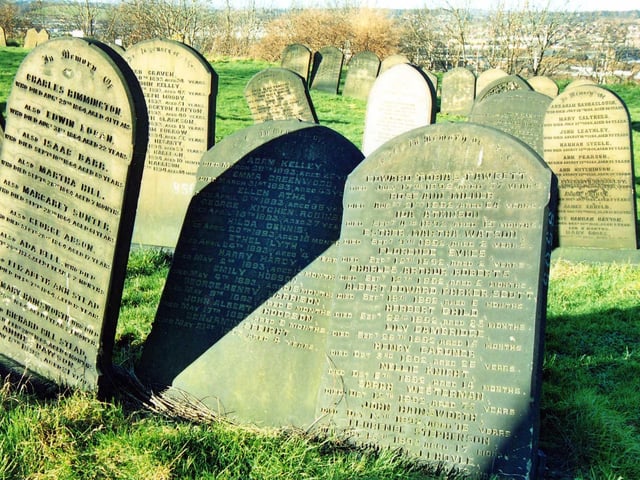
These were the public graves containing the remains of local people who died in poverty. This type of burial was introduced in 1857 and continued until 1940. It enabled impoverished people to provide a decent burial for their loved one in a communal plot with a shared headstone. Rather than the family suffering the indignity of a paupers grave for their loved ones, a guinea or 21 shillings (that’s £1.05 in modern money), would pay for an inscription of up to 36 letters. These graves held up to 20 people and the graves were left open until they were filled. Some of the guinea graves in cemeteries around Leeds are inscribed with as many as 46 names. They were also often used in times of an epidemic. READ MORE: The story of the Leeds city centre character known as 'Woodbine Lizzie' LOVE LEEDS? LOVE NOSTALGIA? Join Leeds Retro on facebook YEP RETRO NEWSLETTER: Sign up for our free monthly email digest of Leeds nostalgia
1. Guinea graves
Guinea Grave Row at the Leeds Burial Ground on Beckett Street. PIC: Jonathan Gawthorpe | Jonathan Gawthorpe Photo: Jonathan Gawthorpe
2. Guinea graves
Guinea graves in Holbeck Cemetery. As many as 46 names are listed on a single tombstone. There are many 'guinea graves' dating from 1857 to the 1940s. | Leeds Libraries, www.leodis.net Photo: Leeds Libraries, www.leodis.net
3. Guinea graves
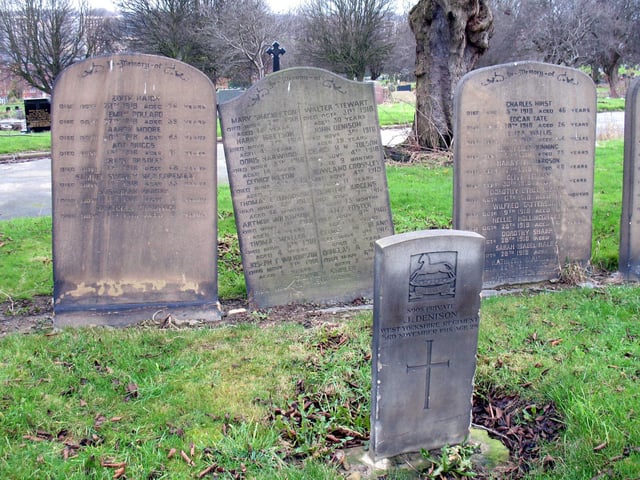
The front one is inscribed 'S908 Private J. Denison, West Yorkshire Regiment, 3rd November 1918, age 29.' Behind are three common graves commemorating a number of unrelated people all buried in 1918. | Leeds Libraries, www.leodis.net Photo: Leeds Libraries, www.leodis.net
4. Guinea graves
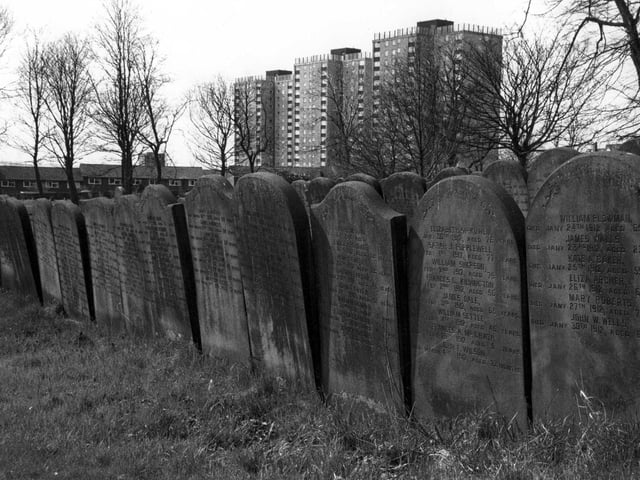
Beckett Street cemetery showing rows of inscription graves or 'guinea graves'. The graves on the right here date from 1912. In the background are the high-rise flats of Shakespeare Towers, Court and Grange. | Leeds Libraries, www.leodis.net Photo: Leeds Libraries, www.leodis.net
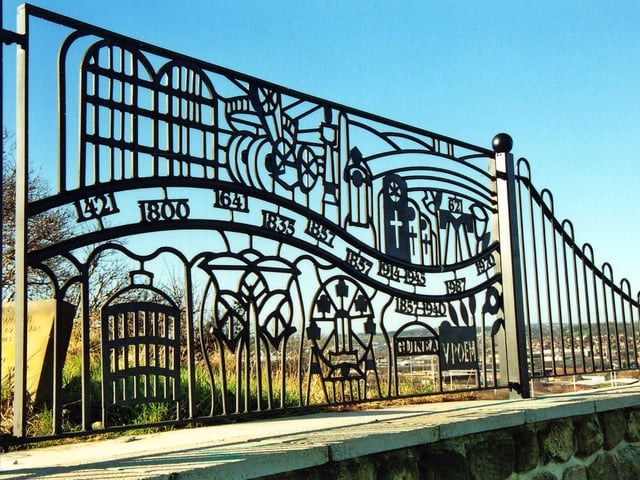
5. Guinea graves
Decorative fencing put up at the viewing point in Holbeck Cemetery. It has significant dates including 1857 when the cemetery was first opened, 1857 - 1940 representing the era of the 'Guinea Graves'. Photo: Leeds Libraries, www.leodis.net
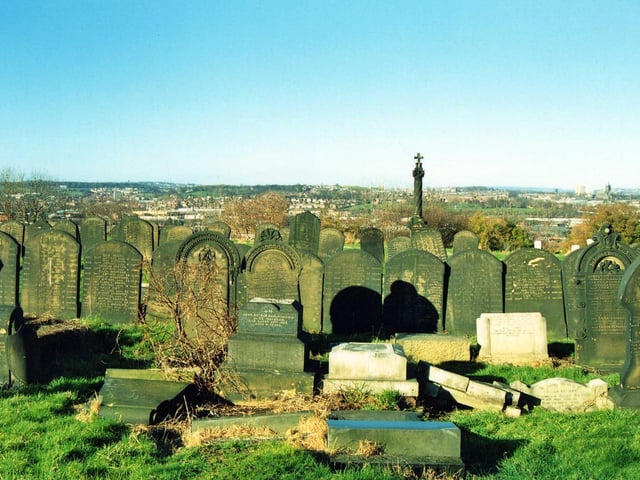
6. Guinea graves
'Guinea Graves' that can be seen in Holbeck Cemetery. In contrast to the more ornate memorials these are simple stone slabs which have been inscribed with a long list of names and ages of people in the locality who died in poverty. | Leeds Libraries, www.leodis.net Photo: Leeds Libraries, www.leodis.net