
How the cost of 13 grocery staples has changed since the 60s and 70s, with one popular food soaring in price

The price of several store cupboard essentials has soared since the 60s and 70s
- The cost of a typical basket of food has shot up since the 60s and 70s
- Some basic food items cost more than 40 times what they did in 1970
- But others are cheaper than they were in the 60s and 70s, when inflation and wage increases are taken into account


The cost-of-living crisis may have abated slightly since inflation peaked in October 2022 at 11.1% - a 41-year high.
But households across the UK continue to feel the pinch, with the cost of household goods, fuel and essential services considerably higher than a few years ago.
But how do food prices today compare with the 60s, 70s 80s and early noughties?
We’ve looked at the average cost of a range of everyday food items like milk, sugar and eggs over the decades to see how prices have fluctuated, according to the retail price index.
What foods have increased most in price?
The cost of fish has ballooned most rapidly since 1970, with the price of a cod fillet nearly 44 times today what it was back then. Butter, meanwhile, costs 24 times what it did then, and bread is 19 times as expensive.
The smallest price increase was for bananas, which cost just over six times what they did in 1970, onions (8.4) and flour (7.7).
Of course, wages have increased during that time too.
How has the average salary changed?
In April 1960, average weekly earnings in the UK were £14.10, according to Hansard, based on a 48-hour week.
In October 1970, average weekly earnings for full-time male manual workers aged 21 and over were £28.05.
And as of July 2025, according to the Office for National Statistics, the average weekly earnings in the UK were £727.
According to the Bank of England’s inflation calculator, £1 in 1960 would be equivalent to £20.21 today, based on the rising price of goods and services, and £1 in 1970 would be worth £13.84 today.
The cost of some goods and services has risen much faster than others, while house prices have significantly outstripped overall inflation and salary increases since both the 60s and the 70s.
When was inflation at its highest?
While inflation in 2022 was high, it was nothing compared to 1975. In August that year, the rocketing price of oil caused the Consumer Prices Index (CPI), which measures the cost of living for a typical UK household, to soar by 24.5%.
Below are 13 household staples and how they have increased in price over the decades. Some of these goods were only added to the Retail Price Index (RPI) from 1970, while for others prices are available for 1960.
Beef
A rump steak cost on average £1.25 per kg in 1970, £5.07 by 1980, £8.66 in 2000, and £18.89 in January 2025.
Flour
A 1.5kg bag of flour cost on average 9.8p in 1960, 10.8p in 1970, 39p in 1980, 60p in 2000, and 83p in January 2025.
Bread
An 800g loaf of white, unsliced bread cost on average 4.8p in 1960, 8.8p by 1970, 37p in 1980, 70p in 2000, and £1.68 in January 2025.
Milk
A pint of milk cost on average 3.3p in 1960, 4.7p in 1970, 17p in 1980, 34p in 2000, and 65p in January 2025.
Sugar
A 1kg bag of granulated sugar cost on average 7.4p in 1960, 8.3p in 1970, 36p in 1980, 55p in 2000, and £1.13 in January 2025.
Eggs
A dozen eggs cost on average 29.5p in 1960, 23.2p in 1970, 72p in 1980, £1.68 in 2000, and £3.31 in January 2025.
Butter
A 250g block of butter cost on average 10.1p in 1970, 44p in 1980, 88p in 2000, and £2.43 in January 2025.
Onions
A kilo of onions cost on average 5.2p in 1960, 12.6p in 1970, 33p in 1980, 56p in 2000, and £1.06 in January 2025.
Apples
A kilo of dessert apples cost on average 10.5p in 1960, 18.5p in 1970, 53p in 1980, £1.08 in 2000, and £2.14 in January 2025.
Bananas
A kilo of bananas cost on average 16.8p in 1970, 59p in 1980, 99p in 2000, and £1.02 in January 2025.
Fish
Cod fillets cost on average 47p per kilo in 1970, £2.38 in 1980, £8.40 in 2000, and £20.59 in January 2025.
Cheese
A kilo of cheddar cheese cost on average 31p in 1960, 40.8p in 1970, £2.09 in 1980, £5.05 in 2000, and £8.63 in January 2025.
Instant coffee
Instant coffee cost on average 22.7p per 100g in 1970, £1.01 in 1980, £1.88 in 2000, and £3.85 in January 2025.
How hard are you finding it to make ends meet, and what goods in particular do you find are much more expensive than they used to be?
If you found this article interesting, you might enjoy this look back at how we spent our Sundays in the 70s and 80s.
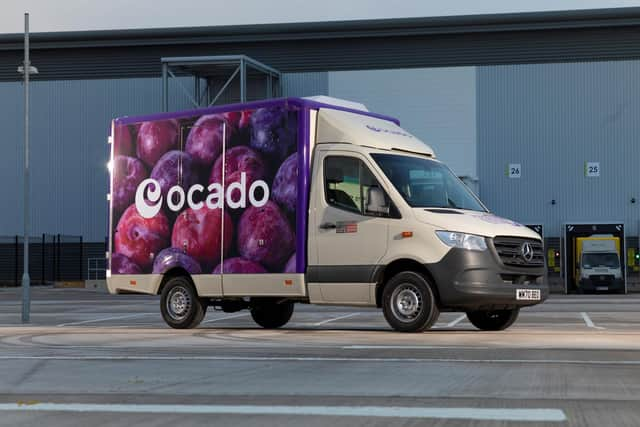
If you’re looking to save time on the weekly shop, Ocado is one of the most flexible and reliable grocery delivery services around. It offers a wide range of big-brand staples, M&S exclusives, and independent products you might not find elsewhere. Prices are competitive, and the service is known for accurate deliveries with few substitutions.
There’s currently a decent offer for new customers too: 25% off your first shop and three months of free delivery when you spend £60 or more. Just use code VOU7311870 at checkout.