
'It is a real survivor': Inside Leeds’ 200-year-old mill that built a modern city
Why this former woollen mill is a true heritage hero as one of Leeds’ most fascinating museums
Housed within the historic Armley Mills, the museum charts the industries that transformed the city, from textiles and tailoring to engineering, printing and locomotive building.
For Keeper Chris Sharp, it's a story that has always been about people.
"Leeds Industrial Museum is housed in the wonderful Grade II listed building of Armley Mills, a historic woollen mill," he said.
"It tells the story of the industries that made Leeds the city it is today through its collections and interpretation.
"That includes the woollen industry, but not exclusively. We also explore locomotive manufacture, printing, cinema, tailoring and many other industries.
"Without industry, Leeds isn't the city it is today. This museum tells the story of modern Leeds and what makes Leeds the city it is."
Chris has worked across Leeds Museums and Galleries for a number of years, but now has one of the more unusual job titles in the city.
"I'm the Keeper," he laughed.
"People always joke about the title. They ask if I'm like a zookeeper or a goalkeeper. I’m like Hagrid, the Keeper of the Keys.
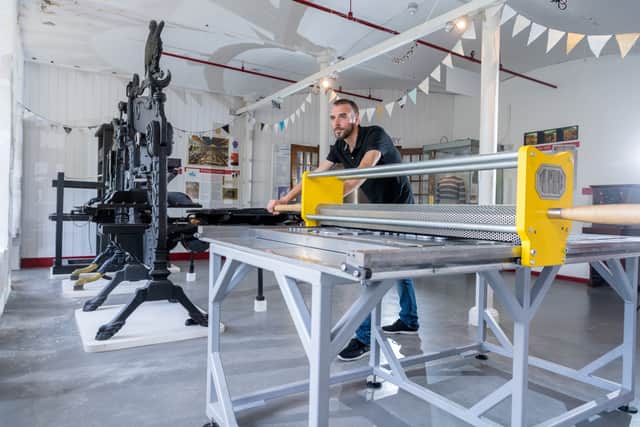

"Really, I'm the operational manager. It's my responsibility - and privilege - to help look after the buildings and work alongside colleagues who care for the collections, school groups and community visitors.
"My job is effectively running the museum with a wonderful team to make sure we're the best museum we can be for the people of Leeds."
The museum occupies a site that has been part of Leeds' industrial story for more than 500 years.
A fulling mill stood there from at least the early 1500s before Leeds cloth merchant Colonel Thomas Lloyd expanded the business in the late 18th century. After the original buildings were destroyed by fire, industrialist Benjamin Gott rebuilt the mill in 1805, creating what was then the largest woollen mill in the world.
For Chris, however, one of the most remarkable things about Armley Mills is not simply its age, but its ability to adapt.
"In 1805 there would have been hundreds of people working here, including children, making heavy woollen blankets," he said.
"By the time the mill closed there were far fewer workers because machinery had become automated. Thankfully we weren't employing children anymore, but the mill was still making blankets - this time the woollen parts for Philips electric blankets.
"The mill also made overcoats for soldiers during the American Civil War, uniforms and blankets for the British Army during both World Wars and then electric blanket materials right up until closure.
"When these buildings were completed in 1805, this was the world's largest woollen mill.
"It's seen Leeds grow from around 20,000 people to more than 800,000 today. Factories like this brought people from across Britain and overseas to Leeds, helping create the wonderfully diverse city we have today.
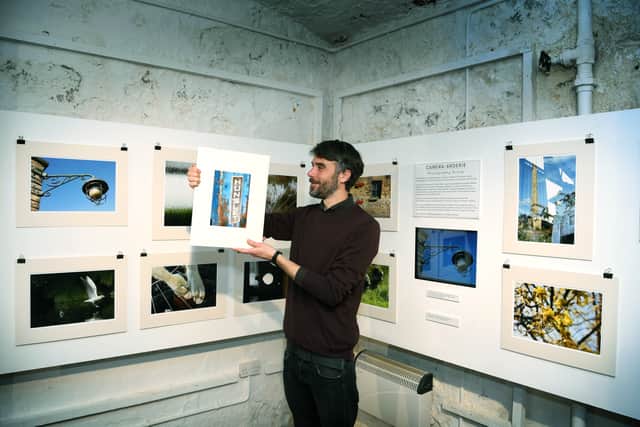
"This mill is a real survivor - a sentinel that's watched over the city for more than 200 years."
Production at Armley Mills finally came to an end in 1969 before the site reopened as Leeds Industrial Museum in 1982, preserving not only the building itself but the stories of the people who worked there.
Those stories are what make the museum so special to Chris.
"Our collections are a rich representation of the innovation and hard work of the people of Leeds," he said.
"Everything we have was either made or used in Leeds, so it always speaks about the people of the city.
"It's also a wonderful place for people to come together. It's an inclusive, safe space where people can learn more about their shared history on their own terms."
Choosing a favourite object from the museum is no easy task.
Despite the museum's impressive collection of locomotives and textile machinery, Chris's choice is an unassuming Victorian printing press.
"It isn't the most beautiful object," he said.
"But I know how many people have enjoyed using it over the years.
"We've worked with Pyramid of Arts, supporting artists with learning disabilities, who created artwork using that press.
"Before it became part of the museum, it was used by Leeds' Jewish community to print Hebrew posters and advertisements.
"It may have printed notices announcing war or peace. It carried thousands of messages throughout its working life, and now it continues creating stories through community projects."
One machine that never fails to stop visitors in their tracks is the museum's working spinning mule.
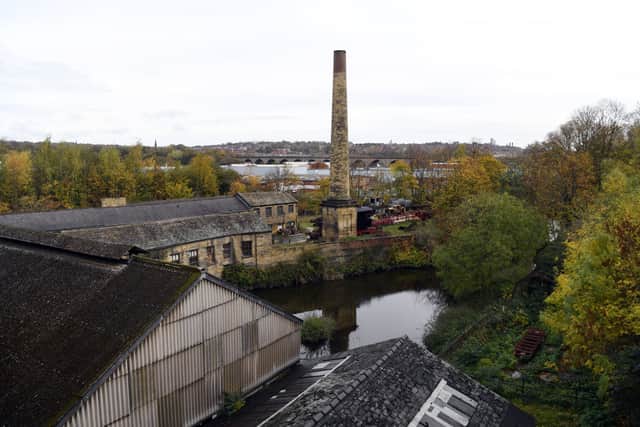
"It's a machine that spins wool into thread," Chris explained.
"Imagine the spinning wheel from Sleeping Beauty, but industrial, producing hundreds of threads at once.
"We have two, but one still works. It's from 1904 and it's about 20 metres long.
"When it's operating, you really understand how noisy, dangerous and dirty a working woollen mill would have been.
"Industrial museums should be exciting places. Unfortunately, because of conservation it's often impossible to run historic machinery. Being able to demonstrate a machine like this in action is really special."
Even its unusual name has a story.
"It's called a mule because it combines two earlier inventions - the Spinning Jenny and the Water Frame - just as a mule is the offspring of a horse and a donkey."
For many people in Leeds, however, the museum's strongest memories are not of giant machines but of sitting at wooden desks in the Victorian schoolroom.
Since opening as a museum in 1982, generations of schoolchildren have experienced lessons there, complete with a stern Victorian schoolteacher.
"Our Learning and Access Officer dresses in costume, becomes a Victorian schoolteacher and teaches entirely in character," Chris said.
"It's fun, it's immersive and it's memorable.
"Victorian teachers were famously strict, so there's lots of theatrical shouting and pretend telling-off - but all in a safe, educational environment.
"Now we're seeing people who visited as children bringing their own children back. It's become almost a rite of passage for Leeds schoolchildren."
Like the city itself, the museum has weathered difficult times.
The Boxing Day floods of 2015 caused extensive damage, forcing the museum to close while repairs were carried out.
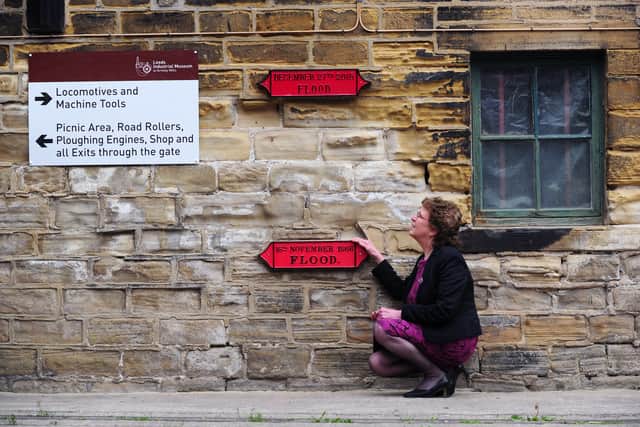
Chris was working at Kirkstall Abbey when the flooding happened and remembers watching events unfold before joining the museum just months later.
"One of my first jobs was organising a community exhibition about the floods," he said.
"We invited people to share photographs and memories, and told the story of how the floods affected both Leeds and the museum.
"Looking back now, I see the floods as a turning point.
"Since then we've built flood walls through the Leeds Flood Alleviation Scheme, rebuilt our locomotive shed with Arts Council funding and secured National Lottery Heritage Fund funding to continue redeveloping the railway gallery.
"The floods were catastrophic, but they also led to a period of renewal and investment."
That redevelopment is now one of the museum's most significant projects.
The restored locomotive sheds are due to reopen next year, celebrating a part of Leeds' industrial heritage that Chris believes deserves far greater recognition.
"People love trains," he said.
"But it's especially important in Leeds because the city was once the second-largest locomotive manufacturer in Britain after Glasgow.
"One example is ‘Junin’, built in Leeds in 1929 for a nitrate mine in Chile's Atacama Desert. It was one of the world's earliest successful diesel locomotives, designed for an incredibly specific job in one of the driest places on Earth.
"The restored railway gallery will tell stories like that while making the museum more sustainable and attractive for visitors."
As well as its permanent collections, the museum continues to uncover new stories and work with artists and community groups.
Chris hopes visitors will also take time to explore the current exhibition, Boom: Untangled, created with the International Feltmakers Association, and the museum's volunteer-maintained gardens.
"I hope people feel welcome," he said.
"I hope they're excited to discover things they didn't already know about Leeds and its shared history.
"I also hope they simply have a really enjoyable day.
"Ideally they'll leave having learned something new and enjoyed themselves."
Ultimately, though, Chris believes the museum's greatest treasures are not the machines or the buildings, but the people connected to them.
"I think what makes museums special is people," he said.
"We have fascinating collections, but without people's stories they're just objects.
"It's our staff, our volunteers, our community partners like Pyramid of Arts, Hyde Park Source and West Specialist Inclusive Learning Centre (SILC), and of course our visitors, who make museums wonderful places.
"Museums exist because people come to them, engage with them and create new memories here."