

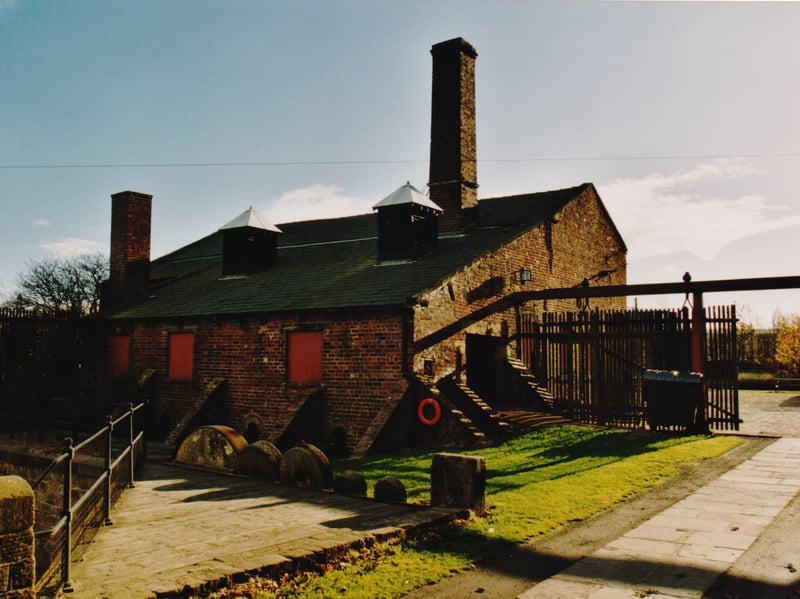
Thwaite Mills in Stourton has been part of the city’s industrial landscape for more than 350 years. It started as a fulling mill in 1641 with eight fulling stocks using four waterwheels before the site was bought and rebuilt by the Aire & Calder canal company with two large waterwheels. By 1825 the mills were operated on lease by W & E Joy seed crushers and oil refiners specialising in rape oil for lubricating and lighting. Exotic woods were also crushed at Thwaite Mills and the extract was used to make colour dyes for he textile industry. In 1872 the Horn family came to operate Thwaite Mills griding flint and china stone for glazing pottery and white ground chalk used for whitewash. Thwaite Mills ended their working life with the manufacturer of putty from whiting and linseed oil having use in the reconstruction of London property after the Blitz. The weir collapsed in a flood in January 1975 and the waterwheels could no longer work. Thwaite Mills Society was formed in 1978 to restore the site by September 1989 before the Mills opened as a Leeds City Council museum in the early 1990s. The museum closed in 2024 before ownership was transferred to the Canal & River Trust. Fast forward to 2026 and the site was due to go to auction after being sold to a developer by the Canal & River Trust. These photos, a mix from Leeds Museum Service and photographic archive Leodis, which is run by Leeds Library & Information Service, chart the highs and lows of the industrial heritage gem. READ MORE: Concerns over sale of Leeds heritage site LOVE LEEDS? LOVE NOSTALGIA? Join Leeds Retro on facebook YEP RETRO NEWSLETTER: Sign up for our free monthly email digest of Leeds nostalgia
1. Thwaite Mills
Thwaite Mills in November 1999. | Leeds Libraries, www.leodis.net Photo: Leeds Libraries, www.leodis.net
2. Thwaite Mills
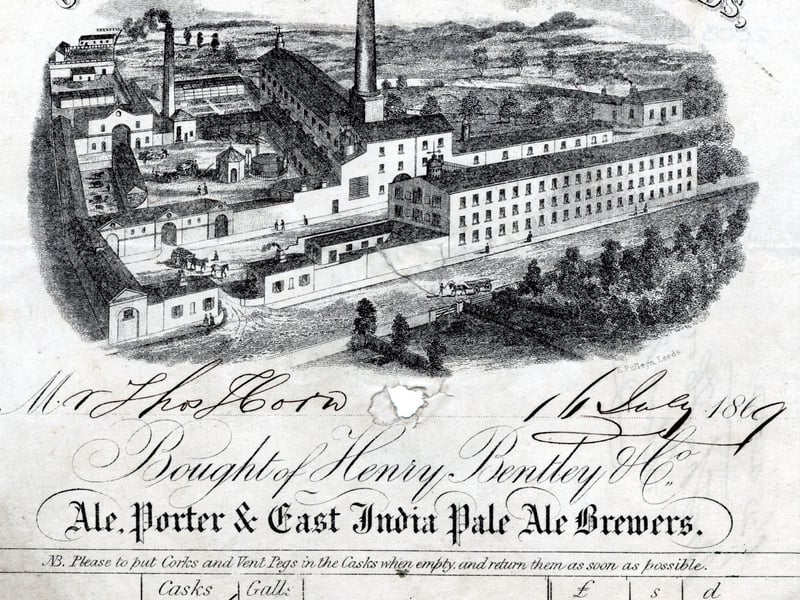
A bill from Bentley's Oulton Brewery, 'Ale, Porter & East India Pale Ale Brewers',to Thomas Horn of Thwaite Mills in July 1869. | Leeds Museums Service Photo: Leeds Museums Service
3. Thwaite Mills
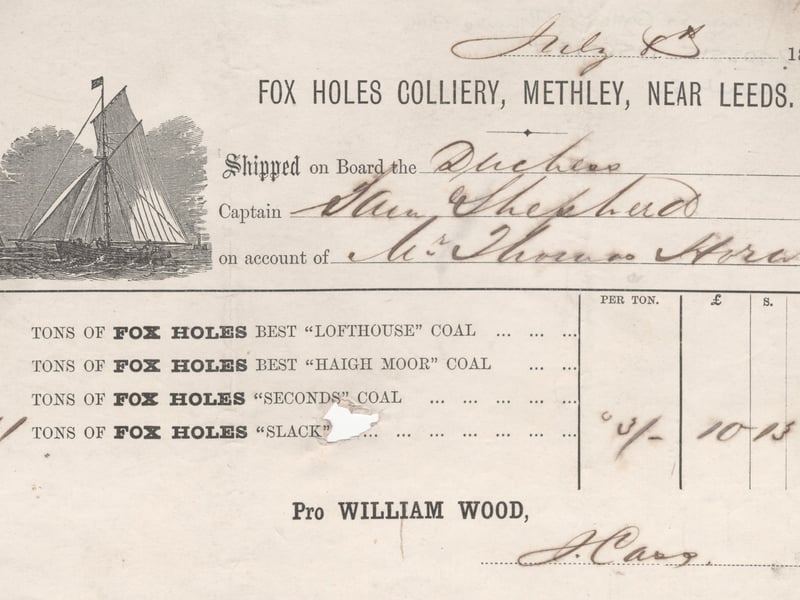
A bill from Fox Holes Colliery, Methley, to Thomas Horn of Thwaite Mills in July 1870. Most of the materials delivered to Thwaite were delivered by sailing barges on the Aire and Calder Navigation. In this case the 'Duchess' was delivering coal. | Leeds Museums Service Photo: Leeds Museums Service
4. Thwaite Mills
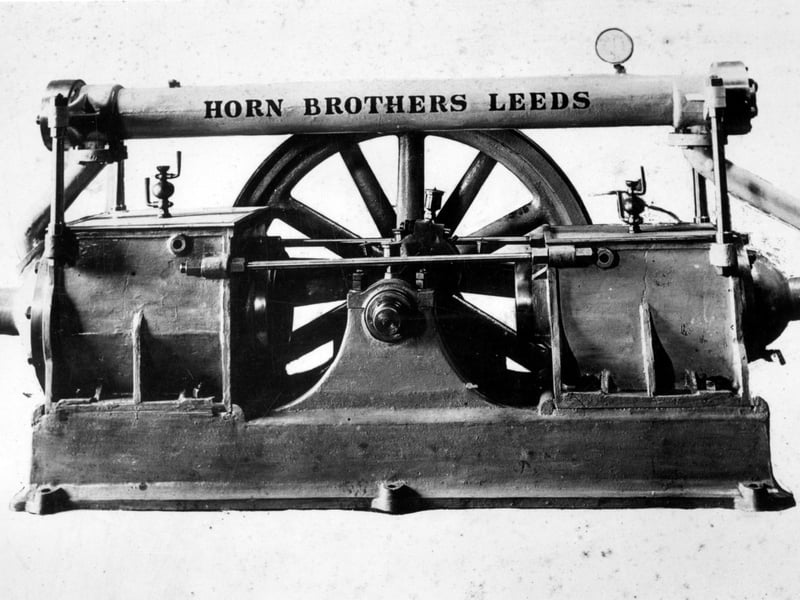
A photo of a compressor built by WH Horn at Thwaite Mills. The Horn family owned the mills from 1872 - 1976. Between 1900-1915 the Horns experimented with producing engineering goods. | Leeds Museums Service Photo: Leeds Museums Service
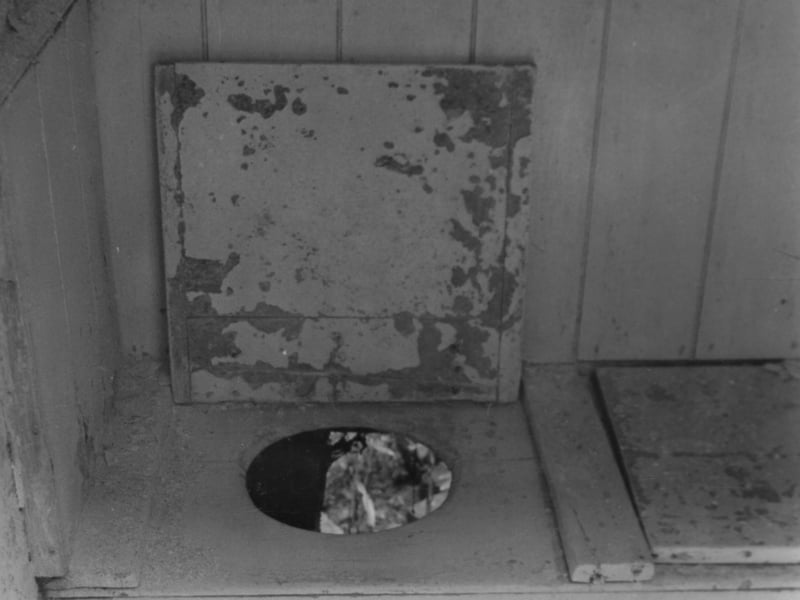
5. Thwaite Mills
Twin seat earth closet toilets at Thwaite Mills. They were demolished in 1980 during restoration work at the site. | Leeds Museums Service Photo: Leeds Museums Service
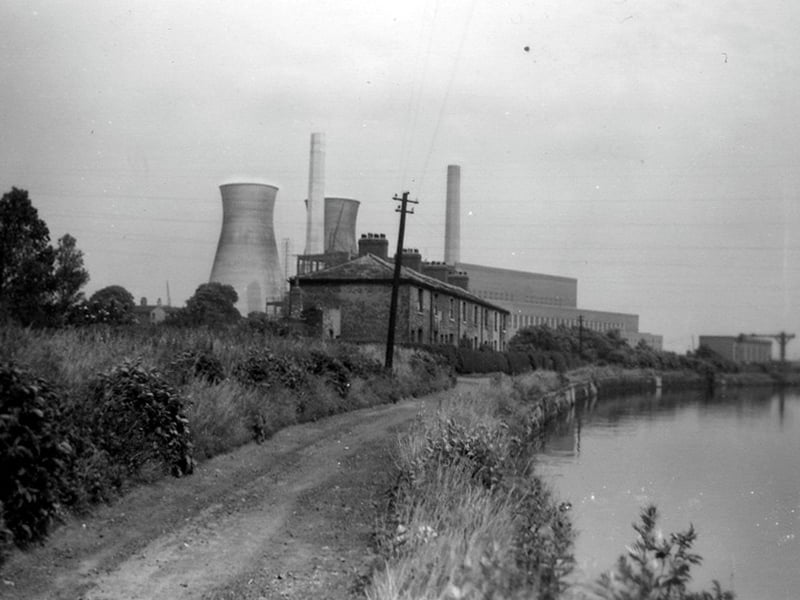
6. Thwaite Mills
The cottages at Dandy Row pictured circa 1950s. Dandy Row housed workers at Thwaite Mills, and was effectively an island, surrounded by the River Aire, the Aire & Calder Navigation, and the mill stream. They were demolished in 1968. Skelton Grange 'A' power station is visible behind the cottages, with two cooling towers at this time. | Leeds Libraries, www.leodis.net Photo: Leeds Libraries, www.leodis.net