
The story of a roadside Leeds curiosity unnoticed by motorists

It’s the roadside curiosity largely unnoticed by the thousands of motorists who pass it every day.
Revolution Well on Parkland Crescent at the junction with Stonegate Road in Meanwood dates back to 1788.
The Grade II listed landmark was built by Joseph Oates who inherited Carr Manor House - opposite side of Stonegate Road - on the death of his father in 1779. He undertook work on the building and land.
The well celebrates the centenary of the landing of William of Orange and the Glorious Revolution of 1688.
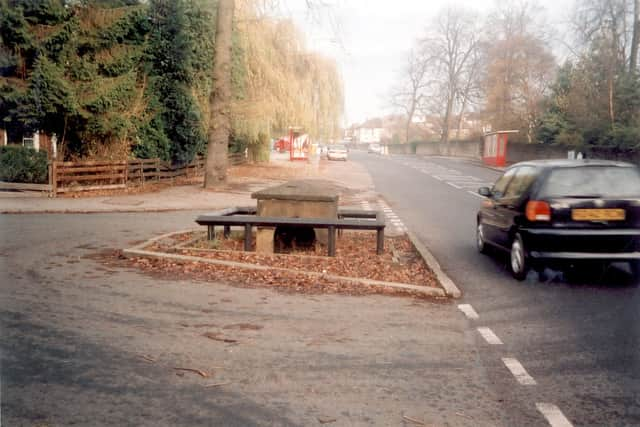

It is made of gritstone slabs, rectangular with pyramidal capstone. There is a round arched opening on south side. On the north side is an inscription which reads (abbreviated lettering): Bog in the adjoining field drain'd spring open'd and conducted hither For the benefit of the Passenger and the neighbouring house Novr 5th 1788 the 100th Anniversary from the land'g of KING WILLIAM
The Oates family owned land in Meanwood from 1796 and were the ancestors of Captain Lawrence Oates, who died in the ill-fated Antarctic expedition in 1912.
Captain Oates was a frequent visitor to his uncle, who lived at Meanwoodside, near to the beck and from whom he inherited the estate in equal shares with his brother.
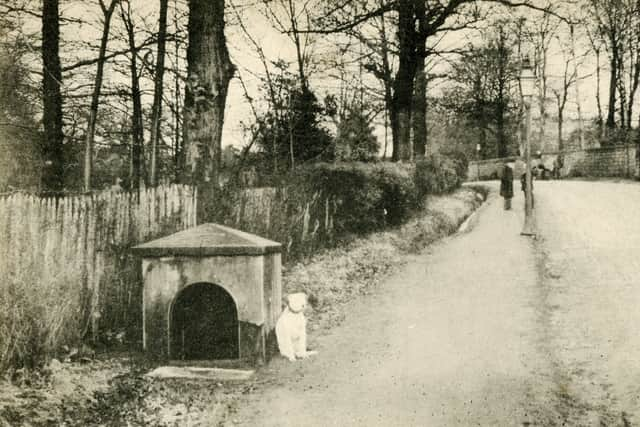
The well was moved slightly circa 1926 possibly to allow access to Parkland Crescent which was built by 1928.
The site of the well can still be seen today, in the copse of trees about 50 yards from the standing stone which marks the centre of the field off Stonegate Road.