
Bob Mould on reuniting Sugar: 'All the needles got threaded properly'

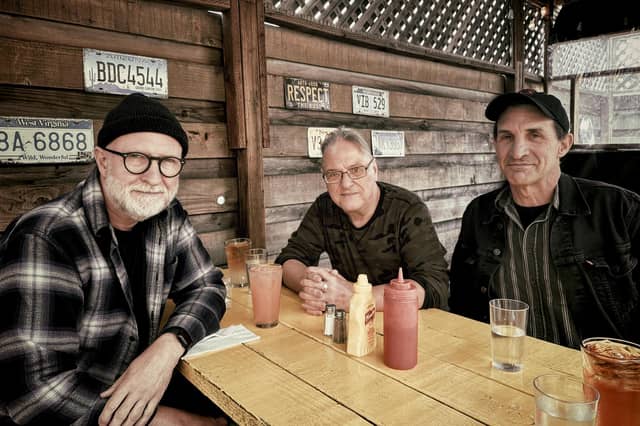

The surprise announcement last autumn that the US alternative rock band Sugar were reforming caused a quite a stir, with tickets for their first shows in 30 years – in New York and London – selling out in an instant.
At the start of this year, dozens more dates were added across the UK, Europe and the US – including one in Yorkshire, at Leeds Irish Centre.
Speaking to The Yorkshire Post about the reunion of his most commercially successful group – who had three top ten albums in the UK in the mid-1990s – singer, guitarist and songwriter Bob Mould, a veteran of 1980s American punk rock circuit with his previous band Hüsker Dü, says he felt there was “a little bit” of unfinished business to conclude with his old bandmates David Barbe and Malcolm Travis.
“Sugar had a frantic three years and then it went away and decades went by,” he says. “I think it was in early 2024, David Barbe was making a trip to San Francisco and gave me a call, said, ‘How would you like to get some breakfast?’ and we had a wonderful time. I let him know then that people were interested in what Sugar might be up to and he said, ‘Let’s ask Malcolm’.
“Then we got together in October ’24, played a little bit down in Athens (Georgia), it sounded good, so we started booking some shows and here we are.”
With Mould and Barbe in their sixties and Travis having recently turned 73, there was a mutual awareness that this was an opportunity that needed to be grasped now. “The clock is ticking, so any kind of class reunions or stuff like that, it’s best to get it on the schedule now,” says Mould.
It had helped that Mould and Barbe had stayed in touch since Sugar broke up in 1995. After a 14-year silence, Mould had also “reconnected” with Travis in 2011. “If there was an urgency, 2026 was a time when we could all take a moment out of our own individual lives and try to put this back together, so I’m grateful that that’s happening,” Mould says.
An attempt to reunite as a trio in 2011 had been nixed due to personal circumstances. “We got back together to play and it was OK,” says Mould, “but I was doing a lot of stuff with Jon (Wurster) and Jason (Narducy) at that time, David was maybe three or four years into teaching at the University of Georgia in Athens where he built a music department to teach music business etcetera to people, and Malcolm had stuff going on up in New England. In 2011 it didn’t jump out at us like it did this time.”
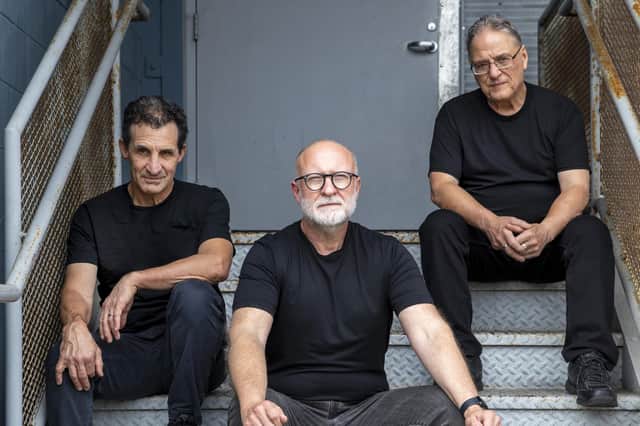
The interest of BMG – to whom Mould is signed as a solo artist – in reissuing Sugar’s Copper Blue and File Under Easy Listening in box set formats has also greased the wheels. “I think it’s good that BMG is there and they’re reissuing things now that we’re getting ready to do this, but as far as finance goes, I’m not sure how much anybody makes in recorded music these days; I think if you’re going to make any money is probably on tickets,” Mould says.
“But everything was starting to line up the right way: a new label, interest from promoters, David being available, Malcolm being interested and available. It got a little tricky for me with Jon and Jason and having (his solo album) Here We Go Crazy out in early ’25, but all’s well that ends well, all the needles got threaded properly.”
Sugar’s roots go back to a bunch of songs that Mould wrote in 1991 while extricating himself from a solo deal with Virgin Records that had soured after the failure of his album Black Sheets of Rain. That year grunge had broken in the US and Mould had found himself on festival bills in Europe with the likes of Nirvana, Sonic Youth and Dinosaur Jr whose music was indebted to the punk rock of Hüsker Dü. His new material combined the blazing energy of his old group with melodic hooks and he sought to assemble a band with which to perform.
Mould says he felt in good company with the likes of Nirvana and Pixies. “Kurt (Cobain) and Dave (Grohl) were Hüsker fans and were at shows back in the day, and (there was) the famous Pixies wanted ad: ‘Peter, Paul and Mary meets Husker Du’, I sort of knew them. In 1989 when Workbook came out I did a run of dates on the West Coast opening for the Pixies and I hung out with Charles (Thompson, aka Frank Black) and Kim (Deal) so we were friends.
“But in the summer of ’91 to see Nirvana on these festival stages right as Nevermind was about to come out, or doing a bunch of shows with Dinosaur Jr, the whole The Year That Punk Broke filming that summer, I was on the edges of that but ended up pretty close to the middle of it, I guess, in ’92.
“I think we just all sensed that something was about to happen, and that maybe we didn’t need even more hair metal, maybe we didn’t need even more Paula Abdul. No knock on it, but for years it was LA hair metal and superstar solo artists. I think especially when Teen Spirit dropped it was ‘oh, OK, everything just changed’.”
Bassist Barbe he had known from his band Mercyland. “We had mutual friends from Atlanta and Athens, and I knew David was a good guy and Mercyland was a good band, so David was on deck later in ’91,” he recalls. Travis, meanwhile, had played drums in Boston band The Zulus. “Some of the members of The Zulus were in a band called Human Sexual response in the ’80s and I produced The Zulus’ album from Slash Records in 1988, so I had already been in the studio with Malcolm for a month (and) I had seen how good a drummer he is. So I brought them the songs and off we went.”
Mould has long favoured the power trio onstage. “I’ve had at least four that I know of,” he says with a gentle chuckle. “I like the economy of guitar, bass, drums. It’s easier to improvise, it’s easier to react to what people are doing, everything is very clear onstage.
“I’ve had second guitarist and it’s OK. Rich Morel came out and played keyboards on a couple of tours with me and that was really fun because it’s a completely different sound, I don’t know if I need extra guitars but it was really nice to have Rich on keyboards because it’s a whole different set of colours that we can add to. But power trio feels pretty natural and pretty easy for me.”
In Sugar’s first few months they worked on dozens of songs – most of which became Copper Blue and the mini album Beaster. “I think we rehearsed 30 – 10 for Copper Blue, six ended up on Beaster, there were several B-sides and there’s probably a couple of things that didn’t get finished. It was a lot of work,” Mould remembers.
“We got together in Athens, Georgia… and it started feeling like a band. We got offered a show just as we were leaving to go up to the North East to record the albums.”
Sugar were turned down by several US record labels, but their demos caught the ear of Alan McGee, whose label Creation Records had signed Primal Scream, My Bloody Valentine and Teenage Fanclub. “The folks at Rykodisc were really interested, but then going over to London and meeting Alan and playing him the demos, after five songs he was ready to go,” Mould recalls. “I knew a little bit about Creation at the time, but that was like that precipice before everything got really big with the Boo Radleys, My Bloody Valentine, Sugar, Swervedriver – a lot of stuff, and that’s all before Oasis.”
For three years Sugar maintained a breathless pace. Their third album File Under Easy Listening came out in September 1994, but their tour the following year would be their last. “I had three months to write what became FUEL,” Mould says. “Given that Copper Blue and Beaster I had a full year to write and workshop, I didn’t have enough time to write what became FUEL in retrospect.
“The three of us went to Atlanta, we tried for weeks down there at a really great studio but we just weren’t catching a break, we weren’t making a lot of progress. We took a break and we reconvened in Austin, Texas and the recording went much better and we got the record out in September, started touring, and through all of that David had his second child and he had to go home and take care of kids. I was pretty beat-up from all of it. You know, life goes the way it goes, family always comes first and your health should come second.”
There was “no real animosity” of that led to the band’s break-up, he says, “it was just this other stuff’s going on, so in January ’95 we put Sugar on indefinite hold and for a long time didn’t give it much throught”.
Sugar’s reunion has yielded two new songs – House of Dead Memories and Long Live Love – but Mould pours cold water on the idea that there might be many more. The first, he says, was written in 2011 when he was working on his solo album Silver Age which “was meant to be a homage or a companion piece to the 20th anniversary of Copper Blue, so no surprise that House of Dead Memories sounds like a Sugar song”.
Long Live Love was penned on 2007 when Mould was living in Washington DC. “It’s definitely got a Sugar hook to it. It’s a little different in the verses than the unrelenting nature of Sugar stuff, and we did record a third song that’s not been finished, but that’s all we’ve got. There is no album, there’s just this third song that hasn’t been heard yet.”
Nonetheless Mould is looking forward to their world tour. “We’re all excited to get going,” he says. “Everybody’s woodshedding by themselves and we will get together a few weeks ahead of the New York show and get everything buttoned down for the tour.
“It’s great to come back to these songs. I knew that Copper Blue was a great record, I was hoping that people would be excited when we announced the New York and London dates and shared the new song, I did not expect the emotional reactions from people – friends and colleagues and fans. I think it’s typical of everybody, really, that when you’re in the middle of something as wild as what Sugar was I had no idea what it meant to other people because it was just like keep alight, keep feeding it, keep doing more and more and more.
“I never really got to stop and enjoy it much as it was happening, but to see how people are reacting, to see how much this means to folks right off the bat, that was really great and that’s a lot of goodwill and good energy to go into this May with that kind of love and knowing what it means to people. We just need to show up and do what we do and hopefully it will be a fun time.”
Sugar play at Leeds Irish Centre on June 3. https://sugarcopperblue.com/