
Dr Scott Caizley on his journey from Rothwell to helping state school musicians join Royal Academy of Music

Dr Scott Caizley is dedicated to bringing more state school leavers into classical music education. He tells John Blow about his hard-fought success.
The next Dame Fanny Waterman is from Leeds, reckons Dr Scott Caizley. It shouldn’t really be a controversial point, given the great pianist and teacher, who died aged 100 in 2020, was indeed born in the West Yorkshire city.
Except that top classical musicians from these parts, particularly those from less affluent areas, are still a rarity. Dr Caizley found that out the hard way on his long journey from growing up on the Wood Lane estate in Rothwell, Leeds, to now working at the Royal Academy of Music in central London.
His job there does not involve the piano, the instrument on which he trained, but is another rarity: Head of Widening Participation.
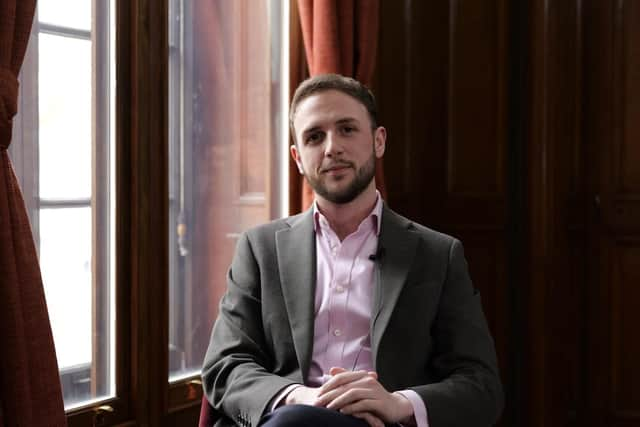

Dr Caizley, 32, feels that his working class background put him at a disadvantage when building towards, and then stepping back from, life as a professional musician – he has conducted research to back up such a state of affairs – but now his role is to create those opportunities for people just like his younger self.
“Where I sit at the Academy, I can hear through all four walls of my office somebody practising, somebody playing. And what a joy to be able to get paid, to go into work every day and hear that,” says Dr Caizley.
“Music is back in my life. I feel relief that I’m back to where and what feels like home, which is quite ironic, given that I didn't fit in in the very beginning, right?”
As the Yorkshire Post reported back in 2018, a young Dr Caizley had his heart set on a classical pianist, having enjoyed the music of Sir Elton John – an alumni of what is now his workplace – and becoming fascinated by a performance of Rachmaninoff’s Piano Concerto No.2 on the BBC Proms.
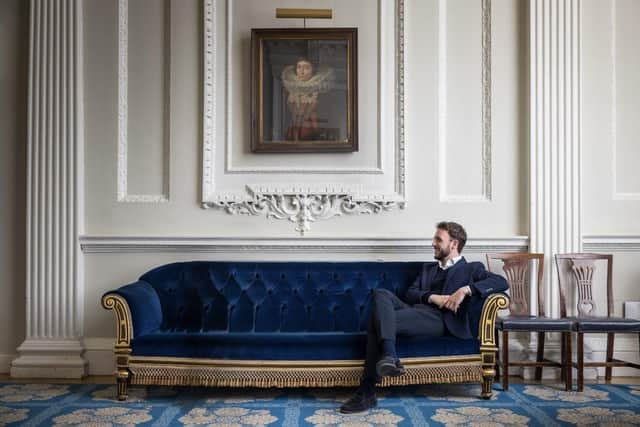
At 16, he attended the Leeds College of Music, after which he was offered places at The Royal College of Music, The Royal Birmingham Conservatoire and Trinity Laban Conservatoire of Music and Dance, choosing the latter.
However, he left music college after seven months and moved back to Leeds, vowing never to play the piano again.
He says: “To have all these different people playing out their privilege in small rooms with very intense style training programmes is a lot. It’s a lot.
“I remember, it was me and a class of eight pianists at the conservatoire in London and I was being told my posture was wrong, my accent was funny, the way I sat at the piano wasn't right. And all these things which might be important – which are important – at that time, for me, coming all that way and working so hard to get there felt (like) well, that's not that important, because in my first year I achieved the highest grade in my recitals at the conservatoire. Yet, despite that kind of meritocratic attainment that I was really going for, everything else, the culture, it got too much and I ended up leaving.”
The issue of class difference was exacerbated by the somewhat lonely route of the pianist – while a string or brass player might have been socialised into the world of music in youth orchestras, budding pianists tend not to make those connections. So it all came as a shock to feel so unwelcome.
Dr Caizley’s own findings show, as he wrote recently in the publication Arts Professional, that “early access to tuition, mentoring and the cultural cues that normalise classical music strongly shape who reaches conservatoire auditions and who progresses beyond them”.
In other words, the real training begins long before a prospective student has even submitted an application to a conservatoire, of which there are only nine main institutions in England.
Dr Caizley’s love for playing, though, was rekindled after hearing Franz Liszt’s Liebestraum on the radio.
He remembers thinking: “This can’t just be it. I might not be the one going to the Wigmore Hall and playing my debut concert there but this can't just be the end of the road here. And what if there's somebody else like me who’s having this crisis right now? So I made that decision there and then: okay, I might not be a professional pianist, but I will continue to be a professional in that industry, looking at the way in which people like me are treated and the way in which it's accessed and understood.”
Dr Caizley made an application to University College London to study the sociology of music education and this time his further education experience was different.
Since then, he has completed a Master of Philosophy at Cambridge and a PhD at King’s College, London, funded by a UK Research and Innovation scholarship, exploring four decades of state-schooled students’ experiences at this country’s music conservatoires – becoming the first researcher to do so in the UK.
Scott went on to lead education, culture and skills policy for the City of London and, actually, he did end up at Wigmore Hall – presenting some of his research at the Classical Music Industry Conference in 2019.
A recent announcement he made on behalf of the Royal Academy of Music signals progress in his field: it is launching the first fully-funded foundation year at any UK music conservatoire. With support from the Clore Duffield Foundation, tuition and accommodation are covered entirely and they will also provide a cost-of-living bursary to successful candidates, who can apply now, from state schools.
Scott, who now lives in Notting Hill, says: “I’ve worked with leaders across the world, across governments, and one thing that I’ve never shied away from since leaving the conservatoire is who I am. My education at state school and my council estate upbringing and my working class roots are still my cultural DNA. They’re what make me who I am. I’ve never lost that fire in my belly.”