
Exclusive:‘It feels like coming home’ - James reflect on Yorkshire roots, decades of reinvention, and arena-sized ambition

For more than forty years, the band James has journeyed from cramped rehearsal rooms and wild gigs to the world’s biggest stages, all while staying true to their adventurous spirit and Northern roots.
With a landmark 58-track retrospective album, Nothing But Love - The Definitive Best Of, and their largest-ever arena tour about to hit Leeds next year, the band - fronted by Tim Booth and grounded by bassist Jim Glennie - are taking a collective look back at the circuitous, creative, and at times chaotic ride that has made them local legends and global chart-toppers alike.
“We wanted to make a documentary, and the deal with the record company was if we made a documentary, we had to release another greatest hits,” says singer Booth. “That was the initial impulse. Then we were like, ‘Well, okay, but only if we can update it and put all the songs in that we’ve loved, that we've made since we came back in 2006 and deeper cuts.’”


Glennie, who, along with Booth, has been with James since its earliest days, remembers the challenge of winnowing their catalogue to a career-defining 58 tracks: “The initial concept was basically a singles collection. And we just thought, oh, we can do a bit better than that, because the singles reflect one aspect of James, but there’s a whole back catalogue of music.
“The bulk of what we do doesn’t fit the remit for a single, and we wanted that to be reflected in all its glory. So the hard part was restricting it to 58 tracks. At the end, it was a painful process of negotiation.”
The resulting album does more than showcase chart hits. It’s a sprawling, living testament to the band’s evolution - from spindly four-piece in the early 80s to the powerhouse nine-piece act that now spans generations of fans.
James was founded in Manchester in the early 80s and originally consisted of Booth and Glennie alongside former members Paul Gilbertson and Gavan Whelan. Glennie was born in Manchester, while Booth, an avid Leeds United supporter, was born in Bradford and raised in Boston Spa.
“Leeds has changed less than Manchester,” Booth says. “Here it’s like I remember the tiles on a railway bridge or a building and know where I am. It does feel like this is my home city, you know, from when I was a kid, coming in on the bus… I’ve got lots of memories here.”
Few bands emerge from their local scenes unscathed, and for James, the early gigs in Leeds were nothing short of a trial by fire.
“First time we played, the owner of the venue thought we were Buddhist vegetarians, so he figured that it didn’t need security, that our audience would be meagre, mild,” Booth remembers with a laugh.
The reality was anything but: “They were the ‘Wrecking Crew’ from Leeds… and it was a riot. People were on stage throughout the whole gig, we couldn’t get them off, and it was a lot of aggression really, and we hadn’t got any security.”
The chaos spilled out well beyond the stage. “They smashed up cars afterwards,” the two recall.
After 18 studio albums, countless singles, and gigs at some of the biggest venues and festivals around the globe, the creative fire still burns bright. James might just have released two new songs, Wake Up Superman and Hallelujah Anyhow, but there are no signs of the band slowing down anytime soon.
“We write songs, constantly. It’s the lifeblood of what we do. Those two new songs (on the album) reflect that vision of moving forward again, where we’re going next,” says Booth.
“For every album, we write a tonne of songs, so we’re good at going, ‘okay, only these can make it on.’ There’s always that painful part where you have to let go of something for the greater good,” Glennie adds.
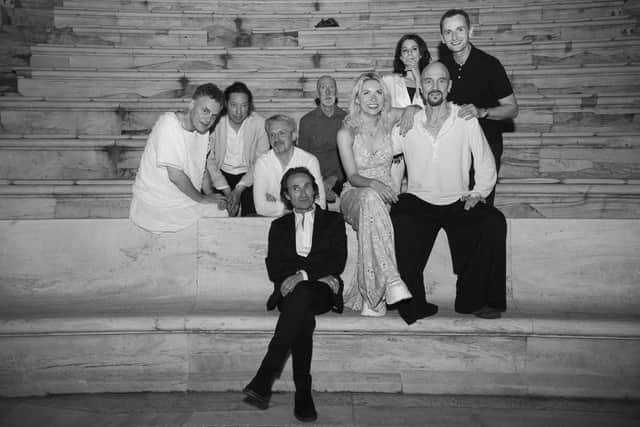
James’ famed live shows - the raucous energy, emotional contrast, and setlist improvisation - are a testament to band democracy. Crowd reactions matter as much as musicianship, with every tour, every gig, and every dynamic song switch a team effort that keeps performances thrilling and fans guessing.
“The key is to get the contrast,” Booth says. “So you want intimacy… But then when you need it, you’ve got an armoury behind you. We’ve got two drummers, at times even three… It’s important because people need waking up at points in gigs.
“What we always try to do in the James show is give them a circuitous journey… But the point of a James gig is to give people that euphoria, that sense of positivity, and leave people tired and hot and sweaty and happy.”
With the band set to take the stage in their biggest Leeds show yet, and a retrospective album that charts every twist and triumph of their singular journey, Booth knows where his heart lies. “For us, it’s a real homecoming.”