
'The nightclub is dying, but club culture isn’t': Judge Jules talks ahead of LIFI 2026 panel discussion

As he prepares for the Leeds International Festival of Ideas, Judge Jules discusses how sobriety and social media have transformed the modern dance floor compared to the 90s
They say that trends are cyclical; what one day no longer seems on trend can, just a short time later, become completely in vogue.
For Dance legend Judge Jules, that cyclical nature can be heard by modern producers "making records that sound like they were originating from that decade."
Jules notes that this nostalgic revival is less about imitating specific iconic individual producers from the era and more about capturing the overarching sonic identity of 90s rave culture.
Rather than individual artists acting as the primary touchpoints, he explains that contemporary tracks are channelling "the genre and the sounds" as a whole, focusing on specific structural markers like accelerated BPMs and dramatic "breakdown moments in records."
There is also an additional benefit of that 90s sound: “It’s actually really helpful for me in my DJ sets, because I can play some old records out of new records!”
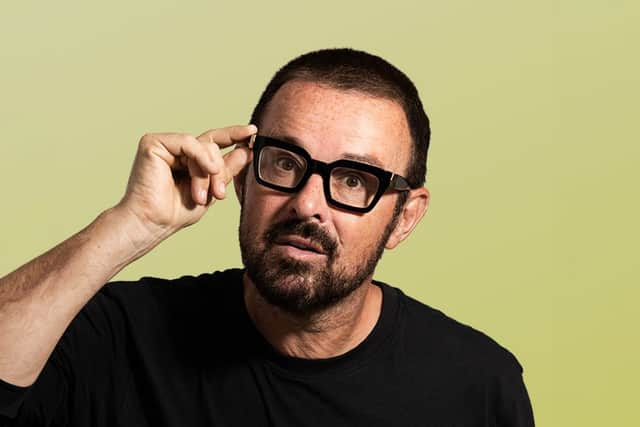

The icon of the electronic scene is heading to the Leeds Playhouse as part of the Leeds International Festival of Ideas (LIFI 2026) to tackle the heavyweight panel debate: ‘What did the 90s really do to us?’
As Jules prepares to look backwards in Leeds, he is acutely aware that while the music has circled back, the physical way audiences experience it has undergone a dramatic structural evolution.
The traditional weekly ritual of the dark, sweaty nightclub is being rapidly eclipsed by a craving for unique, one-off festival spectacles, heavily driven by social media.
"Electronic music culture and going-out culture is as strong as ever," Jules explains. "What isn't as strong as ever is nightclubs.
“My personal theory is it ties into Instagram culture, whereby it's quite boring if you are going to somewhat the same place regularly to post that as footage on your socials. People are into the one-off event."
The structural reality of this shift is stark. Jules reveals that during his 1990s peak, he would clock up roughly 200 gigs a year, with 170 of those taking place inside traditional nightclubs.
This architectural shift has collided with a massive demographic change on the dancefloor. While Jules still commands a massive, loyal market of ravers aged 35 to 40-plus, his mixed events bring him face-to-face with Gen Z - a generation that brings a completely different energy to the room.
"The reality is that Gen Z don't drink as much as the generations before them," Jules notes. "On the one hand, that's a good thing. But it does make for a slightly more detrimental atmosphere.”
“You may not go as crazy as you would”
Compounding this sober restraint is the hum of modern technology; where 90s raves were sanctuaries built on togetherness, modern crowds are intensely aware of the lenses pointed at them.
Jules points out that the younger crowd tends to be incredibly phone-centric, creating a real challenge for a DJ trying to foster a collective release, and with younger generations capturing footage for TikTok, there is an underlying self-consciousness - a fear of letting go too completely, lest you end up captured online.
“There's no question that if you are stone-cold sober, you may not go as crazy as you would. That's probably the extent of what I'm noticing."
Yet, despite the rise of phone screens and the decline of the brick-and-mortar venue, Jules insists that the core pulse of going out remains unbroken; the nighttime element is simply shifting into the daytime, mirrored by the meteoric rise of early-evening clubbing concepts.
For Jules, electronic music culture endures because it satisfies a fundamental human need that technology simply cannot replicate.
"The overriding success of electronic music culture is the fact that it's the last bastion of an environment where you can hang out with people that you've never met in a quite safe, non-challenging environment," Jules says.
"We are social beings, and life doesn't always provide an opportunity to be like that, whether in the 90s or now."
As he prepares to take the stage at Leeds Playhouse, Jules is ready to field whatever the West Yorkshire public throws at him - bar, perhaps, one specific area.
"Probably the biggest area that I couldn't answer is how the 90s have influenced Gen Z, because I'm not Gen Z," he laughs. "I can hypothesise, but I can't really give a definitive answer. I'm here to discuss whatever anybody throws at me.
“I've not got the ringmaster role. I am the circus performer."
Judge Jules will appear on the 'What did the 90s really do to us' panel, alongside Denise Van Outen, Harriet Harman, Jason McGann and host Miranda Sawyer at the Leeds International Festival of Ideas. Tickets and schedule details can be found via the official festival website.