
Kiefer Sutherland: 'I will always have a soft spot in my heart for Leeds'



In Belfast on the latest leg of a 34-date tour of the UK and Europe, Kiefer Sutherland sounds like a man who is enjoying the life of a travelling musician. “We’re having a lot of fun and I hope everybody else is too,” says the British-Candian actor turned singer, songwriter and band leader.
After an illustrious career in Hollywood – his CV includes such films as Stand By Me, The Lost Boys, Young Guns, Flatliners and A Few Good Men as well as the long running, multi-award-winning TV series 24 – Sutherland has found himself savouring the camaraderie of a band.
“I think that’s a lot of it,” he tells The Yorkshire Post. “One of the things that I enjoy most from interviews that I’ve read or heard from Paul McCartney and John Lennon – and in all fairness, George Harrison and Ringo Starr – after The Beatles broke up it was the thing that they missed the most. It wasn’t the recording or the music, it was being part of a group and that even if you fought amongst yourselves, you were a united front against everything else.
“That’s the nice thing about having brothers as a child, so I think that’s a big part of it. As much as it’s work going on tour – and make no mistake about it, playing four shows in a row is a hard deal if you’re putting a few hundred miles in between each show – I think the reason why we certainly keep coming back, part of it is musical, but there’s a large part of it that is really just everybody missing each other and wanting to spend some time (together).”
Sutherland has even been airing some of the songs from his soon-to-be released fourth album Grey, in the band’s live set. “I remember playing a few of them on a tour before this, just kind of working them up, playing them in front of audience before I recorded them,” he says. “So there’s a bunch of songs from Grey and there’s a few new songs that will go on the next album because it’s always interesting to play the songs for an audience and also to then tweak those songs as you play them to see how the audience reacts.”
While he always thought it would “make so much sense” to write on the road – “everybody’s there, you could just bounce an idea off of somebody” – in practice he’s found that “it just doesn’t work for me”.
“You’re always trying to get some rest, it’s not easy sleeping on the bus, nothing’s regular so towards the end you feel like you’re hanging on like a cat for dear life. When you finish soundchecking (and) all of the elements that need to happen before the show takes place I think you’re just so grateful that it went off without a hitch and you have to relax.
“It doesn’t mean that there aren’t ideas that I’ve got on my phone that are a result of touring, but it’s usually just a line or a visit and I will come back and revisit it down the line. I’ve maybe written one or two songs over the years on tour; everything else is in a much quieter state when I’m home.”
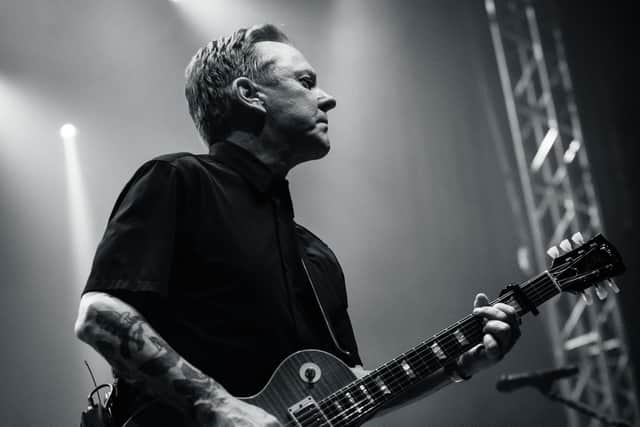
Four albums in, Sutherland does “not necessarily” feel that he’s found a sound and a writing style that he’s happy with. “Jude Cole made the first two records (with me) and I think the reason that I continued is because I loved what he did with those first two albums. The third album (Bloor Street) was kind of a departure from that, and I think (Grey) is again a large departure from that. As I start to play with different people, that has a profound influence on where I think a song can go, so hopefully it’s just an evolution as you learn more as a player, as you learn more as a writer, and you learn more about making records… I certainly feel that way about Grey, I think that it is a significant step forward for me creatively, and I hope the audience feels that way too.”
The songs were written between 2023 and 2024 and cover a period of change in Sutherland’s life as he reached his late fifties. “In a very short period of time I lost my mother (the actress and activist Shirley Douglas) then I lost my father (the Hollywood star Donald Sutherland) – that’s a new thing for me,” he says. “It wasn’t that I hadn’t lost a friend or two before on the road, but that was a real anomaly, and now I’m going through a period where almost every few months something happens.
“That’s just a sign that I’m getting older and a lot of things are written through my perspective of what I think my grandkids and my kids are going through. The writing has changed because yes, it’s a significant time when you spend more time looking back on your life than you did looking forward, and that is a significant change of perspective, so that has had a significant change on me.”
The single Simpler Time finds the now 59-year-old harking back to his youth and memories of an era that he says felt “more reliable” culturally, socially and politically. But it’s more than simply nostalgia for the 1970s and 80s. “I’ve got one grandson who’s 20 who’s in Europe studying and I’ve got another who’s going into high school and I was just thinking about them and their parents and how lucky I was that I didn’t grow up with a cell phone or a computer, and that somehow with the lack of technology I felt more connected to nature, to what was happening in front of me. So I was nostalgic about that. I was doing that through the perspective of I hope my kids and my grandkids find that time for themselves as well.”
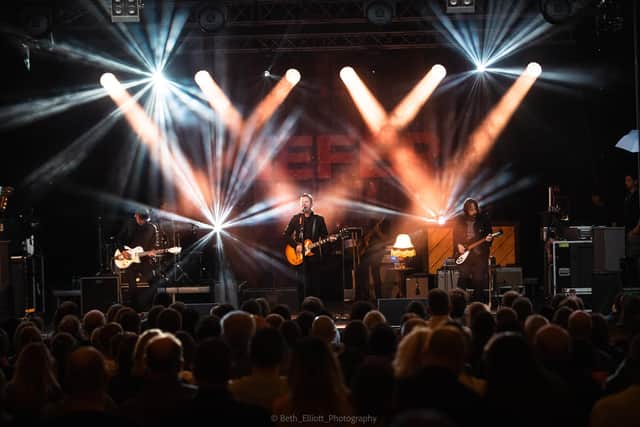
The song Goodbye California bids farewell to the place where Sutherland spent much of his acting career since making his first film, Max Dugan Returns, there in 1983. Two years ago, he sold his house in Los Angeles and resettled on a 75-acre working farm in upstate New York. “I introduce it (onstage) as a fond farewell to a place that made a young man’s dreams come true,” he says. “But I think cities are a young person’s game.
“I don’t want to make myself sound like I’m ancient but I’m at a place where I really enjoy the quiet of the country. It’s also something that I’ve been drawn to my whole life at different times, so it was just time for me to do something different, and where I ended up I couldn’t be happier. When you decide to pick up and make a big change like that in your life, you start to take everything into account… I’m very happy and grateful for where I ended up and I look forward to really spending time there.”
The album also includes a storming cover of The Bottle Let Me Down by one of Sutherland’s favourite country artists, Merle Haggard. “I played Buck Owens’ Crystal Palace in Bakersfield, California maybe about nine weeks before Merle passed away and I got to talk to him,” he recalls. “He wanted to give me a guitar and I was like, no, I’m not taking your guitar, I’m one of your biggest fans, just the honour of meeting you is absolutely everything. He was so complimentary about the music and where we were going and we should play some dates and man, I floated back onto the bus that night with the idea of that maybe happening and then sadly he passed away.
“The Bottle Let Me Down is one of my favourite songs of his and I recorded that with Rocco DeLuca and we just did such a different version of the song, and I think that Merle would’ve appreciated that. It was really out of respect to one of my favourite songwriters of all time, it’s one of my favourite songs of all time, so I recorded it for those reasons.”
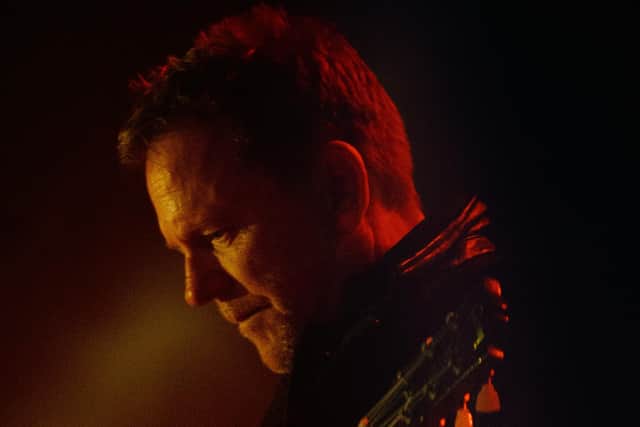
It’s 10 years since Sutherland released his first album, Down In The Hole, but he’d been playing guitar since childhood. “I picked up a guitar when I was about 10,” he remembers. “I started playing the violin when I was four, I wanted a guitar when I was seven and my mother said if I played the violin until I was 10 then she would get me a guitar. So I played the violin until I was 10 and to her word she got me a guitar, and I don’t think I ever picked the violin up again until the early 2000s. So I’ve been playing all my life.
“I’ve been writing songs from when I was about 15 and they sounded like I wrote them when I was 15. I can still play a few of them now, which makes me laugh. I was friends with a guy name Jude Cole who was a great singer-songwriter and the first two records were written between the two of us, and through that process I learned a lot, and then started writing on my own, and that’s what allowed me to figure out a system for myself about how to approach writing a song. Before that they would have to kind of fall out of the sky into my lap.
“It was a process that I ended up really falling in love with. It’s hard to explain the satisfaction of finishing a song, even if after time you go it’s not worth recording, just the being able to finish the melody, the choruses, to have it make sense from a storytelling point of view from A to Z, all of that is just so incredibly rewarding to me and it’s something that I’m really grateful that I can do.”
Playing music onstage is completely different to appearing in a Broadway show, he’s found. “For me, they’re night and day. If I’m going to be honest – and that’s my goal – then I’m not playing a character. I didn’t realise as an actor how much one can hide behind a character and someone else’s words. The songs that I play I wrote, for the most part, obviously I play a cover once in a while, but the songs I wrote are expressions of either an experience that I’ve had or an observation and when I explain to people why I wrote this song and why I think you should take the time to listen to it, I’m going to tell you a story that’s very personal.
“As someone who’s been pretty private my whole life, I find myself up onstage telling something to 800 strangers that I wouldn’t tell to someone I know normally. So the music has opened me up in many ways that I didn’t expect, it’s given me a freedom to be who I am in front of people, and that’s taken a while to become comfortable with, and I think the only reason that I would be comfortable at all is that the audiences we’ve played in front of – and I’m talking well over 500 shows by now – have been so generous and made us feel, and certainly made me feel, they were on our side, and I’m just very grateful for that experience.”
Having spent time in Yorkshire last year shooting the film Tinsel Town with Rebel Wilson, Sutherland is looking forward to coming back. “It’s so funny,” he says. “I told a bunch of people when I was abroad doing a film and another thing that I was going to go to England and do a film and they would ask where and I would say Leeds and they seemed perplexed by that. I phoned every single one of those people back and I said, hey, you have no idea how cool Leeds is, you should check it out.
“I had an absolute blast there. The food was great, the people were great, the hotel I stayed in was amazing and I loved the film that I was making, we had so much fun. So it was an amazing experience and I will have always and forever a soft spot in my heart for Leeds and for the time that I was there. I don’t say this about everywhere I go, but I really enjoyed myself.”
Kiefer Sutherland plays at O2 Academy Leeds on Wednesday May 27. Grey is released on Friday May 29.