
‘If not Leeds, then where?’: How Leeds Nomad is unearthing the city’s secret alternative history

Mark Silver speaks on plain-clothes Goth, 50 years of underground subcultures, and the free audio trail putting West Yorkshire’s musical pioneers back on the map
When Mark Silver returned home to Leeds in late 2019 after six years away, he moved straight into the city centre to re-immerse himself in urban life.
Walking along the canal with a podcast in his ears, he set up a simple Instagram page called Leeds Nomad to document his rediscovery of the streets.
He had no idea that a few years later, that photo diary would evolve into a full-scale cultural rescue mission.
“In early 2023, I noticed John Robb’s book The Art of Darkness coming out,” Mark explains to the Yorkshire Evening Post. “It started my journey into Goth culture in Leeds. I knew Leeds had this in its history, but I didn’t realise how much of it came together here. It was known as ‘Goth City’, but that identity got lost over time.
“Back in the day, being called a ‘Leeds Goth’ was an accusation people from other cities threw at you. Now, I see it as a badge of pride.”
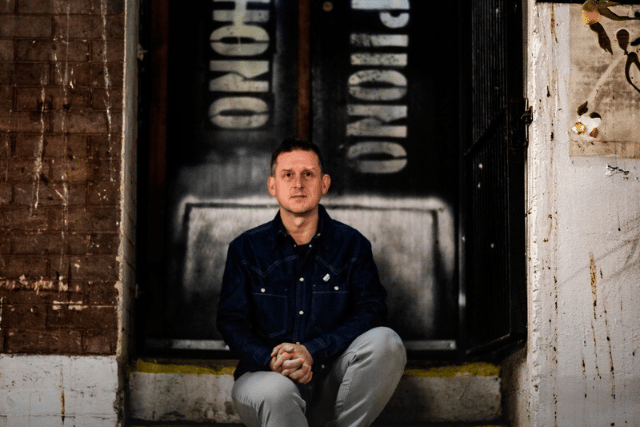

For decades, national music narratives have placed London at the epicentre of post-punk and Goth. Silver is on a mission to correct the record.
“The Batcave in London opened three years after the Phono, which was the world's first Goth club,” Mark points out. “Goth was happening before London.
“You had John Keenan’s F Club starting in 1977 - the first alternative club in Leeds - which birthed Gang of Four, Delta 5, The Mekons, and later The Wedding Present.”
Out of this pressure cooker of art-school experimentation and political tension came The Sisters of Mercy, who famously paired drum machines with dark guitar walls.
“Gary Marx told me that classic sound came from something as mundane as a drum machine being easier to take on the bus than a full drum kit,” laughs Mark.
By 1983, Keenan organised the fifth Futurama Festival at Queen’s Hall, prompting this publication’s very own headline declaring the city “Two Days Down in Gothic City.”
“If not Leeds, then where?” asks Mark. “ The famous Goth dance came out of the Phono—dancing around that iconic mirrored pillar in the middle of the floor, and because the floor was so sticky you couldn't do much else besides two steps forward and two steps back!”
Megaphones, Public Enemy & Bleep Techno
The project quickly expanded beyond Goth into West Yorkshire’s wider alternative web.
One of Silver’s favourite discoveries involved Leeds band Age of Chance (featuring Neil Howson and Steve Elvidge), who forged a chaotic hybrid of punk, hip-hop, industrial rock, and Northern soul - often delivered through a megaphone.
Partnering with Sheffield graphic icons The Designers Republic, their cover of Prince’s ‘Kiss’ became an indie hit.
That track caught the ear of hip-hop royalty: Public Enemy’s production team (Hank Shocklee and Carl Ryder) stepped in to remix their track Take It from the 1988 album 1000 Years of Trouble - making Age of Chance the very first band ever remixed by Public Enemy.
This cross-pollination extended into the birth of Bleep Techno, pioneered across Leeds and Sheffield by acts like LFO and Nightmares on Wax via Warp Records—widely recognised as the first uniquely British form of dance music.
“It was just punk with new tools,” says Mark. “Whether it was samplers or synthesisers, people were using whatever they could get their hands on.”
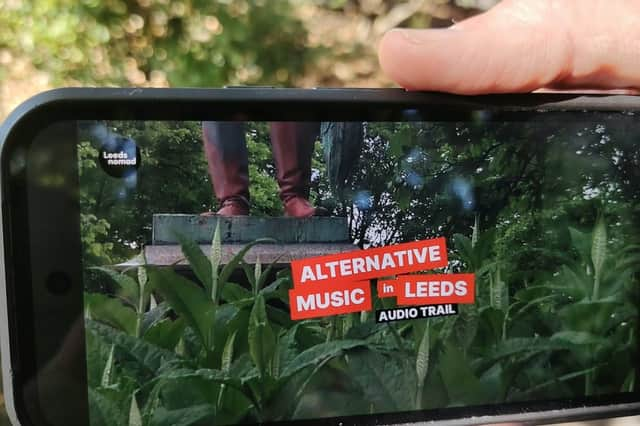
For Silver, subculture is as much about fashion, retail, and radical press as the music itself. On the trail, listeners explore hubs like X-Clothes - where Neil Howson from Age of Chance sold styles otherwise only found on London's King's Road - and BAD Clothing.
“Maria Martin, who worked at BAD Clothing, told me a hilarious story about Wayne Hussey from The Mission coming in, getting a ring stuck on his finger, and having to buy it because he couldn’t get it off!” Mark says.
“BAD was also the only place in Leeds you could buy Dr. Martens at the time.”
The city’s independent print media was equally vital, led by the Leeds Other Paper, where writer Tony Harcup provided an alternative newsroom that launched the writing career of Chumbawamba’s Alice Nutter.
The trail also spotlights retail mainstays across the decades, from Jumbo Records (opened in Thornton’s Arcade in 1971) and Crash Records to the Corn Exchange, which housed Tribe Records (founded by Simon Scott), Released Records, and Steve Luigi’s The Listening Booth - home to the city's first in-store listening booths since the 1960s.
20 Stops, 50 Years of Stories
Supported by a grant from Leeds Civic Trust for physical maps, Silver’s latest project is the Alternative Music in Leeds Audio Trail - a free, self-guided 20-stop walking tour.
Rather than relying solely on narration, Silver interviewed over 20 key figures. The trail features headline interviews with local icons including Gary Marx (The Sisters of Mercy), Alice Nutter & Boff Whaley (Chumbawamba), George Evelyn (Nightmares on Wax), David Gedge (The Wedding Present), and Jez Willis (Utah Saints), alongside key voices from Age of Chance, CUD, The March Violets, Salvation, Leeds Other Paper, BAD Clothing, and The Wendy House.
Despite the stellar line-up, Silver insists the entire project rests on the shoulders of one man.
“Almost everyone I interviewed said the same thing: without John Keenan, none of this would have happened,” says Mark. “John ploughed on for years with no recognition.
“He is an absolute legend who gave dozens of bands their first break, and he deserves to be celebrated as the foundation of everything.”
Silver also highlights collaborations with Elizabeth Rose from the Festival of Gothica, Jordan (creator of the alternative music mural at Kirkgate Market), and Leeds Museums.
“Deep down at heart, I’m a plain-clothes Goth,” Mark jokes. “I don’t do this for profit - the trail is free because I want people to have that moment of mindfulness.
“You stand on a street corner, put your headphones on, and realise you’re standing in the exact spot where history happened.”
The Alternative Music in Leeds Audio Trail is available to stream now. Physical map guides are available at independent venues across Leeds city centre, and you can follow Leeds Nomad on Instagram.