
The complex history of mash-ups - from culture jamming to chart successes

Bangers in Mash; the complicated history of mash-ups - from plunderphonics to mainstream acceptance
- Remixes of some of the biggest tracks in the world have become a regular thing, even including brand new albums’ worth of material.
- But long before ‘official’ remixes, budding DJs were creating new works by ‘appropriating’ those before them.
- Benjamin Jackson examines the history of mash-ups, from their theoretical origins to Soulwax’s influence on the art form.
They are those oddities that you find yourself listening to in bars or even out shopping in the High Street; you think you know what that song in question is but suddenly someone else appears on the track.
You find yourself suddenly thinking to yourself, “I never thought Miley Cyrus collaborated with The Notorious B.I.G,” before realising there is a significant time gap between the death of Biggie Smalls and Miley Cyrus’ rise to fame. So, how on earth has this been possible, and why is it being played out in the open if it’s not ‘legitimate’?
That’s because, if it is the very same track in question, you’re listening to a mash-up; a new song or piece of music created by blending two or more pre-existing, typically recognisable, recordings, often taking an instrumental track from one genre and overlaying it with the vocals (a cappella) from a completely different genre.
Unlike traditional remixes, which typically sample different versions of the same song, mash-ups intentionally collide separate works, celebrating the unexpected synergy that arises from their fusion - and that’s where the magic happens.
Think of taking the driving beat of a rock anthem and pairing it with the soulful vocals of an R&B ballad, or the intricate rhythms of hip-hop with the soaring melodies of pop. When done well, these unlikely pairings create a brand new, cohesive work that can feel surprisingly natural, humorous, or even reveal new layers in the original tracks.
But they weren’t just a fun distraction for music fans, and their history comes from a theory that if a work is created by someone based on another work and betters it, then why shouldn’t the artist who appropriated and bettered the work be acknowledged for something that, ultimately, was original?
Because record labels weren’t happy?
Here’s the complicated history, intertwined during an era when sampling became a recognised, mainstream method of creating music, and how one man’s essay on audio piracy led to a wave of new music in the new millennium, all fashioned from hits, not just from a bygone era, but at many times from contemporary popular culture.
A history of mash-ups - 1980s to present day
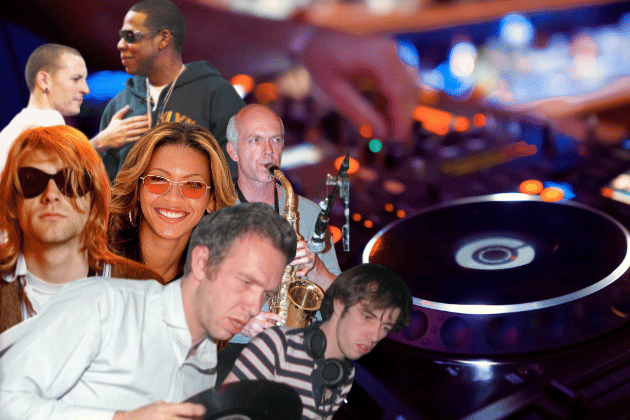

Plunderphonics: The Art of Subversion and Copyright Confrontation (Mid-1980s – Early 1990s)
Long before mashing up songs became a dancefloor essential, the art form emerged as a means to subvert cultural standards - or ‘culture jamming’ as it’s referred to.
In 1985, Canadian composer John Oswald published Plunderphonics, or Audio Piracy as a Compositional Prerogative. This essay introduced the 'plunderphonics' term, describing music made by plundering recognisable audio samples to create entirely new compositions.
Oswald argued against restrictive copyright, believing new works that "bettered" their originals shouldn't be plagiarism. He saw recording technology and samplers as new instruments, blurring the lines between documentation and creation.
He would put his theories into practice in a huge way, going after the sacred cow of the musical scene of the time: Michael Jackson. He released the Plunderphonics CD for free in 1989, which featured ‘Dab’ - a manipulation of Jackson's ‘Bad.’ Which, of course, sparked intense legal pressure and demands for its destruction from Jackson's team and the CRIA in 1990.
Meanwhile, American experimental group Negativland began their own highly publicised copyright battle; in 1991, they released their controversial 'U2' EP, famously sampling U2's "I Still Haven't Found What I'm Looking For" and an explosive Casey Kasem rant.
Intended as a “media critique,” it swiftly drew aggressive legal action from Island Records and Warner/Chappell; the resulting settlement, recall, and destruction of the EP further cemented the legal perils of plunderphonics.
Those incidents sent a clear, direct message: while musicians started to explore the realms of ‘sampling’ someone else’s work, the music industry was ready to fight this artistic practice. So, for a few years, mash-ups would return beneath the cultural surface.
The Brewing Storm: Big Beat, Underground Sampling, and Soulwax's Spark (Mid-1990s - Early 2000s)
While plunderphonics were being mauled by legal teams across the world, the music industry was moving towards a clearer, albeit costly, means of clearing samples. While in hip-hop circles the trend has been a mainstay for years, dance music also started to channel the spirit of plundering older tunes.
Big Beat drew heavily from the energetic, often illicit, rave culture of the late 80s and early 90s, particularly the evolution of breakbeat hardcore and the scene was characterised by loud, driving beats, a focus on dancefloor energy, and an increasing use of sampled drum breaks.
The dance genre slowed down the frenetic tempos of jungle/drum & bass (another breakbeat offshoot) to a more mid-tempo range (typically 100-140 BPM), making it more accessible to a wider audience while retaining that raw, rhythmic power
Championed by artists like Fatboy Slim, The Chemical Brothers, and The Prodigy, Big Beat blended diverse samples from obscure funk to pop culture snippets with driving rhythms and infectious hooks. It helped acclimatise a generation of listeners to music built entirely from repurposed sounds, proving its massive commercial appeal even while operating within a complex legal landscape.
But what truly turned this simmering potential into a roaring inferno was the arrival of accessible technology. The proliferation of affordable digital audio workstations and simpler mixing software allowed anyone with a computer to become a sonic surgeon. Simultaneously, the rise of MP3s and peer-to-peer file-sharing platforms like Napster, Gnutella, and Limewire shattered traditional distribution barriers.
Suddenly, bedroom producers could create and instantly share unauthorised musical fusions with a global audience, bypassing legal gatekeepers entirely.
This perfect storm of a primed audience, democratic tools, and unrestricted distribution set the stage for two Belgian brothers to inadvertently catapult 'plunderphonics' from esoteric art to a household, albeit illicit, art form: Soulwax.
Enter: Soulwax (2002)
Operating under their DJ moniker 2 Many DJs, the duo became the match that lit the fire for the mainstream mash-up boom through a potent blend of innovative artistry and a perfect storm of burgeoning digital distribution.
Their mixtape, As Heard on Radio Soulwax Pt. 2, released in 2002, was far more than a simple DJ set; it was a meticulously crafted, genre-defying masterclass in seamless musical curation, where brothers David and Stephen Dewaele demonstrated their uncanny ability to blend wildly disparate styles – from pop, rock, and hip-hop to electro, R&B, and indie – into a cohesive, exhilarating, and often humorous sonic journey.
Crucially, this mixtape was a fully unauthorised and unlicensed work, representing a bold, high-profile challenge to traditional music industry norms and copyright enforcement.
While the entire mixtape was a work of genius, one track in particular exploded into the public consciousness, becoming the viral anthem of the burgeoning movement: ‘Smells Like Teen Booty.’
This audacious blend took the instantly recognisable instrumental of Nirvana's ‘Smells Like Teen Spirit’ and perfectly layered over it the a cappella vocals of Destiny's Child's ‘Independent Women Part 1.’.
Released at the peak of the MP3 and peer-to-peer file-sharing era via platforms like Napster, Gnutella, and Limewire, ‘Smells Like Teen Booty’ spread like wildfire across the internet. Its "bootleg" status ironically fuelled its rapid virality, as it was unconstrained by traditional distribution channels or licensing.
By creating and widely distributing such high-quality, unauthorised work, Soulwax/2 Many DJs effectively bypassed the traditional music industry's gatekeepers, demonstrating that you didn't need a major label or official clearances to create wildly popular music and reach a massive, global audience.
The accessibility of these tracks through file-sharing, coupled with the clear and often deceptively simple concept of perfectly juxtaposing two well-known songs, directly inspired countless "bedroom producers."
It showed them that with basic software and readily available MP3s, they too could participate in this thrilling new form of musical creations, transforming a niche, theoretical practice into an undeniable global phenomenon.
The Mash-Up Explosion: MTV, Superstars, and the Commercial Peak (Early - Mid-2000s)
The floodgates opened after the success of 2 Many DJs, with countless attempts to replicate what some referred to as "bastard pop." Some were good, others not so much; that was the reality of the Wild West during the early days of file sharing. Even Weird Al had to come out and reveal a list of parody songs that were genuinely his, distinguishing them from others floating online.
But much like how streaming services perhaps borrowed from the foundations laid by Napster and its peers, so too did the music industry – the cynic in me thinks it was also a cheap means to release new material from legacy acts if a label owned both licenses.
Regardless, two rather significant developments happened that turned renegade plunderphonics into a ubiquitous sound. MTV, back when they still played predominantly music videos (ask your parents!), tapped into the craze and introduced "MTV Mash" (and later, "MTV Ultimate Mash-Ups").
"MTV Mash" often commissioned its own unique blends and, critically, produced accompanying music videos for these audio creations. This gave it both the platform and the presentation to declare that "this" was the future of sampled music. It legitimised the art form by giving it the same polished presentation as any major single, allowing a wider, mainstream audience—often less familiar with the underground club scene or the technicalities of file-sharing—to grasp the creative concept of juxtaposing disparate songs.
But just as crucial as "MTV Mash" was the wildly successful Linkin Park and Jay-Z Collision Course project. After the immense popularity of Danger Mouse's The Grey Album—itself a victim of similar copyright issues both Oswald and Negativland had decades before—MTV approached hip-hop mogul Jay-Z with an idea for a special episode of their "Ultimate Mash-Ups" series, envisioning a ground-breaking collaboration between two major artists.
When asked who he would like to collaborate with, Jay-Z, impressed by their sound and perhaps influenced by the growing rock/rap crossover appeal, famously chose the immensely popular nu-metal band Linkin Park.
Released in November 2004, Collision Course was a landmark moment: the first official, major-label, chart-topping mash-up album by two global superstars. It debuted at #1 on the Billboard 200, validating the mash-up format on a grand commercial scale.
Its lead single, ‘Numb/Encore,’ became a massive hit and later won a Grammy Award for Best Rap/Sung Collaboration, cementing its place in music history and proving that the spirit of musical appropriation, when sanctioned and creatively re-imagined by the artists themselves, could achieve unprecedented mainstream success.
However, if everyone could make mash-ups and share their work online, where was the quality control? That, sadly, is what led to the saturation of the genre and perhaps the reason why people started to "tune out" of the once culture-jamming platform—it had become part of capitalist culture.
A Sleeping Giant Awakes: Evolution, Retreat, and Enduring Influence (Mid-2000s - Present)
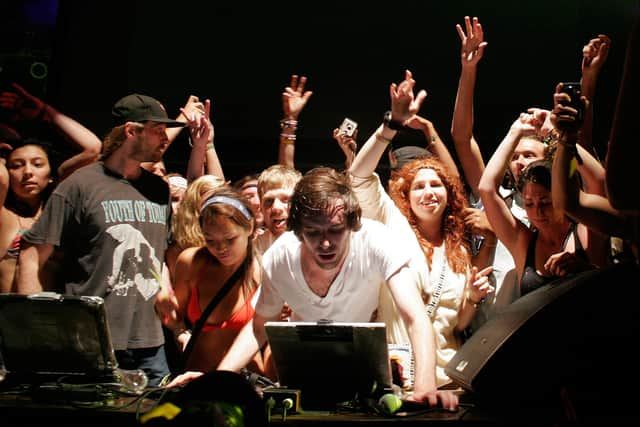
While the initial frenzy of the early 2000s faded from the charts, the 'sleeping giant' of sonic appropriation never truly slumbered.
The decline was largely due to oversaturation and intensified legal pressures, with tools like YouTube's Content ID system making unauthorised sharing far riskier. Labels, recognising the public's appetite for genre fusions, increasingly released official remixes, offering legitimate alternatives that diluted the need for bootlegs.
Despite this mainstream retreat, the mash-up spirit persisted. Artists like Girl Talk and his sample-heavy albums, such as Night Ripper in 2006 and All Day in 2010, proved the form could still command massive audiences and critical acclaim.
SoundCloud, launched in 2007, quickly became a haven for independent artists and remixers, offering a more "niche" yet free environment for sharing unauthorised creations and user-friendly editing apps like BandLab further democratized production, allowing anyone with a smartphone to easily create and distribute tracks "on the down low."
Much like most things these days, the mash-up has found a vibrant new home - TikTok. The platform's emphasis on short, shareable audio clips almost seemed designed for social media. Add to that TikTok’s strong interest in most things in the early millennium, those sounds from the 2000s being rediscovered, much like certain formats of the time.
Though perhaps not as discussed as it was during its heyday, the influence of mash-ups and the earlier plunderphonics is felt throughout official remixes, DJ sets and viral social media trends.
From its radical theoretical beginnings to its current omnipresence in digital culture, the mash-up remains a powerful testament to creative appropriation and the endlessly fascinating possibilities of sound - where else could you hear Edwin Starr guesting with Slayer?
Do you remember the boom in mash-ups during the ‘00s, and what was your favourite track from its weird and wonderful world? Share your memories or even suggest some mash-ups we might not have heard by leaving a comment down below.