
ATA Records: Meet the Leeds record label keeping it analogue in the digital era

This article contains affiliate links. We may earn a small commission on items purchased through this article, but that does not affect our editorial judgement.
In an era where AI might be infiltrating music, one record label is happy to keep things strictly analogue.
- ATA Records is an independent record label and studio in Leeds with a differing take on music in the 21st century.
- Rather than commit to digital, the label instead records and promotes the “warm” sounds of the ‘60s and ‘70s.
- They count The Sorcerers, Work Money Death and the incredibly interesting The Library Archives among those who have been released through the analogue enthusiasts.
Opinion on how music is recorded and/or consumed has been a big debate across the generational divide since the dawning of the music industry’s technological revolution. What once could take six weeks in a recording studio to get right can now be done in a matter of hours through digital audio workstations and a dose of artificial intelligence.
Releasing a song has also changed from trying to garner the attention of a record label through constant demo submissions and invitations to gigs, to now being able to record, master and then upload it yourself through the multitude of DIY digital aggregators offering their services—for a fee, admittedly, but far cheaper than an album advance having to be paid back.
For some, the digital revolution has done what punk and no-wave music did before: allow anyone to become a musician and release music. With the caveat that quality control can sometimes lack, or the concern that AI is infiltrating our streaming services, something that companies like Spotify and Deezer are trying to combat.
But some people still eschew the notion of recording digitally, feeling like the advent of technology has taken away some of the warm, at times idiosyncratic elements that used to be found on albums, be it through the equipment being used or the methods the songs are being recorded. However, some are bucking modern convention and going back to the halcyon days (for some), where re-recording an item took more than merely pressing Ctrl and Z on a keyboard.
A community of those people also happen to be based in Leeds, where ATA Records champions the fact that they release “chunky” vinyl and record in an “Aladdin’s Cave” of classic, vintage instruments and recording gear.
So why has one label decided to ditch digital and continue to embrace analogue?
Who are ATA Records?

ATA Records is an active, independent record label and analogue recording studio based in Leeds, UK.
They specialise in high-quality, authentic recordings of funk, soul, jazz, and afrobeat music, with a sound that is deeply rooted in the aesthetic of the 1960s and 70s. The label was co-founded around 2014 by established Leeds musicians Neil Innes and Pete Williams (who stepped down as director in 2022).
The label's existence is a direct response to a gap the founders perceived in the contemporary music landscape; having spent years working within various bands and genres, Innes and Williams felt the desire to break away and chase a specific, missing sound.
As they noted, the label was founded on the tireless ambition of "making the records they weren't hearing," and this wasn't simply a nostalgic pursuit, but a technical mission to restore the sonic character of music that had been lost in the digital shift.
What makes ATA Records unique in the digital age?
The core of the label's identity is encapsulated in its name: ATA stands for All Things Analogue. This isn't just a marketing choice, but a foundational philosophy, placing them in sharp contrast to the convenience and precision of modern digital production.
Their studio, housed in an industrial unit in Leeds, is an Aladdin's cave of vintage 1960s recording equipment, including their heart of the studio: a vintage two-inch tape machine used for all their primary recordings, rejecting the hard drives of modern Digital Audio Workstations (DAWs), a Swedish Broadcast Console, highly prized by engineers for their unique pre-amps and equalisation (EQ), which give recordings a rich, distinct character, and a selection of vintage 1950s and 1960s microphones and valve amplifiers (tube amps) to capture the initial sound. Valve technology is critical for providing the "analogue warmth" that Innes champions.
In essence, every piece of equipment at ATA Studios is chosen not for its modern convenience, but for its historical character and its ability to contribute to a sound aesthetic that the founders believe is missing from today's music.
Innes directly addressed this critique of digital music when discussing their process across numerous interviews regarding ATA: “Today's technology, with the ability to endlessly edit, tweak, cut, and paste, has removed those honest human moments from the table. Is there the same intense commitment to a recording if you knew that you can just fix it after?
And where do you draw the line of what you fix? Modern production has become like Photoshop for the music industry.”
By deliberately avoiding the perfection of digital editing, ATA Records achieves a sound that is "as thick as a steak and raw as a carrot," celebrating the subtle imperfections, bleed, and warmth of a live, human performance captured on tape.
This uncompromising stance has allowed them to carve out a surviving niche for physical media enthusiasts and crate-diggers worldwide looking for, in their own words, “chunky vinyl” - a term used by music fans and record collectors to describe vinyl records that are thicker and heavier than the modern industry standard.
Who are Some of ATA Records' most well-known acts?
ATA Records primarily operates with a tight circle of highly talented Leeds musicians, often featuring the same personnel in different configurations, all united by a love of jazz and soul history. Notable acts and projects include:
The Sorcerers

The Sorcerers are a highly regarded cinematic funk and Afro-funk project, known for their atmospheric and percussive soundscapes. Their flagship album, In Search Of The Lost City Of The Monkey God, is often cited as a modern classic for its authentic vintage sound.
Their music is a fascinating fusion that blends the hypnotic, distinctive scales and grooves of Ethiopian jazz (specifically inspired by the legendary Mulatu Astatke) with the moody, bass-heavy orchestration of 1960s and 70s European B-movie and horror film soundtracks.
Each track is composed to evoke a specific scene or atmosphere, often featuring an eerie, unsettling undercurrent achieved through the use of bass clarinet, vibraphone, and Farfisa organ melodies. This makes their music perfect for "shadowy figures and dead letter drops."
Their success is such that the great Ethiopian composer Astatke himself has reportedly championed the group, a high endorsement for their authentic yet original approach to the genre.
Work Money Death
Led by tenor saxophonist Tony Burkill, Work Money Death focuses on raw, spiritual jazz grooves and modal sounds. The project is less about groove-heavy funk and more about a deeply felt, introspective musical expression.
Burkill, a stalwart of the Leeds jazz scene for decades, was a well-kept secret in the North of England until ATA Records brought him to a national audience. He is known for his powerful, earthy, and uncompromised approach to improvisation. The music attempts to channel the foundational work of the great tenor players of the late 60s and early 70s.
Their albums, including People of the Fast Flowing River, are described as sounding "like a lost album from the spiritual jazz scene of the 1970s," thanks to the rich analogue recording and the use of McCoy Tyner-esque piano playing and agitated, polyrhythmic drumming that pushes Burkill's impassioned saxophone explorations forward.
The Lewis Express
The Lewis Express is known for its deep funk and soul-jazz sound, drawing inspiration from the golden age of organ-led instrumental groups. The band is a direct homage to the classic soul-jazz outfits of the 1960s, taking their name from the influential pianist Ramsey Lewis.
They channel the swinging, feel-good energy of groups like the Young-Holt Unlimited and the Latin-tinged work of artists like Eddie Cano. Their music is designed for the dancefloor, built on a rock-solid rhythm section and featuring prominent organ work (often George Cooper on piano/organ) and punchy brass arrangements.
Their debut LP was intentionally recorded over an intense, two-day session to capture the raw, live interplay between the musicians, with tracks ranging from introspective, spy-film themes (reflecting the label's cinematic influence) to up-tempo, Latin-tinged stormers, showing the versatility within the deep funk template.
The Library Archive Series
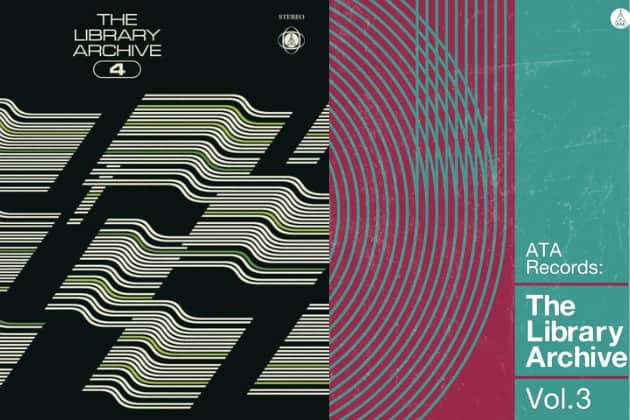
A popular, recurring, and highly specific project where the studio meticulously recreates the instrumental "library music" style of the 1960s and 70s. Library music (or stock music) was recorded for use as ready-made background scores for film, TV, and radio. Labels like KPM, DeWolfe, and Cavendish built vast, influential catalogues.
The series distils the spirit of these original production companies, recording each track with meticulous attention to detail on the same period-authentic instruments and equipment. The focus is on spooky textures, stripped-back rhythm sections, vibes, and vintage synths.
Later volumes have focused on specific sub-genres, such as the off-kilter, "wonky organ weirdness" of Italian cult favourites like I Marc 4 (Volume 2) and the heavy, cinematic sounds of Blaxploitation era composers (Volume 3). The series has garnered praise from contemporary library aficionados like Shawn Lee, proving its success in preserving and reviving this niche sound.
What releases from ATA Records should I check out first?
For a first dive into the label's rich analogue catalogue, these three albums are essential starting points, each showcasing a different facet of the ATA Records sound:
The Library Archive (Vol. 1)
- For Fans Of: KPM, DeWolfe, Vintage Spy Thriller Soundtracks
The perfect introductory release because it is the clearest expression of the label's analogue philosophy. It meticulously recreates the instrumental "library music" sound of the 1960s and 70s, which served as background music for film and TV. This album is a full immersion into the specific vintage aesthetic and production techniques that ATA holds sacred, delivering moody, evocative cues that sound like lost recordings from the KPM catalogue.
The Sorcerers - In Search Of The Lost City Of The Monkey God
- For Fans Of: Mulatu Astatke, Cinematic Afro-Funk, 1970s Horror Movie Soundtracks
This album showcases the label's ability to blend deep global influences with their vintage recording style. It is widely considered a classic and one of the label's signature releases. It fuses hypnotic Ethio-jazz grooves with the dark, cinematic atmosphere of European horror soundtracks.
The deep grooves and exotic, percussive soundscapes make this the definitive example of ATA's talent for crafting atmospheric, genre-bending music.
Work Money Death - People of the Fast Flowing River
- For Fans Of: Pharoah Sanders, John Coltrane (70s era), Spiritual Jazz
This powerful album proves that the ATA analogue approach is not limited to funk grooves but is perfectly suited for deeper, more contemplative music. It is a heavier, raw, and highly soulful project, serving as a torchbearer for the spiritual jazz of the late 60s and early 70s.
It features Tony Burkill's impassioned tenor saxophone, showcasing the rich, warm analogue sound applied to a highly emotional and intense jazz style.

Know someone with a collection of vinyl they love, or hoping to build one up?
The record player works as a stand-alone record player with integrated stereo speakers, so they can enjoy favourite tracks in high quality sound.
Alternatively, he can use the USB port to connect the player to his PC and use it as a USB record player, recording and converting their favourite vinyl to WAV or MP3 format for his modern MP3 player.
If he want to connect it to his home stereo too then that’s no problem, with stereo phono outputs on the rear can simply and quickly be connected.
Featuring two-speed settings of 33 1/3 and 45 RPM.