
Meet the Sir David Attenborough 'superfan' curator celebrating his 100th birthday in Leeds

Leeds Discovery Centre celebrates the 100th birthday of Sir David Attenborough with taxidermy and giant eggs - curated by one Attenborough ‘superfan’
Sir David Attenborough’s work has captivated tens of millions of people worldwide, inspiring a global passion for nature and a deeper understanding of our role in protecting the planet.
As he marks his centenary today, Leeds is proud to showcase the tangible links to the natural wonders he has spent a lifetime revealing - and to mark the occasion, curators at the Leeds Discovery Centre have delved into their vast collections to pay tribute to a man whose career has spanned more than eight decades on our screens.
The tribute is particularly personal for Sarah Burhouse, Leeds Museums and Galleries’ curator of natural sciences.
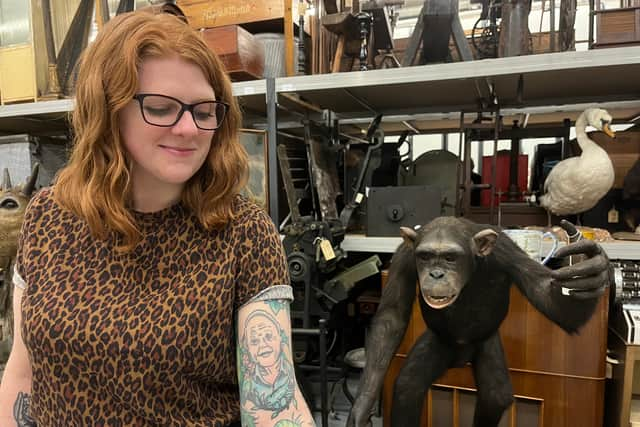

An Attenborough superfan, Sarah’s dedication to the naturalist is literal - she even sports a tattoo of the Life on Earth narrator on her arm.
“I think it’s fair to say Sir David Attenborough has shaped my whole career and I wouldn’t be doing what I do now if it wasn’t for him," says Sarah. "It was watching his programmes and listening to his narration that convinced me to pursue a career involving animals."
One of the most striking pieces on display is the immense, 150-year-old skull of an Indian elephant, an animal that has featured prominently in several of the naturalist's series, including ‘Secrets of Wild India’ and ‘Asia.’
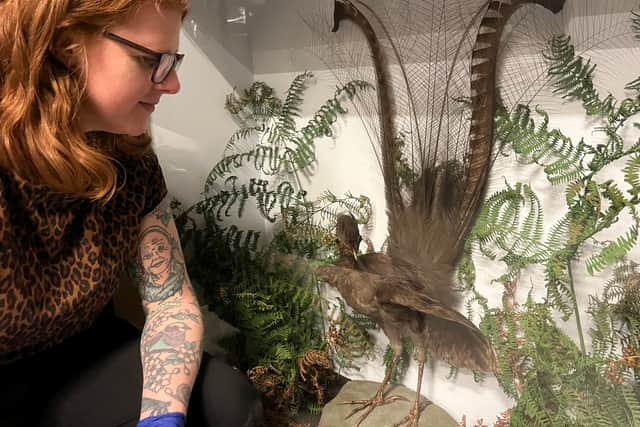
Visitors can also see a beautiful cased lyrebird, which is noted for its uncanny ability to mimic both natural and artificial sounds - a talent Sir David famously captured first-hand in his 1998 series ‘The Life of Birds.’
Another highlight of the collection is a spectacular egg from the extinct elephant bird; these are the largest known eggs in history and were the central focus of the 2011 documentary ‘Attenborough and the Giant Egg.’
Finally, the museum is showcasing taxidermy chimpanzee specimens; as our closest living relatives, these primates were a key focus in popular programmes such as ‘The Trials of Life’ and ‘The Life of Mammals,’ where they were famously shown using specialised tools to hunt or extract honey.
For those looking to see these specimens in person, the Leeds Discovery Centre is a ‘give what you can’ museum, where visitors are invited to donate what they are able to help support the collection.
Tours of the taxidermy collection are available via pre-booking, and donations can be made through online bookings or via the donation box located in the reception area.