
'Fear is drowning out facts': James O'Brien on belonging, division and his Leeds roots

‘The amount of effort we put in, politically and in the media, to portray our country as a place where many people don’t fit in is off the charts now’
Broadcaster James O’Brien says he is heading to Leeds this autumn with a message that is “as simple as it is urgent”: that Britain must rediscover its sense of shared belonging.
The LBC presenter will appear at the Leeds International Festival of Ideas (LIFI) on October 10 as part of a panel titled We All Belong Here, Don’t We?, one of the flagship discussions in a five-day programme bringing major national voices to Leeds Playhouse.
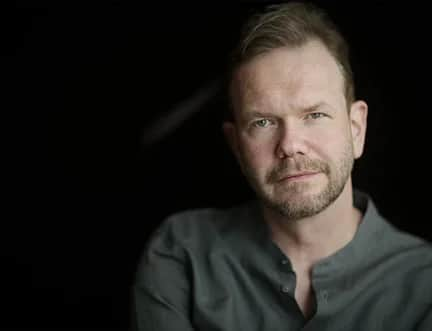

Speaking to the Yorkshire Evening Post, O’Brien said the question of belonging has taken on new weight in recent years.
“My answer is yes, of course we all belong here,” he said. “But the amount of effort we put in, politically and in the media, to portray our country as a place where many people don’t fit in is off the charts now.”
The panel, also featuring host Samira Ahmed and panellists Aufa Hirsch, Ashley James, and Ash Palmisciano, will explore identity, immigration, and community - issues O’Brien has examined in depth on his daily phone-in show.
He believes one of the biggest misconceptions driving division is the idea that immigration reduces opportunities for people born in Britain.
“The idea that there’s a zero-sum number of jobs is so logically stupid,” he said. “Everybody who comes here isn’t just a worker - they’re a customer. Economic growth is built on population growth.”
He argues that fear, rather than fact, increasingly shapes public debate.
“The hardest job sometimes is to say, ‘Are you sure you should be frightened?’” he said, pointing to recent attempts by public figures to exploit tragedies for political gain. “I don’t think that would have happened two years ago.”
O’Brien’s LIFI appearance comes as the festival marks its sixth edition, with a line-up that includes Louis Theroux, Elizabeth Day, Dame Evelyn Glennie, Chris Packham, and Tim Minchin.
The programme, running October 6-10, spans ten events tackling subjects from social media and suicide to climate change and the legacy of the 1990s.
Festival organisers describe LIFI26 as its most ambitious year yet, with discussions designed to “challenge and connect audiences” across themes including belonging, parenting, and disability.
For O’Brien, the Leeds event also marks a personal homecoming. Though he grew up partially in Yorkshire while attending Ampleforth College, it is his family ties to Leeds that have deepened over time.
His father was born in the city, and his grandmother ran several well-known Tetley’s pubs, including the Market Tavern - once nicknamed “The Madhouse” - and the Lawnswood Arms.
“As I’ve got older, that’s become a bigger part of the Yorkshire consciousness,” he said. “Anything connected with my dad makes me feel a little bit closer to him.”
He still keeps an eye on Leeds United - “Dad’s team” - and says reconnecting with relatives in the city has strengthened that sense of belonging. He even hopes his youngest daughter chooses the University of Leeds, though he jokes he doesn’t want to “jinx the A-levels”.
O’Brien says conversations with Yorkshire listeners often highlight frustrations about London-centric politics and media. He cites HS2 as an example of how national debates can look very different from a northern perspective.
“If our media had been based in Yorkshire, all HS2 conversations would have felt very, very different,” he said.
As for what he hopes audiences will take from his LIFI session, he says the value lies in hearing how people from different backgrounds reach similar conclusions.
“Ideas are interesting only insofar as you understand where they come from,” he said. “If those conclusions are similar despite all the journeys being different, then they have to have a value.”
And if he had to answer the festival’s central question in a single sentence? He doesn’t hesitate: “Of course we do - stop minding about this and get on with making everything better for everybody.”