
From emancipation to sunrise: The history of J'ouvert ahead of this year's Leeds West Indian Carnival

What begins at 6am in a cloud of powder, paint, and heavy soca is far more than just early-morning revelry. Ahead of this year's procession, we look at how a 19th-century story of freedom and resistance became the uninhibited heartbeat of Leeds Carnival
Before the main event, as the Leeds West Indian Carnival procession makes it’s way from Potterdown Park is an early-morning tradition before the polished costumes arrive.
It’s a tradition that sees revellers gather to cover each other in pain, mud, powder and cocoa,
This is J’ouvert: the raw, uninhibited sunrise kickoff of the carnival.
It is quite simply some of the best, messiest fun you can have in West Yorkshire - a vibrant cultural hors d'oeuvre served long before the main 2pm banquet arrives.
But while it might seem like a way to, well, blow off some steam before the pageantry of the parade, it’s roots stem from a time of resistance, freedom and the reclamation of identity - something far more than just an excuse to throw stuff at one another.
The History of the J'ouvert - from emancipation to sunrise
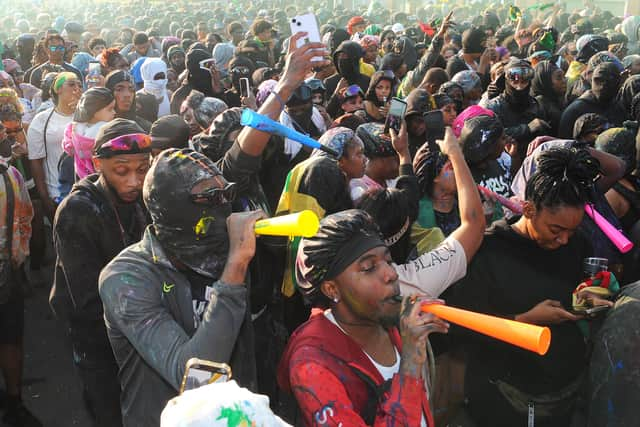

Derived from the French jour ouvert (meaning "daybreak"), J'ouvert's roots trace back to 19th-century Trinidad following the abolition of slavery in 1838.
Under colonial rule, enslaved Africans were strictly forbidden from participating in the lavish masquerade balls hosted by French plantation owners.
Upon gaining their freedom, liberated communities created Canboulay (from the French cannes brûlées, or "burnt cane").
Taking to the streets in the pitch dark of the early morning, they reclaimed the tradition on their own terms—using music, dance, and satire to mock their former oppressors and celebrate their liberation.
The ritual of covering bodies in mud, paint, powder, motor oil, and cocoa carries deep historical weight.
In the decades following emancipation, a layer of mud or oil served a dual purpose: it offered anonymity from colonial authorities while acting as a powerful social equalizer.
Beneath a shared coat of colour, social class, wealth, and background vanished, leaving every reveller on equal footing in the streets at dawn.
When Arthur France founded the Leeds West Indian Carnival in 1967 - establishing Europe’s oldest West Indian carnival—J’ouvert was embedded as its spiritual heartbeat.
While the 2pm main parade showcases months of intricate costume design and "pretty mas" glamour, J'ouvert remains raw, uninhibited, and deeply sacred at its core - a loud, joyous declaration of freedom driven by iron-pounding rhythm sections, steelpans, and soca trucks before the sun fully meets the sky.
Paint, prep, and plain T-shirts: What to know before joining in
While J'ouvert is open to anyone who wants to jump in, taking part in a 6am sea of mud, paint, and heavy soca requires a bit of preparation - and a couple of unwritten rules to keep in mind:
- Sacrifice your wardrobe: Wear old clothes you are completely prepared to bin afterwards. Paint, cocoa, and oil will not wash out. A plain T-shirt is a classic choice, but make sure your footwear consists of sturdy, old trainers—the streets get wet and slippery, making sandals or open-toed shoes a serious hazard.
- Protect the essentials: Put your phone, keys, and cash inside a sealed ziplock bag before tucking them into a secure cross-body pouch under your shirt. A pair of cheap sunglasses will keep powder out of your eyes, while a layer of coconut oil in your hair makes washing out paint far easier later in the day.
- If you're on the road, you're fair game: Stepping into the procession means consenting to get painted. If you want to stay clean, stay firmly back on the pavement.
- Respect the sidelines: Paint throwing is playful, but keep it on the road. Avoid targeting spectators staying back on the footpaths, stewards, children, or photographers carrying expensive gear.
- Pace yourself for a long day: J'ouvert sets off from Potternewton Park at 6am sharp. It's a high-energy morning workout, so stay hydrated—remember the main 2pm parade is still to come later in the afternoon.
Paint, powder, and shared heritage
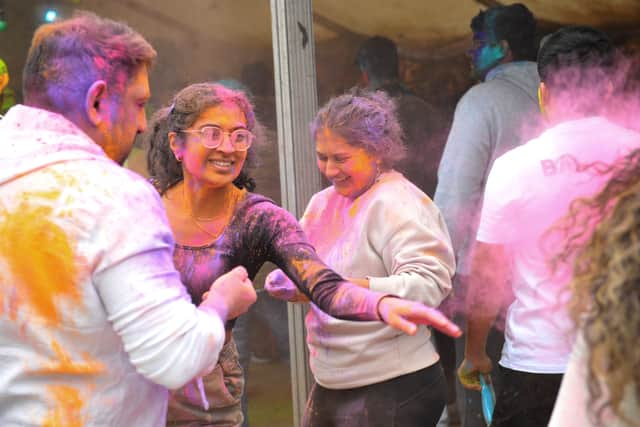
It’s easy to spot the visual similarities between J’ouvert and the Hindu festival of Holi (often known as Phagwah across the Caribbean) - both feature crowds filling the streets to drench each other in vibrant coloured powders, paint, and water.
While their origins are historically distinct - J’ouvert born from 19th-century Afro-Caribbean emancipation and Holi originating as an ancient Indian spring festival - they share a rich cultural connection in the West Indies.
Following the abolition of slavery in 1838, hundreds of thousands of indentured labourers arrived in the Caribbean from India, bringing traditions like Phagwah with them.
Over generations of living side-by-side, Indo-Caribbean and Afro-Caribbean customs naturally influenced one another, with the vibrant powder-throwing of Phagwah blending seamlessly into modern Carnival street celebrations.
Today, while J'ouvert remains grounded in freedom and Holi in seasonal renewal, both traditions embody the exact same Caribbean spirit: using mess, music, and colour to tear down social boundaries and bring the entire community together as equals.