
'Where are all the good men?': Meet the Leeds pub landlord turned acclaimed sociologist starring on LIFI panel

We sat down to talk to Dr Stephen Whitehead about returning to Leeds, becoming an academic “by accident” and toxic masculinity.
- Renowned sociologist Dr Stephen Whitehead is set to speak at next month’s Leeds International Festival of Ideas.
- He’ll be part of a panel discussion on masculinity in the 21st century and the issues surrounding young men in this day and age.
- The author of The End of Sex charts his career with Benjamin Jackson - from a pub landlord in Leeds to an acclaimed voice in gender studies.
Leeds International Festival of Ideas returns in October, when a star-studded line-up will offer new discussions and perspectives on a variety of issues.
This year, there’s a focus on drawing a younger audience to the series of talks, including one which seems especially pertinent - based around the idea of masculinity in the 21st century.
‘Where have all the good men gone?’ is set to be a powerful conversation attempting to “untangle the pressures and expectations facing men and boys now—exploring misogyny, online grooming, identity, stereotypes, mental health, safety and knife crime, education, and feminism—to challenge outdated narratives and redefine what masculinity should be in an ideal world.”
Taking place at Leeds Playhouse on October 15, the discussion will be hosted by journalist and author Caitlin Moran.
One of the guest speakers on the panel is an academic with a unique perspective on the topic, Dr Stephen Whitehead. He initially cut his teeth working in hospitality before becoming a leading name in gender and masculinity theory.
An unplanned career path
Stephen had an unusual path into academia, starting out as a pub landlord in the 1970s. He still recalls being fired from one of his first roles back in 1976.
“I was actually sacked by Tetley’s because I was underperforming as a manager,” he says, admitting he’d lost interest in the job. “And in those days, if you lost interest...your days were numbered because it was a very intense job.”
He felt he was “underachieving intellectually as a pub landlord” but didn’t know what his options were after leaving school without any O-Levels.
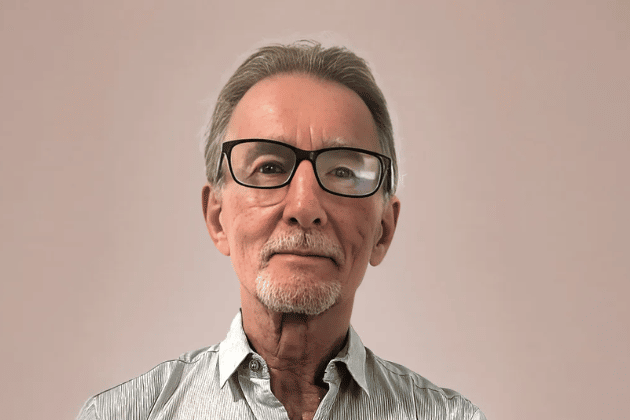

Stephen later “got caught up in” athletics and became a senior coach for the British Amateur Athletic Board, which spurred him on to go to university part-time. His path saw him study at Carnegie College in Leeds and he turned his attention to applying for jobs where the application of both coaching and management within the hospitality world could be used.
As luck would have it, he would end up getting a job at Thomas Danby College in Hunslet, becoming a part-time lecturer in Sport and Leisure, which kicked off Stephen’s academic career.
“Thomas Stanley College,” he recalls fondly, “they gave me training. They paid for me to do a teaching qualification, then a master’s, and then a PhD, and I was there with them for 10 years.”
Later, Stephen had the opportunity to do a master’s degree at Leeds Metropolitan University - and it was there that his interest in sociological and feminist theory began.
He developed what he calls his “intellectual dimensions”, using the unique perspective of working as a landlord and other personal moments in his life.

“I'd gone through divorces and had children, and all the [pressure] that goes on with funding put on landlords,” Stephen said. “It gave me a pretty unique insight, and I kept that insight all the way through my career as a sociologist.”
It was after starting his master’s, and then going on to study a PhD, that “all his needs were met”.
“I was in my element,” he smiles, as he tells me he has been in that element ever since.
Self-interrogation
Asked about his ‘eureka’ moment, when it struck him that sociology would be his calling, Stephen revealed that there was a lot of self-reflection before wading into that new world.
He said: “It took a while, but I recognised more about myself as a man, about my own masculinity. It's impossible to do any real, serious study as a man in the arena of gender analysis, or certainly metamasculinities, or the sociology of masculinities, without first doing the self-interrogation.
“I'd failed in many things [and] succeeded in some - I’d gone through a marriage, gone through a divorce. All of that played a big hand for me in helping me understand myself and be self-critical.”
“But not to the point of being paranoid about it,” he quickly assures me - more about recognising that he had weaknesses as well as strengths.
Accepting his strengths and weaknesses allowed him to go into research with men to look at their own masculinity and “portrayal of manliness, their own performance of masculine self.”
“I was sympathetic to their situation,” he says, “but at the same time, did I have a feminist critique of it? Yes, very much.”
Where have all the good men gone?
Despite retirement from higher education, Stephen is a celebrated writer who is releasing his latest book, The End of Sex, in October, around the same time as the keynote talk he will take part in at the Leeds International Festival of Ideas.
His new book explores gender divergence - growing differences between the lives of men and women - and argues it’s leading to changes in marriages, birth-rates and sexual relationships; what men think women ‘need’ might not be what they are looking for in the 21st century.
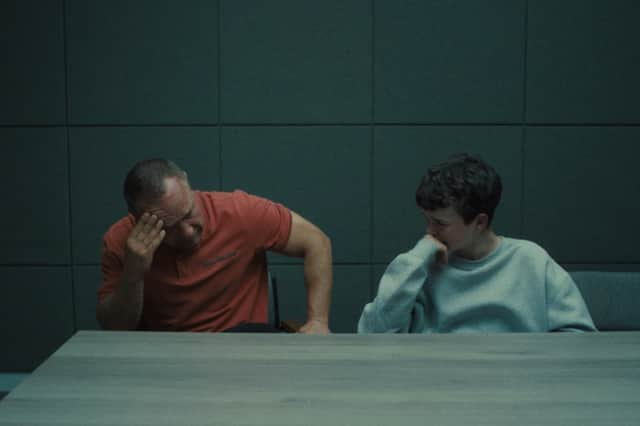
And Stephen investigates whether this is contributing to “toxic masculinity” and the manosphere, a topic very much in the public eye after the success and conversations around Netflix’s Adolescence.
So, to paraphrase the LIFI25 talk, where have all the good men gone?
“Women are becoming very wary now, and I think there are a lot of women who are concerned about the risk to them in the dating game, risks of violence, abuse and all the other stuff, toxic stuff that goes off on social media,” Stephen explained.
“There’s a rise of AI relationships, which will replace traditional heterosexual relationships. You can see the kickback against LGBT in America is absolutely appalling - and what's coming next is going to be a kickback against women, generally, as a gender.
“This is where we are, this is why we've got this cultural divide, which also manifests itself as a gender divergence. And that's got many, many aspects to it.”
The answer?
“We've got to explain what masculinity is,” Stephen said. “We've got to explain that there are many different ways of being a man. We've got to educate them to understand that respect, consent, safety, and women's long historic subjugation by men are now issues which are important to everybody in the world today. Men have got to sign up with it and make their contribution.”
He believes that this can only be done through a school curriculum, and that, despite parents having a “major job”, they can be assisted by better understanding and working with their children through their issues.
“We've got a government that possibly can do it,” he said, pointing to plans to show Adolescence in schools. “They certainly made some movement towards that. The change in the curriculum, the English curriculum at the moment, that's all positive, but there is a major road ahead. At the same time, we've got to address the problems of the manosphere as manifested in social media.
“The only way I can see that happening is to limit young people's access to social media.”
A return to where it all began
Stephen, who now lives in Thailand, is looking forward to returning to Leeds on October 15 to take part in the huge conversation around masculinity. It’s a full-circle moment for his career, one which he attributes to his late ex-wife, who died 10 years ago in Horsforth.
Stephen said: “Rosie and I went to Leeds in 1975, and she went on to become, after we divorced, a prominent Leeds magistrate, while I went on to become a sociologist.
“I thought to myself, ‘Rosie, this is you who has done this. You've got me going back to Leeds’.
“I'm ever so grateful to be able to come back, and there'll be a few tears in my eyes. But it's a lot of joy and pleasure, with a lot of good memories about that wonderful city.”
You can check out what other talks and speakers are taking place as part of this year’s Leeds International Festival of Ideas line-up by checking out our article ahead of next month’s event.