
Expert reveals what to fuel up on for the Leeds Marathon, and what to skip to avoid 'runner trots'

Running the Leeds Marathon and worried that what you consume might lead to an unneeded toilet break? This expert explains what to eat and what to skip until the day after.
The Rob Burrow Leeds Marathon is just on the horizon as participants get their final practices in before the big day arrives on May 10.
The fourth edition of the race will see thousands of runners once again gather at AMT Headingley Stadium, with the circular route winding through some of the city’s most scenic stops, and a new Marathon Relay introduced for 2026.
But for those who are just about to embark on their first marathon, there is perhaps one question - what to do if you’re caught short and need to loo?
Are there some things to avoid on race day, and are there some foods that can help during a marathon?
Gut health expert and IBS specialist Kirsten Jackson has shared how simple nutrition mistakes could impact performance on the day, and as an IBS dietitian, Jackson has outlined practical advice to help runners avoid common race-day issues like bloating, cramps, and urgent digestive discomfort, even if you don’t suffer from the affliction.
5 expert gut-health tips for the Rob Burrow Leeds Marathon
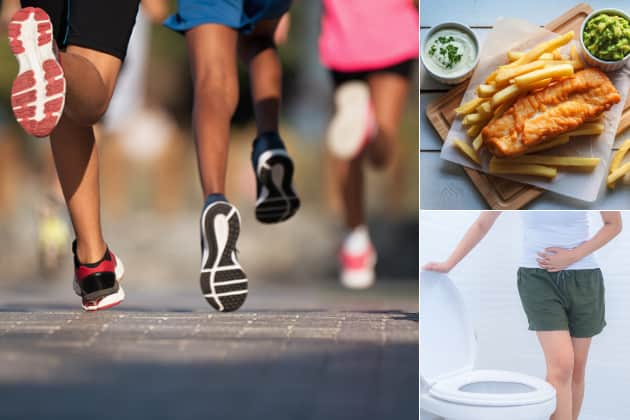

1. Mastering the pre-race window
To ensure your body has enough energy without overloading your system, focus on ‘white carbohydrates’ such as rice or a small bowl of low-fibre cereal. These are easy to digest and top up your energy stores quickly without sitting heavily in the gut.
Timing is critical; you should aim to finish your main meal three to four hours before the race begins. If you feel hungry closer to the start time, a small snack like a banana is safe to consume one to two hours before the starting pistol to prevent feeling sluggish or nauseous.
2. Identifying digestive red flags
Knowing what to leave off your plate is just as important as what you put on it. Jackson warns that high-fat foods - including fatty cuts of meat, hard cheeses, avocado, and biscuits - should be strictly avoided on race morning.
Fat stimulates the gastro-colic reflex, which encourages the gut to clear itself out, potentially leading to an emergency toilet stop mid-run. Additionally, those with sensitive stomachs should reduce ‘high FODMAP’ foods like onions, garlic, and beans at least 24 to 48 hours before the event to prevent excess gas and fluid in the bowel.
3. Taming the gut-brain axis
It isn't just diet that dictates how your stomach behaves; pre-race stress plays a massive role in gut sensitivity.
Nerves activate the gut-brain axis, which can physically speed up digestion and heighten sensations like cramping or urgency.
To settle ‘butterflies’ at the Headingley start line, use simple mindfulness techniques such as box breathing or a short meditation; these exercises calm the nervous system and help settle the gut-brain connection before you embark on the 26.2-mile course.
4. The "Golden Rule" of preparation
The most vital piece of advice for any marathon runner is to never try anything new on race day.
Jackson emphasises that all race-day nutrition should be trialled in advance during training sessions. This allows you to identify personal trigger foods and understand how your body reacts to specific fuels under the strain of long-distance running.
By the time May 10 arrives, your fuelling strategy should be a well-practised routine rather than an experiment.
5. The post-race recovery feast
Recovery begins the moment you cross the finish line, but your gut needs time to stabilise after intense exercise. Jackson suggests prioritising recovery in the first hour with a small, low-fiber snack like a handful of cashews.
Once your stomach has settled, you can reintroduce denser meals to replace the massive amount of energy lost; surprisingly, British classics like fish and chips or a roast dinner are actually recommended for recovery as they provide necessary carbohydrates and energy.
Pair these with water and electrolytes to replace the vital salts lost through sweat.