
'We're proud of our green spaces': Meet the 500-year-old guardians of Leeds parks - now fighting child obesity

They have a legacy that spans back to Henry VIII and are responsible for some of Leeds' most beautiful green spaces
You might wander through Leeds’ green spaces and assume they belong to the City Council. Most residents do.
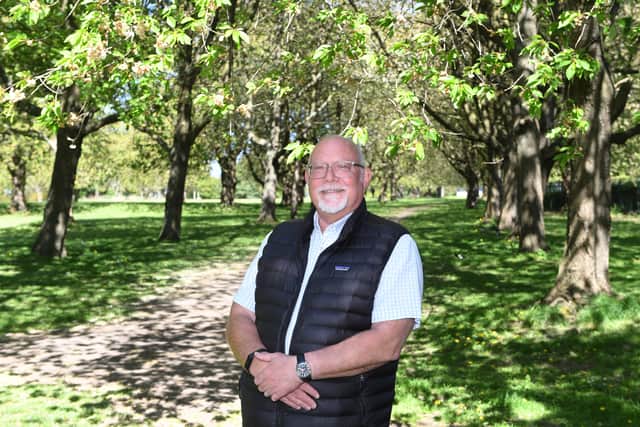
But as Tim Barber, a trustee of Wade’s Charity, explains, these lands are steeped in a 500-year history.
Wade’s is Leeds’ oldest institution, run entirely by volunteers. Tim, who balances his trusteeship with running Real Yorkshire Tours, describes it as a "labour of love".
With the charity approaching its 500th anniversary in 2030, the trustees view themselves as temporary custodians.
"It’s almost like we’re just owning it for that little period to pass on to the next generations," Tim told the Yorkshire Evening Post.

The charity’s origins date back to 1530, when Thomas Wade left a will to maintain Leeds' roads. By the 1800s, the mission evolved to improving the quality of life in deprived areas.
This led to the purchase of inner-city parklands, managed through a unique partnership with the local authority.
"We own them, and then they’re rented back to Leeds City Council on long leases," Tim explains. "It’s a pound for a thousand years - what we call peppercorn rents".
Under this arrangement, the land title remains with the charity, while the council’s parks department handles the day-to-day maintenance. This ensures the land is legally protected as a public asset forever.
The charity is passionate about protecting Leeds’ precious green spaces, and believes they can have a key role in the health of the city.
Historical grounds, modern priorities
A priority for the trust is tackling the city’s childhood obesity crisis, and Tim views green spaces as essential tools to correct the "energy imbalance" of the digital age.
"Obesity is caused by taking in more calories than you burn off," he explains. "If people are doing a little more sport - jumpers for goalposts rather than FIFA - they’re going to be healthier. It’s not rocket science".
The stakes go beyond simple fitness: Tim highlights a staggering £500 billion burden on the NHS - a figure he describes as a significant missed opportunity for public investment.
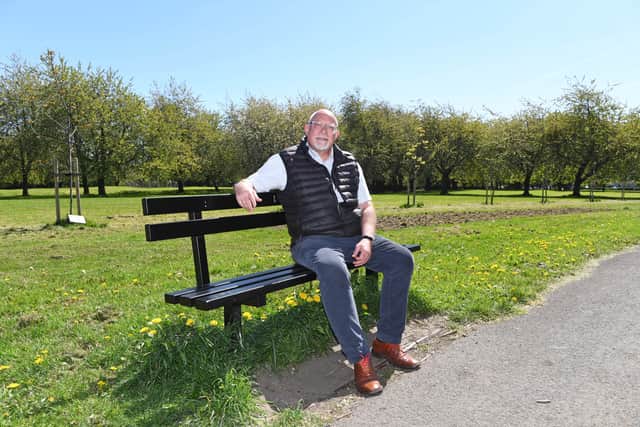
"What a waste that is," Tim reflects. “If they could get that down even by a small amount, what else could they do with that money?"
Tim believes the current national strategy, often focused on sugar taxes and calorie counts, misses the mark, explaining that real traction comes from providing the structures that "time-poor" modern life has eroded.
"Parents are working longer hours now," he observes, noting that families are increasingly "reliant on other people" to facilitate the sports and active play that used to be a childhood standard.
This is where the charity’s unique geography comes into play.
Leeds ranks in the top 10% of English cities for green space per capita, providing Wade’s with a massive, natural arena to stage an intervention.
By funding bike clubs and football schemes in parks like Middleton and Gotts, Wade’s Charity transforms ancient acreage into a proactive health service, and the statistics prove the mission: proximity to green space consistently correlates with lower childhood obesity, even in the most deprived areas.
Leeds’ best-kept secret?
Despite the important work and many of us regularly walking around the likes of Gotts Park in Armley or Middleton Park, Tim said Wade’s Charity is little known.
Historically, the charity has operated "very much under the radar”, he explains.
Because Tim said that because the partnership with the council is so seamless, residents rarely look past the park gates. He recalls a photographer who had lived in Armley his whole life without realising the very ground at Armley Park belonged to the trust.
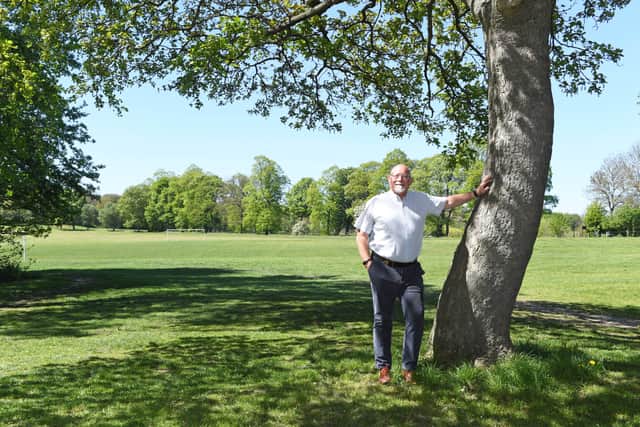
“It’s such a shame, but nobody in Leeds knows of Wade’s,” Tim admits.
But on the day our Yorkshire Evening Post photographer went out to Gotts Park, the sight was one of a sunny day with everyone out enjoying the green space.
It is a sight that perfectly illustrates why Tim remains so dedicated to his role as a "temporary custodian".
He added: “It was stunning; the cherry blossom on the trees was blowing off, it was like it was snowing there. It was absolutely beautiful, and there were loads of people.
“As we walked around, the playground was full, there were people kicking footballs around the pitch, people on bikes. It was just great, it made me quite proud.”
Under a new chairperson, the charity is now raising its head “above the parapet” to build a deeper connection with the city.
While the parks are visible, the charity’s direct impact often happens through its substantial grants program.
Grants average £3,000, reaching up to £10,000, and focus strictly on youth and recreation.
"We want newer charities to come to us; we want to give more money away," Tim urges.
"If you haven't applied before, check it out".
Wade’s Charity is actively looking for new applicants to help distribute their annual funding; visit the Wade’s Charity website for application information and criteria, or to learn more about their history in Leeds.